

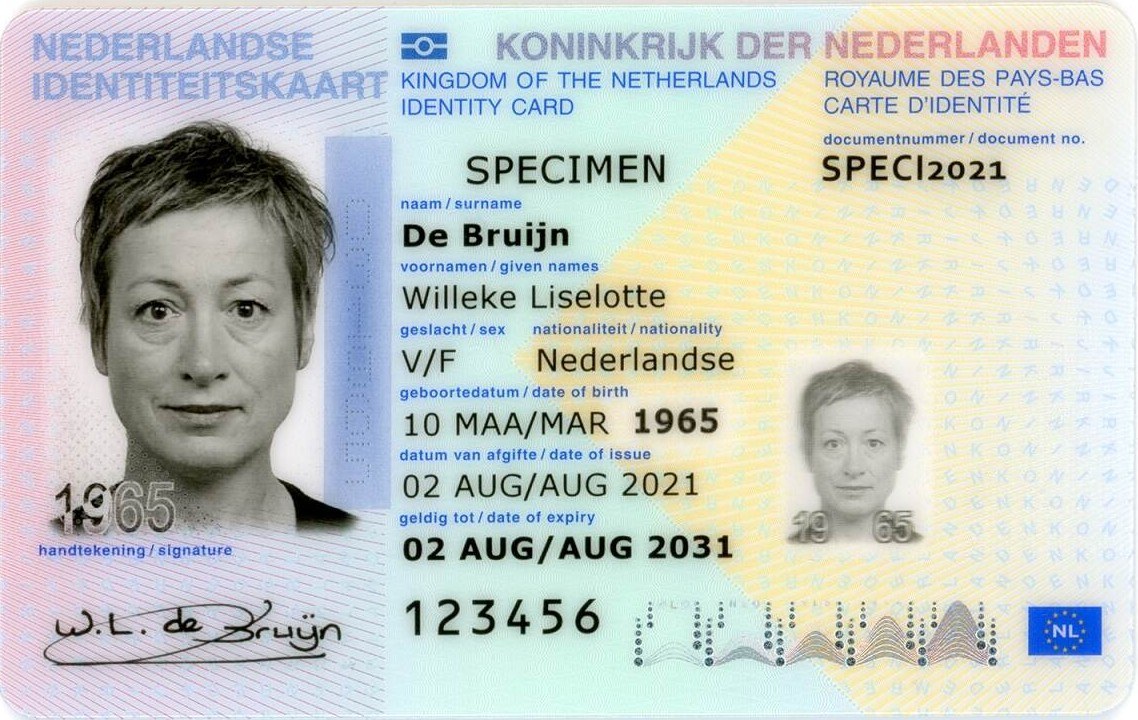
















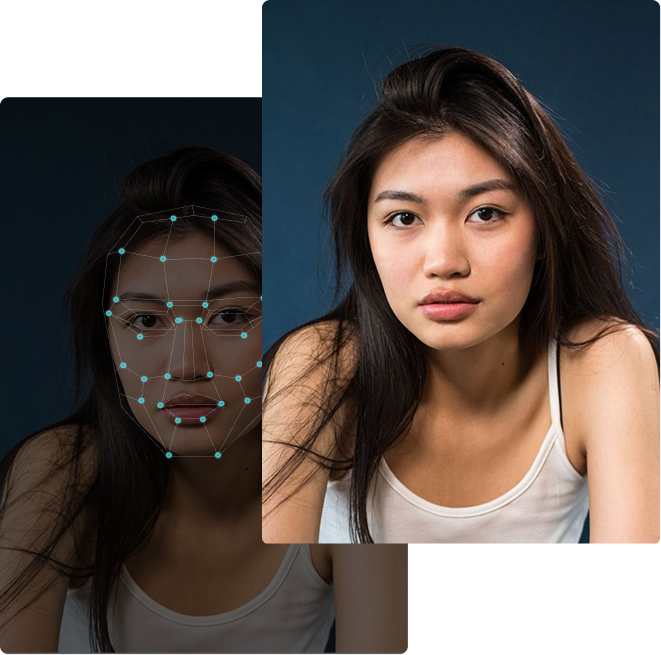

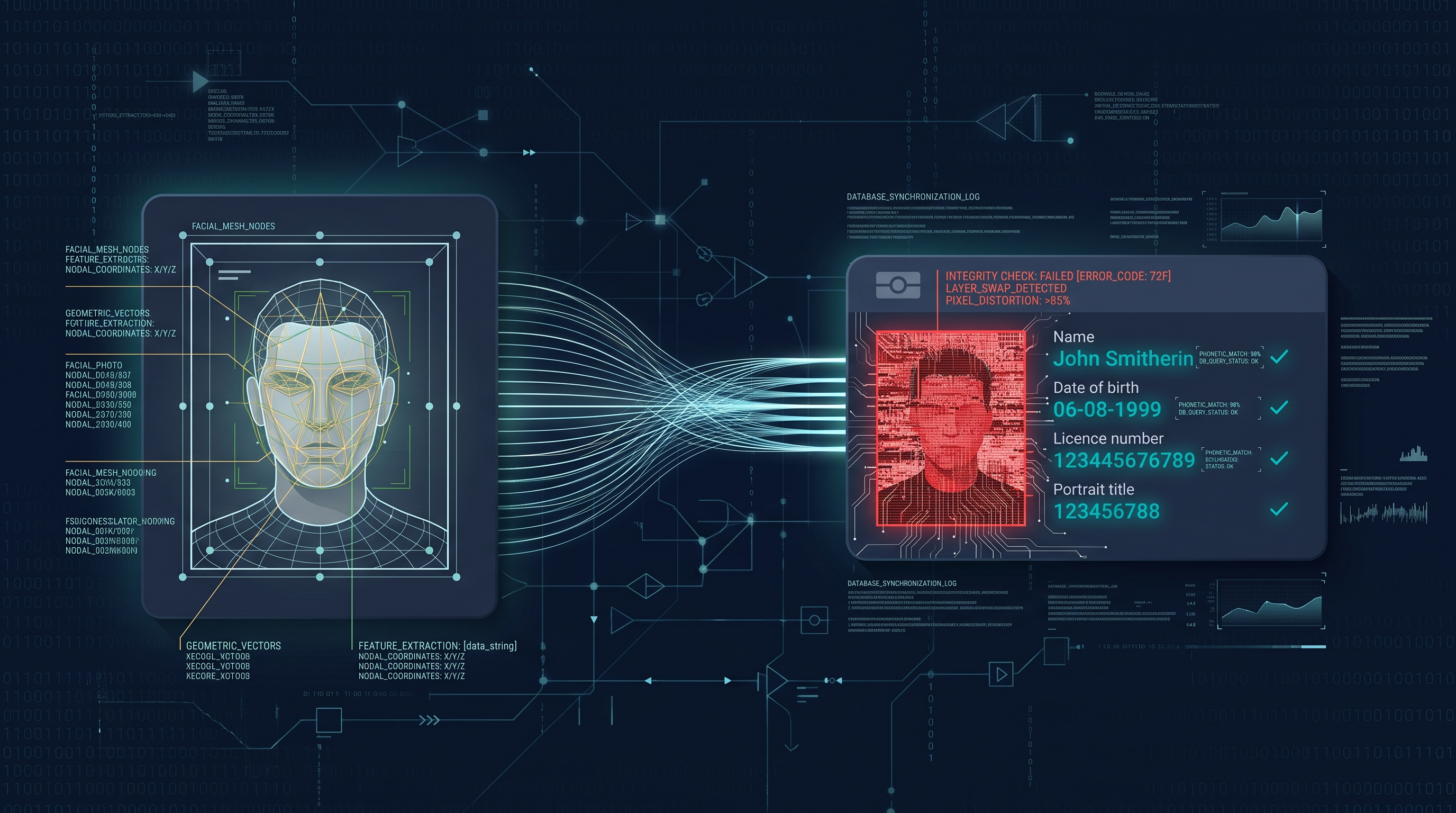


In August 2026 a suspected North Korean operative was hired into a sales and marketing role and went undetected for thirteen days. The identity documents that got them through the door carried a real person's full name, real date of birth and real driver's licence jurisdiction, and the identification numbers passed validation checks. Nothing in the personal data was invented. The security firm Huntress, which investigated the case, traced those details to a specific individual — and found their police mugshot, posted online by law enforcement after an arrest. The face in that mugshot was not the face on the submitted ID.
The entire forgery was one photograph and one signature. Everything a database could check was authentic, which is precisely why every check that queried a database came back clean. This is the shape of identity fraud that data validation cannot see, and it is now arriving through the hiring pipeline rather than the customer one.
- Thirteen days passed between onboarding and identification — and the flag came from post-hire investigation, not from the verification step.
- The PII was genuine. Huntress found the submitted details matched a real person whose mugshot had been published online by law enforcement after their arrest.
- Only the image layer was forged. Huntress states the document picture was “altered to resemble the likeness of the fraudulent employee” and the signature “appeared to have been digitally overlaid”.
- Validation checks passed, correctly: an identity that exists cannot be flagged as non-existent.
- Five suspected workers were investigated by Huntress across 2026, including three inside an Australian healthcare organisation in February.
- $2.84M+ in tracked remittances over three months sits behind this labour model, per DTEX — with an exposed payment server holding 390 worker accounts.
- 64 US companies were infiltrated in the scheme charged by the US Department of Justice in January 2025, which included conspiracy to transfer false identification documents.
The numbers in this case, and where each one comes from
Every figure above was read from the source named beside it. The $2.84M is DTEX's own total for tracked remittances; press coverage citing $1.97M refers to a documented subset of that window, and DTEX does not itself attribute a specific sum to any single sanctioned entity.
Almost every control in a hiring identity check is built to answer one question: does this person exist, and are they who the document says they are? The case Huntress published in late August 2026 is worth studying because the honest answer to the first half of that question was yes. A real person did exist. Their name, date of birth and licence jurisdiction were accurate. The identification numbers validated. The fraud lived entirely in the part of the document that no database lookup examines — the photograph.
That inversion is the reason this incident matters more than its headline. It is not a story about a fake identity defeating a verification system. It is a story about a genuine identity being fitted with a different face, and every existence-checking control in the pipeline returning green because it was asked the wrong question.
What actually happened, and when?
A suspected DPRK operative was hired into a sales and marketing role in August 2026 and flagged thirteen days later. The identity documents carried a real person's name, date of birth and driver's licence jurisdiction, taken from a police mugshot published online after that person's arrest. The portrait had been digitally altered and the signature digitally overlaid.
Huntress published its findings in “Insights into Suspected DPRK Workers”, covering five suspected workers it investigated during 2026. Help Net Security carried the research on 28 August and The Hacker News followed on 31 August, both framing the significant development as sector expansion: operators who had previously concentrated on software engineering roles now appearing in sales, marketing and medical positions.
The February 2026 case involved three suspected workers posing as Chinese nationals inside an Australian healthcare organisation. The August case is the one with the document forensics, and it is the one this analysis is built on.
According to Help Net Security's account of the investigation, analysts located “a police mugshot of a person whose name, date of birth, and location matched the information in the identity documents. The person in the mugshot did not match the photo on the submitted ID.” The same report notes the identification numbers passed validation, “suggesting the documents contained information belonging to an existing person and had been digitally altered.”
Huntress's own description of the document artefacts is more specific. The picture on the identity documents was “altered to resemble the likeness of the fraudulent employee”, and the signature appearing on both documents retrieved “appeared to have been digitally overlaid”. The details shared with the employer — full name including middle name, date of birth, and the location of the driver's licence, which was also the arrest location — belonged to someone whose booking photograph was already in the public domain.
Table 1: Timeline of the Huntress DPRK worker investigations and the surrounding financial research.
Who is named in this case, and how do you verify each one?
Nine named entities carry the factual weight of this story, and each one resolves to a record you can check independently. A vendor's primary research, a Department of Justice release, a sanctions listing with a reference identifier. The table below gives the canonical record for each, including the alias set for the one entity whose name is spelled inconsistently across reporting.
Named-incident reporting fails in a specific way: an entity is mentioned, the mention is repeated downstream, and by the third retelling nobody can say which record the name refers to. That is worse than useless when the entity is a sanctioned defence conglomerate whose name has five spellings in circulation. So before the analysis, here is the resolution table — what each named party is, and the record that establishes it.
Table 2: Entity resolution table. Every named party in this article, with the third-party record that identifies it.
One entry in that table is doing more work than the others. Korea Ryonbong General Corporation appears in reporting on this story as both “Ryonbong” and “Ryongbong”. Both refer to the same sanctioned entity; the alias record confirms “Ryongbong” as a recognised spelling variant. If you cite this story, cite the reference identifier rather than the spelling.
How does a forged-photo ID bypass hiring identity verification?
By keeping the data authentic and forging only the image. A document built on a real person's name, date of birth and licence jurisdiction will validate against every database that checks whether those details are consistent and belong to someone. The substituted portrait and the overlaid signature are not data at all, so no data check is looking at them.
Set aside the geopolitics for a moment and look at this as a pipeline problem. A hiring identity check typically runs some combination of four things: a data validation pass on the submitted credentials, a background check against public and commercial records, one or more video interviews, and — sometimes — an examination of the document image itself. It is a thinner version of a customer onboarding flow, and it inherits the same weaknesses we have documented in remote video KYC flows.
The first two are database questions. They ask whether the identity exists, whether the numbers are internally consistent, whether there is adverse history attached. Feed them a real person's real details and they will answer accurately and favourably, because the identity is real and, in this instance, the record was clean enough to hire on. The controls did not malfunction. They answered the question they were built to answer.
The third, the interview, is the only stage where a human sees a face. Whether it catches anything depends on whether that human ever compares the live face to the document portrait with any rigour, and on whether the portrait is a good enough likeness of the person on the call. In this case the portrait had been altered specifically to resemble the operator, which removes the mismatch a diligent interviewer might otherwise notice.
The fourth is the only control positioned to see the actual forgery, and it is the one most commonly absent from a hiring workflow. Document image forensics asks a different class of question: not whose details are these but has this image been assembled. Compression inconsistency across the portrait region. Resampling traces where a face has been pasted into a template. A signature layer whose edge characteristics do not match the surrounding print — which is what “digitally overlaid” describes.
Where the identity came from, and which layer the forgery lived in
Reconstructed from Huntress's published forensics on a suspected DPRK worker flagged 13 days after onboarding, and from the Multilateral Sanctions Monitoring Team findings cited by DTEX on how identity material reaches these operators.
Huntress traced the details on the submitted documents to a real person whose mugshot had been posted online by law enforcement following their arrest. A booking photo is an unusually complete identity artefact: a verified face, a full legal name, a date of birth and an arrest jurisdiction, all in one indexed image.
The Multilateral Sanctions Monitoring Team report cited by DTEX records that Pakistan-based forgers provided fraudulent passports and identity material to DPRK IT workers, and that Ukrainian brokers sold verified accounts, laptops, residential IP access and identity packages tailored to their needs.
Huntress states the picture on the identity documents was “altered to resemble the likeness of the fraudulent employee”, and that the signature on both documents retrieved “appeared to have been digitally overlaid”. Everything a database can check was genuine. Everything that was forged was pixels.
Per Help Net Security's account of the same investigation, the identification numbers passed validation checks, “suggesting the documents contained information belonging to an existing person and had been digitally altered”. A control that asks does this identity exist cannot fail here. The only disqualifying signal was that the face in the mugshot did not match the face on the ID.
The operator was hired into a sales and marketing role and was identified 13 days after onboarding — not by the verification step, but by post-hire investigation. Across its 2026 caseload Huntress also documented remote-access and location-masking tooling on employer-issued devices: a PiKVM V4 Mini, a Guermok USB3 capture device, a GL.iNet travel router, Astrill VPN and IPRoyal proxy.
Sources: Huntress, “Insights into Suspected DPRK Workers”; Help Net Security, 28 August 2026; DTEX, “From Payroll to Pyongyang”, 21 July 2026. No claim is made here that DuckDuckGoose examined these documents; the forensic findings quoted are Huntress's own.
Read against that chain, the thirteen days are not a detection delay. They are the interval between a verification pipeline saying yes and an unrelated investigative process saying no. Nothing in the pipeline was ever going to reverse its own verdict, because from its point of view the verdict was correct.
Why did the validation checks return clean?
Because they were right. The submitted identity belonged to an existing person, so a check asking whether it belonged to an existing person returned true. Treating that as a control failure misreads it: the control succeeded at its task, and the task was insufficient.
This is the part worth sitting with, because it changes what an organisation should do next. If a control fails, you tune it. If a control succeeds at a task that does not cover the attack, tuning it does nothing and the instinct to tighten it wastes budget.
Stolen-identity fraud has a long history and the defensive answer has usually been more and better data: cross-reference more sources, check more attributes, score more signals. That answer works when the attacker's weakness is that their data is fabricated or inconsistent — the failure mode behind most synthetic identity fraud. Here the attacker's data was neither. It was harvested whole from a real record, and the fabrication was moved into a medium that data checking does not read.
The structural consequence: authentic personal data is not an artefact. There is nothing in a correct name to detect. So the whole detection burden shifts onto the two components that were manufactured — the portrait and the signature — and onto the telemetry surrounding how the person actually works once hired.
Which controls could have caught this, and which could not?
Only two of the four could. Document image forensics is positioned to see the substituted portrait and the overlaid signature. Endpoint and network telemetry is positioned to see the location masking and the hardware relay. The genuine PII at the centre of the fraud is invisible to all four, forensics included, because it was never falsified.
The matrix below maps five elements of the attack against the four controls a hiring pipeline plausibly runs. It is our reading of the controls implied by Huntress's published findings, not a statement about any specific employer's stack.
Four controls, five attack elements, and one row nothing catches
Read the top row first. The genuine name, date of birth and licence jurisdiction are invisible to every control in a standard hiring pipeline — including document forensics — because none of that data was falsified. The forgery is confined to rows two and three, and those are visible to exactly one column.
Coverage assessment is DuckDuckGoose's reading of the controls implied by Huntress's published findings, not a statement about any specific employer's stack. Row 1 is the structural point: authentic personal data is not an artefact, so no forensic method can flag it — which is why the portrait and signature layers carry the entire detection burden.
The top row is the finding. Every column misses it, and every column is right to. That row is why the attack worked, and it is also why the two rows below it carry disproportionate weight: with the data layer conceded, the portrait and the signature are the only places the fraud is detectable at the verification gate.
The bottom two rows point somewhere else entirely. Huntress documented location-masking and remote-access tooling across its 2026 caseload: a PiKVM V4 Mini, a Guermok USB3 video capture device, a GL.iNet travel router, a USB-to-UART serial adapter, Astrill VPN, IPRoyal proxy, and WorkTitans B.V. bulletproof hosting, alongside Toffeeshare for encrypted file sharing, VDO Ninja for screen capture and streaming, Codeshare, Chrome recording extensions and online microphone and webcam testing sites. None of that is visible at the hiring gate. All of it is visible on a managed endpoint afterwards.
Which yields an uncomfortable but useful conclusion: for this attack class, the strongest detection surface is post-hire, not pre-hire. That does not excuse a weak verification gate. It means an organisation relying solely on the gate has one chance to catch something that leaves evidence every working day thereafter — the same asymmetry we have described in why identity fraud surfaces after onboarding rather than during it.
Table 3: What each control in a hiring pipeline is positioned to detect, and what falls outside it.
Where does the reporting disagree, and what should you not repeat?
Four points — and on the last two, the careful reading is narrower than the widely repeated one. The employer's sector, the case count, the dollar figure attributed to a sanctioned entity, and whether generative AI is attested in this specific case.
1. The employer's sector. The Hacker News frames the August case around a sales and marketing hire. Help Net Security describes the employer as a financial services firm. These are compatible — a sales role at a financial services company — but the two write-ups emphasise different halves, and neither names the employer. Do not assert the sector as settled.
2. The case count. Huntress's research covers five suspected workers. Because three of them were in a single February engagement, the same body of work is described as three investigations in some coverage and five workers in others. Both are accurate descriptions of different units of counting.
3. The $1.97M figure. CyberScoop reports $1.97 million in payments flowing through Korea Ryonbong General Corp between December 2025 and February 2026. DTEX's own payment breakdown gives $2.84M+ in tracked remittances for that window, describes $1.97M as a documented subset, and does not assign a specific amount to any single organisation. What DTEX actually states is an assessment: that chat references to an “RB wallet” are likely references to the sanctioned entity. The safe citation is $2.84M+ tracked remittances, with the Ryonbong attribution flagged as an assessment.
4. Whether this was a deepfake. This is the one most likely to be repeated wrongly, and it matters. Huntress does not attest video deepfakes, real-time face-swap filters or voice cloning in the August case. What is attested is document image manipulation: a substituted portrait and an overlaid signature. Separately, The Hacker News reports that a persona cluster tracked by Recorded Future's Insikt Group used AI-generated profile photos and personas described as synthetically generated, and that interview responses in some cases came from screen-recording software used alongside AI transcription and chatbot tools. Those are real findings about the wider campaign. They are not findings about this document. Keep them apart.
Table 4: Claims from this story that are being repeated more confidently than the sources support.
What does a published police mugshot give an attacker?
A complete, pre-verified identity package in a single indexed image. A confirmed face, a full legal name, a date of birth and a jurisdiction, assembled by an authority and indexed for retrieval. It is the highest-quality identity artefact freely available, and it is published by the institutions least likely to be suspected of supplying it.
Here is the observation that we think is the actual story, and it is not in any of the coverage.
Identity fraud is usually constrained by assembly. An attacker can buy a name here, a date of birth there, a document template somewhere else, and the work is in making the pieces agree. A booking photograph collapses that work. It arrives as a single artefact that already contains a verified face, a full legal name including middle name, a date of birth, and an arrest location that in this case doubled as the driver's licence jurisdiction. Every field is internally consistent because an institution assembled it.
It is also, by design, published. Mugshot publication exists for reasons that have nothing to do with identity security — open-records principles, public accountability for arrests, local press convention — and those reasons are not obviously wrong. But the security consequence is that the single richest identity artefact in circulation is distributed by authorities, indexed by search engines, and republished by aggregators, in a form that pairs a face to a name to a date of birth to a jurisdiction.
Note the direction the substitution runs. The attacker did not put the real person's face on their own name. They put their own likeness onto the real person's record — Huntress's phrasing is that the picture was altered to resemble the likeness of the fraudulent employee. The data is the asset. The face is the disposable part. That is the opposite of how impersonation fraud is normally modelled, where the face is the payload and the name is incidental.
The second-order point follows from that. If the face is disposable, then the quality bar for the manipulation is low. This attack did not need a convincing deepfake of a specific individual, which is hard. It needed a portrait on a document that looks like the person who will show up to the interview, which is easy. We have written elsewhere about how deepfakes bypass KYC by defeating a liveness check; this is the cheaper cousin of that attack, and it does not require generative models at all. It also sits beside the pattern in deepfake hiring fraud at a bank, where the target was the recruitment funnel rather than the customer one.
There is a supply chain above it, too. DTEX cites the Multilateral Sanctions Monitoring Team for the finding that Pakistan-based forgers provided fraudulent passports and identity material to DPRK IT workers, and that Ukrainian brokers sold verified accounts, laptops, residential IP access and identity packages tailored to their needs. Raw PII from public records at one end, a working employment identity at the other, and a brokered market in between — the same division of labour we mapped in the synthetic fraud supply chain, and a close relative of how synthetic identities are assembled.
Where does the money go, and why does that raise the stakes for the employer?
For an employer, this converts a hiring mistake into potential sanctions exposure. DTEX tracked $2.84M+ in remittances over three months from an exposed payment server holding 390 worker accounts, and assesses that funds pooled through structures likely linked to a sanctioned DPRK defence entity.
DTEX's “From Payroll to Pyongyang” analysed an exposed internal DPRK payment site containing 390 accounts, chat logs, cryptocurrency transaction data and self-identifications. Individual reported transfers in the published examples range widely — roughly $821 at the low end, about $63,000 and about $129,000 in the middle. Three much larger entries (rcm at $614k, sam at $306k, chorse at $271k) almost certainly represent team financial collectors remitting for multiple workers rather than individual earnings, and DTEX is explicit that the number of workers behind each slice is unknown and likely exceeds the named operator count.
CyberScoop reported the same research with the geopolitical conclusion attached: revenue from the IT worker stream “can feed a larger DPRK system that supports sanctioned entities, domestic state needs, and a Russia war effort”. The sanctioned entities named in that reporting are Sobaeksu, Saenal, Songkwang and Korea Ryonbong General Corporation — the last of which is, per its sanctions record, a defence conglomerate specialising in acquisition for DPRK defence industries.
This is the part that should change how a hiring manager weighs the risk. A fraudulent hire is normally an HR problem with a cost attached. A fraudulent hire whose salary is remitted through structures assessed as linked to a sanctioned defence entity is a sanctions and compliance problem, and the employer is the one making the payments.
The legal precedent already exists. The US Department of Justice's 23 January 2025 indictment charged five defendants — DPRK nationals Jin Sung-Il and Pak Jin-Song, alongside Pedro Ernesto Alonso De Los Reyes, Erick Ntekereze Prince and Emanuel Ashtor — over a scheme that obtained work from at least sixty-four US companies. Payments from ten of them generated at least $866,255 in revenue, most of it then laundered through a Chinese bank account. The charges include conspiracy to cause damage to a protected computer, conspiracy to commit wire and mail fraud, conspiracy to commit money laundering, and — the one that speaks directly to this case — conspiracy to transfer false identification documents. Jin and Pak were additionally charged under the International Emergency Economic Powers Act. The indictment describes the use of “forged and stolen identity documents, including U.S. passports containing the stolen personally identifiable information of a U.S. person”.
That phrase — forged documents containing the stolen PII of a real person — is the same pattern Huntress documented nineteen months later. The method has not changed. What has changed is the range of roles it is being pointed at.
What should employers change at the hiring gate?
Five changes, starting with the only control positioned to see what was actually forged. Add an image-forensics step on submitted identity documents; stop treating a passed validation check as identity assurance; compare the live interview face to the document portrait as an explicit, recorded step; instrument the first thirty days on the endpoint as a second detection window; and treat internally perfect details as a question rather than as reassurance.
Five changes, in rough order of how much they buy per unit of effort.
1. Examine the document image, not just the document data. This is the only control positioned to see what was actually forged here. It asks whether the portrait region has been resampled or recompressed relative to the rest of the document, whether a signature sits as a separate layer, whether template geometry has been disturbed. If your pipeline validates numbers and never inspects pixels, this attack is invisible to it by construction.
2. Stop reading “validation passed” as “identity confirmed”. They are different claims. The first says the details belong to someone. The second says they belong to the applicant. Nothing in this case distinguished the two, and the language used in most verification tooling actively encourages the conflation.
3. Make the face comparison an explicit, recorded step. In many hiring processes the only person who sees both the document photograph and the live candidate is an interviewer with no instruction to compare them and no record of having done so. Even a weak comparison beats none — and in this case the manipulation existed precisely to survive that comparison, which tells you the attacker considered it a real risk.
4. Treat the first thirty days as a detection window. Thirteen days is how long this operator lasted, and the flag came from investigation rather than verification. Location consistency, evidence of hardware KVM devices on a managed laptop, remote-access and streaming tooling, and impossible-travel patterns are all observable post-onboarding and were all present somewhere in the Huntress caseload.
5. Assume public-record identity sourcing. If an applicant's details are internally perfect, that is not by itself reassurance. A record assembled by an institution and published will be internally perfect. Consistency is evidence about the record's origin, not about the person presenting it.
For teams building the verification side of this, the adjacent reading is how injection attacks feed manipulated media into verification — a submitted document with an edited portrait is an injection-class problem, not a presentation-class one, and the controls for the two differ. On placement, see where document and media forensics belong in an identity stack.
Frequently asked questions
Was this a deepfake?
Not in the sense usually meant. Huntress attests document image manipulation — a portrait altered to resemble the fraudulent employee and a digitally overlaid signature. It does not attest video deepfakes, real-time face-swap filters or voice cloning in this case. AI-generated profile photos and AI interview assistance are reported elsewhere in the wider DPRK campaign by other researchers, but those are separate findings about different operations.
How did the identity documents pass validation if they were forged?
Because the data on them was real. The name, date of birth and driver's licence jurisdiction belonged to an existing person, and the identification numbers were consistent. Validation checks confirm that an identity exists and that its attributes agree; they do not examine whether the photograph on the document belongs to the applicant.
Where did the attacker get the identity details?
Huntress traced them to a person whose police mugshot had been posted online by law enforcement after their arrest. The published record supplied a verified face, a full legal name, a date of birth and the arrest location, which was also the licence jurisdiction.
How long did the operator go undetected?
Thirteen days from onboarding to identification. The flag came from post-hire investigation rather than from the verification step, which had already returned clean.
Which control would have caught this?
Document image forensics is the only pre-hire control positioned to see the substituted portrait and the overlaid signature. Endpoint and network telemetry would have surfaced the location masking and hardware relay tooling, but only after onboarding.
Is the employer exposed beyond the cost of a bad hire?
Potentially. DTEX assesses that remittances from this labour model pool through structures likely linked to Korea Ryonbong General Corporation, a sanctioned DPRK defence entity. That makes salary payments a compliance question, not only an HR one. The US Department of Justice has already prosecuted facilitators of such schemes.
Is this only a problem for technology employers?
No, and that is the reported development. Huntress documented suspected workers in an Australian healthcare organisation and in a sales and marketing role, and The Hacker News reports the FBI investigating how a DPRK worker gained employment at an unnamed US federal agency.
Methodology and limits of this analysis
Eight sources were opened and read in full. No figure, name or date in this article is asserted from a search summary or a secondary retelling. Two relevant sources could not be retrieved and are therefore not cited, and the coverage assessment in the matrix is our own reading rather than a measurement.
What this article is built on: Huntress's own published forensics; Help Net Security's and The Hacker News's independent write-ups of it; the US Department of Justice's January 2025 indictment release; DTEX's money-trail research and its published payment breakdown; CyberScoop's reporting of that research; and the OpenSanctions record for Korea Ryonbong General Corporation. Each was retrieved and read during preparation.
What it is not built on. DuckDuckGoose has not examined the identity documents in this case and makes no claim to have analysed any media connected to it; every forensic observation quoted is Huntress's. Reporting from Dark Reading and UPI on DPRK operatives using AI face filters during video interviews is directly relevant, but both returned HTTP 403 on retrieval, so that vector is excluded here rather than cited unread. Sentencing figures for earlier prosecutions circulating in trade coverage are likewise omitted, because the underlying Department of Justice releases were not retrieved — only the January 2025 indictment was read directly.
The control-coverage matrix is an assessment, not a measurement. It reflects what each class of control is structurally positioned to observe, given the artefacts Huntress describes. It is not a statement about the employer's actual stack, which no source identifies, and it should not be read as a vendor comparison.
Sources
Every source below was opened and read for this article. Where a figure is contested, the disagreement is set out in the section above rather than resolved silently.
- Huntress, “Insights into Suspected DPRK Workers” — primary forensic research; the document, artefact and case details.
- Help Net Security, “North Korean remote workers are broadening their job hunt beyond IT”, 28 August 2026 — the mugshot match and the validation-check detail.
- The Hacker News, “North Korean Job Fraud Expands Beyond IT Into Healthcare and Sales”, 31 August 2026 — sector expansion, the FBI federal-agency investigation, and the wider researcher and prosecution context.
- US Department of Justice, indictment of two DPRK nationals and three facilitators, 23 January 2025 — defendants, charges, 64 US companies, $866,255.
- DTEX, “From Payroll to Pyongyang: The DPRK IT Worker Money Trail”, 21 July 2026 — the exposed payment server, 390 accounts, and the Multilateral Sanctions Monitoring Team findings on the identity supply chain.
- DTEX, DPRK IT worker revenue payment breakdown — $2.84M+ tracked remittances and the per-operator figures.
- CyberScoop, “North Korea’s IT worker scheme funds Russia’s war effort”, 21 July 2026 — the $1.97M reporting and the named sanctioned entities.
- OpenSanctions, Korea Ryonbong General Corporation — canonical entity record, alias set and sanctions reference identifiers.
Last update: Q3 2026.

About the author