














.webp)


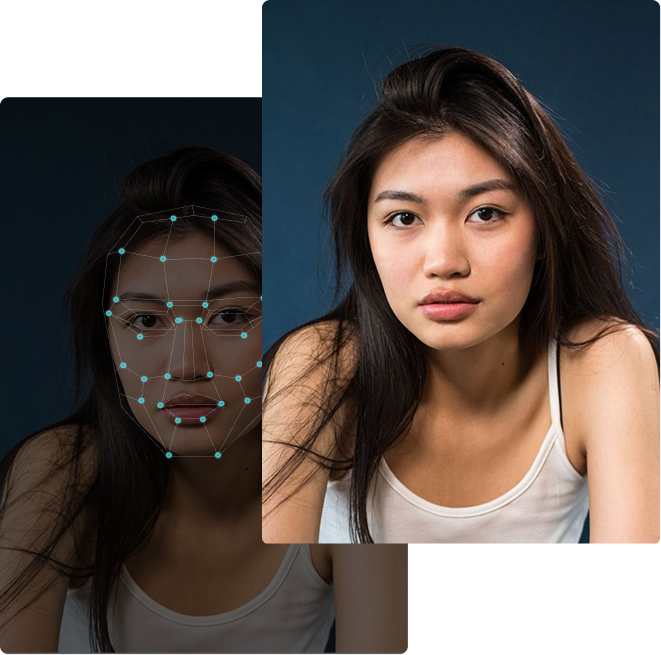
Fraudsters no longer need a stolen passport and a cooperative money mule to open a bank account. They need a laptop, an AI face-swap tool that costs less than a streaming subscription, and about thirty minutes. That combination is now enough to defeat the identity verification checks that most banks, crypto exchanges, and fintechs rely on at onboarding.
This guide explains, in practical terms, how deepfakes bypass KYC: the attack vectors fraudsters use, why traditional liveness checks fail against them, and what detection actually works in 2026. It is written for the security leads, compliance officers, and product managers who own identity verification pipelines and need to understand the threat at a technical level, not just the headlines.
The stakes are measurable. Deloitte's Center for Financial Services projects that generative AI could push US fraud losses from $12.3 billion in 2023 to $40 billion by 2027, a compound annual growth rate of about 32%. A growing share of those losses begins at the account-opening stage, where a deepfake slips past verification and the audit trail records a clean pass.
- Fraudsters can pass KYC with an AI-generated face that costs under $20 and about 30 minutes to create.
- Injection attacks, which feed synthetic video straight into the verification pipeline, overtook presentation attacks as the leading vector in 2024.
- Native virtual camera attacks grew 2,665% year over year, according to iProov.
- iOS injection attacks rose 741% across 2025.
- Basic liveness checks no longer prove a human is present; face-swap tools blink, turn, and smile on command.
- Only 0.1% of people can reliably distinguish real media from deepfakes.
- Deloitte projects US GenAI fraud losses will reach $40 billion by 2027.
- Effective defense validates the capture source and reads passive signals like depth and blood flow, not just prompted movement.
What Is a Deepfake KYC Attack?
A deepfake KYC attack is any attempt to pass a Know Your Customer identity check using AI-generated or AI-manipulated media in place of a genuine person or document. KYC is the regulatory process financial institutions use to confirm that a new customer is real, is who they claim to be, and is eligible to hold an account. Remote onboarding typically combines three checks: a government-issued document, a selfie or short video matched against that document, and a liveness test confirming a live human is present. A deepfake attack targets one or more of those checks with synthetic content.
The technique matters because it removes the two things that used to limit identity fraud at scale: a real accomplice and a genuine stolen document. With generative models, an attacker can fabricate a photorealistic face that belongs to no one, place it on a forged identity document, and animate it to satisfy a liveness prompt, all without a human ever sitting in front of the camera. The Financial Action Task Force named deepfakes a direct threat to anti-money-laundering and customer due diligence controls in its December 2025 Horizon Scan, and the US Financial Crimes Enforcement Network issued a dedicated alert on deepfake fraud schemes (FIN-2024-Alert004) after seeing a spike in related suspicious activity reports.
For a deeper look at how detection systems separate real faces from synthetic ones, see our guide to deepfake detection accuracy rates.
How a Deepfake KYC Bypass Works
Most deepfake KYC bypasses follow the same underlying sequence, regardless of which tool the attacker uses. Understanding the sequence is the fastest way to see where the defenses need to sit.
- Build a synthetic identity. The attacker generates a face that does not exist using a model such as StyleGAN, or pulls one from a site like thispersondoesnotexist.com. Creating a convincing AI face is now a commodity operation.
- Forge the document. That face is placed onto a template of a real identity document, complete with plausible security features, stamps, and fonts. Paired with stolen or fabricated personal data, it becomes a passable government ID.
- Defeat the selfie and liveness step. This is the pivotal stage. The attacker feeds a deepfake of the same face into the verification app so the selfie matches the forged document and the liveness check sees apparent signs of a live human.
- Complete onboarding and monetize. Once the account is verified, it becomes a vehicle for money laundering, mule activity, or other fraud. Because verification passed, the account carries a clean history.
The critical insight for defenders is that step three can be executed in two fundamentally different ways, and they call for different defenses. One approach shows fake content to the camera. The other bypasses the camera entirely.
The Attack Vectors Fraudsters Use
Synthetic Identity Documents
The foundation of most deepfake KYC fraud is a synthetic identity: a fabricated persona built from a mix of real and invented data, fronted by an AI-generated face. Onfido and Entrust's 2025 Identity Fraud Report found that digital document forgeries now account for 57% of all document fraud, overtaking physical forgeries. Because these documents are generated rather than physically altered, they carry none of the tell-tale tampering artifacts that older detection systems were tuned to catch.
Synthetic identities are also slow to surface. Industry estimates put the average time to detect a synthetic identity at roughly 18 months, which is long enough for a fraud ring to build transaction history, pass periodic reviews, and extract significant value before anyone notices.
Presentation Attacks
A presentation attack shows fake content to a genuine camera. In its simplest form this is a printed photo or a mask held up to the lens. The modern version is a screen replaying a deepfake video, or a real-time face-swap rendered on a phone pointed at the verification camera. Presentation attacks are the older category, and traditional Presentation Attack Detection was designed to catch them by looking for screen glare, flat depth, or missing micro-movements.
The problem is that face-swap tools now reproduce the exact signals liveness systems look for. Software such as DeepFaceLive can make a synthetic face blink, turn, and smile on cue, which means an active liveness prompt asking the user to blink or turn their head no longer proves a human is present. It proves only that something on screen followed the instruction.
Injection Attacks
An injection attack skips the camera altogether. Instead of showing something to a lens, the attacker feeds synthetic video directly into the verification pipeline as though it came from the device's camera. The most common method uses a virtual camera driver, software that presents itself to the app as a normal webcam while piping in a pre-recorded or live deepfake stream. More advanced variants hijack the video feed at the operating-system level.
Injection is the more dangerous category because it defeats the entire premise of a camera-based check. There is no glare, no screen bezel, no physical artifact to detect, because no physical scene was ever captured. The World Economic Forum tested virtual-camera injection against live selfie KYC flows and found it bypasses a wide range of active liveness implementations.
The scale of this shift is documented. According to iProov's threat intelligence, native virtual camera attacks grew 2,665% year over year, and 2024 was the year injection attacks definitively overtook presentation attacks as the primary vector. The trend accelerated into late 2025: iProov's 2026 report recorded a 1,151% surge in injection attacks targeting iOS in the second half of 2025 alone, contributing to a 741% annual rise. For a fuller breakdown of the distinction, see our comparison of presentation attacks versus injection attacks.
Crime-as-a-Service Kits
None of this requires the attacker to be a machine-learning engineer. Ready-made kits sell the entire capability as a service. The clearest documented example is ProKYC, a tool uncovered by Cato Networks researchers in October 2024 that generates both a forged government document (an Australian passport in the demonstration) and a matching deepfake selfie video engineered to pass facial recognition and liveness challenges. In the demo, the tool defeated the verification flow of a major crypto exchange. Kits like this turn a specialist attack into a point-and-click purchase, which is a large part of why volumes have grown so quickly. New account fraud, the category these kits feed, accounted for more than $5.3 billion in US losses in 2023.
DuckDuckGoose Datasets
Test your KYC stack against these attacks
Labelled deepfake identity documents, built the way the attacks above work: real document designs with AI-edited data, ready for your QA team to run against your own checks.
- AI-edited ID documents
- Fully generated IDs
- Labelled, with a manifest

Why Traditional KYC Checks Fail
The uncomfortable reality is that most identity verification stacks were designed for a world of physical forgery and human fraudsters. Three assumptions break under deepfake pressure.
First, liveness is treated as proof of humanity. Passive liveness confirms that a frame looks like a real face; active liveness confirms that the subject followed a prompt. Neither confirms the pixels originated from a real camera pointed at a real person. Once a synthetic face can blink and turn on command, both checks measure the wrong thing.
Second, checks are stitched together and not cross-validated. Many pipelines verify the document through one API and the face through another, without binding the two together. That gap between the checks is exactly where an injected deepfake lives: the document passes, the face passes, and nothing confirms they belong to the same real event.
Third, the audit trail lies. When a deepfake succeeds, the log shows a clean pass. The document checked out, the biometric matched, the liveness test cleared. If the fraud is discovered later, there is no signal in the record that verification was ever compromised, which is what makes these attacks so costly to unwind.
Human review does not close the gap. In a widely cited iProov study, 60% of people were confident in their ability to spot a deepfake, yet only 0.1% correctly identified every real and fake sample they were shown.
Common Mistakes IDV Teams Make
Treating active liveness as sufficient. Asking users to blink or turn is now trivially defeated by real-time face-swap tools. Liveness needs to verify capture integrity, not just apparent motion.
Ignoring the capture source. If the pipeline cannot tell whether frames came from a real camera or a virtual one, injection attacks pass invisibly. Capture-source validation is not optional against this threat.
Verifying document and face in isolation. Without biometric binding that ties the selfie to the document in a single session, the seam between checks becomes the attack surface.
Relying on a single frame. Single-image analysis gives an attacker one clean still to optimize. Analyzing many frames over time exposes the temporal inconsistencies that synthetic media still struggles to sustain.
Assuming detection is a one-time purchase. Attack tools iterate constantly. Kling AI, Nano Banana, and similar image-to-video generators lower the bar every quarter, so detection has to be maintained as an ongoing capability.
How to Detect and Stop Deepfake KYC Bypass
Effective defense in 2026 rests on a simple principle: verify that the media is real and was captured live, not just that it looks like a person. Four capabilities do the heavy lifting.
Validate the capture source. Confirm the video originated from a genuine device camera rather than a virtual driver or an injected stream. This is the single most important control against injection attacks, and standards bodies now certify it, for example through the CEN/TS 18099 specification for injection attack detection.
Analyze multiple frames over time. Real faces produce consistent micro-signals across frames; synthetic streams tend to drift. Temporal analysis catches inconsistencies a single-frame check would miss.
Read passive biometric signals. Physiological cues such as blood-flow-driven color changes in the skin (remote photoplethysmography) and true 3D depth are extremely hard for current generators to reproduce faithfully, and they do not depend on the user following a prompt an attacker can script.
Bind the document to the face in one session. Cross-validating the identity document and the live selfie within a single, unbroken capture closes the gap between checks that injection attacks exploit.
This is the layer where dedicated deepfake detection belongs inside the KYC pipeline rather than beside it. DuckDuckGoose's DeepDetector analyzes video and image streams for the artifacts and inconsistencies that betray synthetic media, and it is built to slot into an existing IDV flow so document, biometric, and deepfake checks reinforce one another instead of running blind to each other. Mordor Intelligence names DuckDuckGoose AI among the major companies in the fake image detection market, alongside firms like Microsoft and Canon.
For teams benchmarking vendors, our analysis of deepfake detection accuracy rates covers the lab-to-production gap that separates a demo from a defense.
Frequently Asked Questions
How do fraudsters bypass KYC with deepfakes?
Fraudsters generate a synthetic face, place it on a forged identity document, and then either show a deepfake video to the verification camera (a presentation attack) or feed synthetic video directly into the app through a virtual camera (an injection attack). The deepfake satisfies the selfie match and the liveness check, and the account is verified as though a real person completed onboarding.
What is the difference between a presentation attack and an injection attack?
A presentation attack shows fake content to a real camera, such as a screen replaying a deepfake. An injection attack bypasses the camera entirely and feeds synthetic video straight into the verification pipeline. Injection attacks are harder to detect because no physical scene is ever captured, and they overtook presentation attacks as the leading vector in 2024.
Can liveness detection stop deepfakes?
Basic liveness detection no longer stops modern deepfakes on its own. Face-swap tools can reproduce blinking, head turns, and micro-expressions on demand, so a prompt-based liveness check can be satisfied by synthetic media. Effective defense requires validating the capture source and reading passive signals like depth and blood flow, not just prompting for movement.
How much does it cost to create a deepfake that beats KYC?
Reporting in late 2025 put the cost of an AI-generated face capable of passing many verification systems at under $20, with roughly 30 minutes of setup. Crime-as-a-service kits such as ProKYC package the full capability, including forged documents and matching deepfake video, for a subscription-style fee.
How common are deepfake KYC attacks?
They have grown sharply. Deepfake attacks have risen more than 2,000% over three years and now account for roughly one in fifteen identity-fraud attempts, and iProov recorded a 741% annual increase in iOS injection attacks across 2025. Financial regulators including FinCEN and the FATF have issued formal warnings in response.
What are the warning signs of a deepfake during onboarding?
Red flags flagged by FinCEN include a customer using a third-party webcam plugin during a live check, a photo that is inconsistent with other customer information, submission of multiple different identity documents, device or geographic data that conflicts with the ID, and attempts to switch communication methods mid-verification.
Is deepfake KYC fraud a compliance problem or a security problem?
Both. A missed deepfake is a security failure, but it can also constitute a breach of AML and customer due diligence obligations, and regulators increasingly expect institutions to assess their verification controls specifically against AI-generated threats. FinCEN's alert also reminds institutions of their reporting duties under the Bank Secrecy Act.
Which industries are targeted most?
Crypto exchanges, neobanks, payment platforms, and any service relying on remote onboarding are primary targets, because verification happens entirely online. Crypto exchanges have been especially exposed, as documented in the ProKYC case, though the same techniques transfer directly to traditional banking.

About the author