
How Synthetic Media Is Reshaping Digital Trust: When Identity Becomes Generatable:

Overview
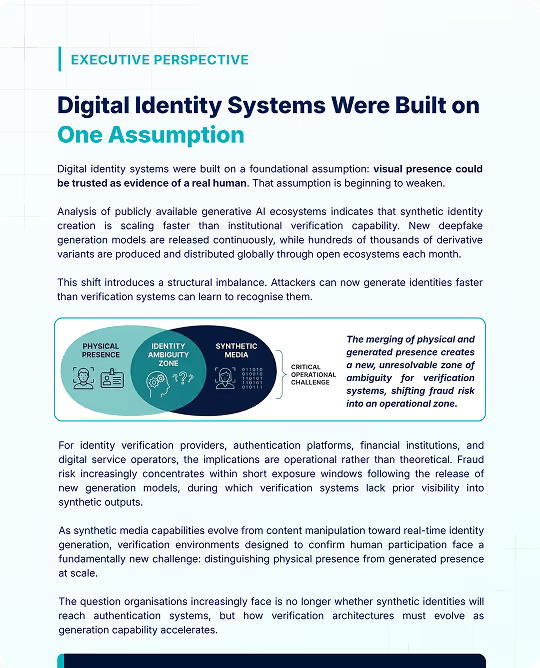
Generative AI is transforming how identities can be created, manipulated, and deployed across digital systems. When Identity Becomes Generatable explores how synthetic media technologies are enabling attackers to generate realistic human identities capable of passing digital verification processes at scale. Analysis of open AI ecosystems shows that new deepfake and image-to-video generators are being released continuously, while hundreds of thousands of derivative model variants are produced each month. This threat intelligence report examines how this rapid acceleration is creating structural gaps between identity generation and verification systems, with high-velocity digital economies such as Brazil already showing early operational signals of synthetic identity risk.
Why it matters

Why we made
this Report?

Digital identity systems were built on one assumption: seeing a person meant a real human was present. Generative AI is breaking that assumption. Synthetic identities can now be created and deployed at scale, forcing organizations to rethink how digital trust and identity verification work.

Key Takeaways

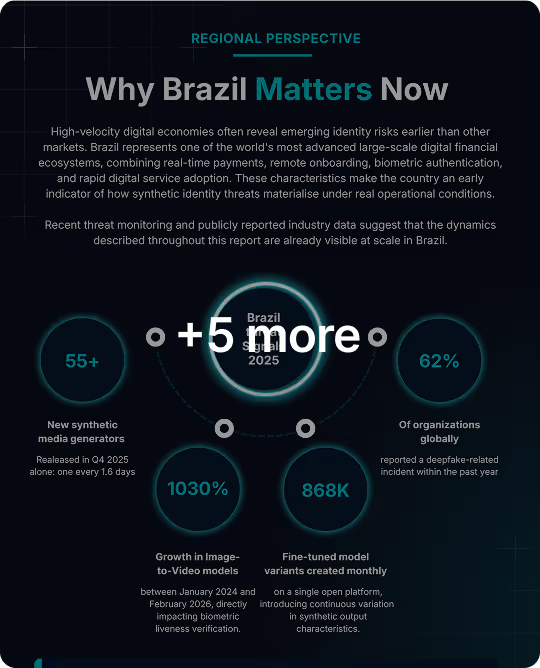
55+
New synthetic media generators released in Q4 2025
Equivalent to one new identity generation capability roughly every 1.6 days, rapidly expanding the tools available to fraud actors.
1030%
Growth in image-to-video models since 2024
Advances in AI animation models now allow attackers to transform a single stolen photo into realistic video capable of passing liveness checks.
868K
Synthetic model variants created monthly
Open AI ecosystems generate hundreds of thousands of fine-tuned model variants, introducing continuous changes that detection systems must adapt to.
R$10.1B+
Banking fraud losses in Brazil in 2024
High-velocity digital economies are already seeing the operational impact of synthetic identity risk across financial infrastructure.

Explore Key Findings

Synthetic identities are rapidly reshaping the foundations of digital trust. This report examines how generative AI is accelerating identity fraud, exposing structural gaps in verification systems, and forcing organizations to rethink how digital identity is authenticated at scale.

Synthetic identities can now be generated faster than systems can verify them

Image-to-video AI enables realistic live impersonation

Open AI ecosystems are producing hundreds of thousands of model variants

Brazil’s digital economy is an early signal of emerging identity risks

Verification systems face a growing structural detection gap

Authenticity verification is becoming critical digital infrastructure

The Future of Identity Is Being Generated

This threat intelligence report examines how generative AI is reshaping identity verification and digital trust. Discover how synthetic identities bypass traditional authentication, how attackers exploit verification gaps, and how organizations can adapt their systems to detect and defend against AI-generated identities at scale.
More Whitepapers to explore

Reports
Deepfakes have evolved from entertainment tools into precision fraud weapons. This white paper reveals how attackers exploit IDV gaps, and how leading organizations are closing them.
Reports
Adoption is global. Readiness is not. From the EU's deliberate approach to Latin America's urgency-driven innovation, regulatory trajectories differ dramatically while the threat remains universal.
Reports
Detection isn't about perfection, it's about measurable, consistent improvement. This study reveals how AI stays ahead of adversarial generation without sacrificing operational efficiency.