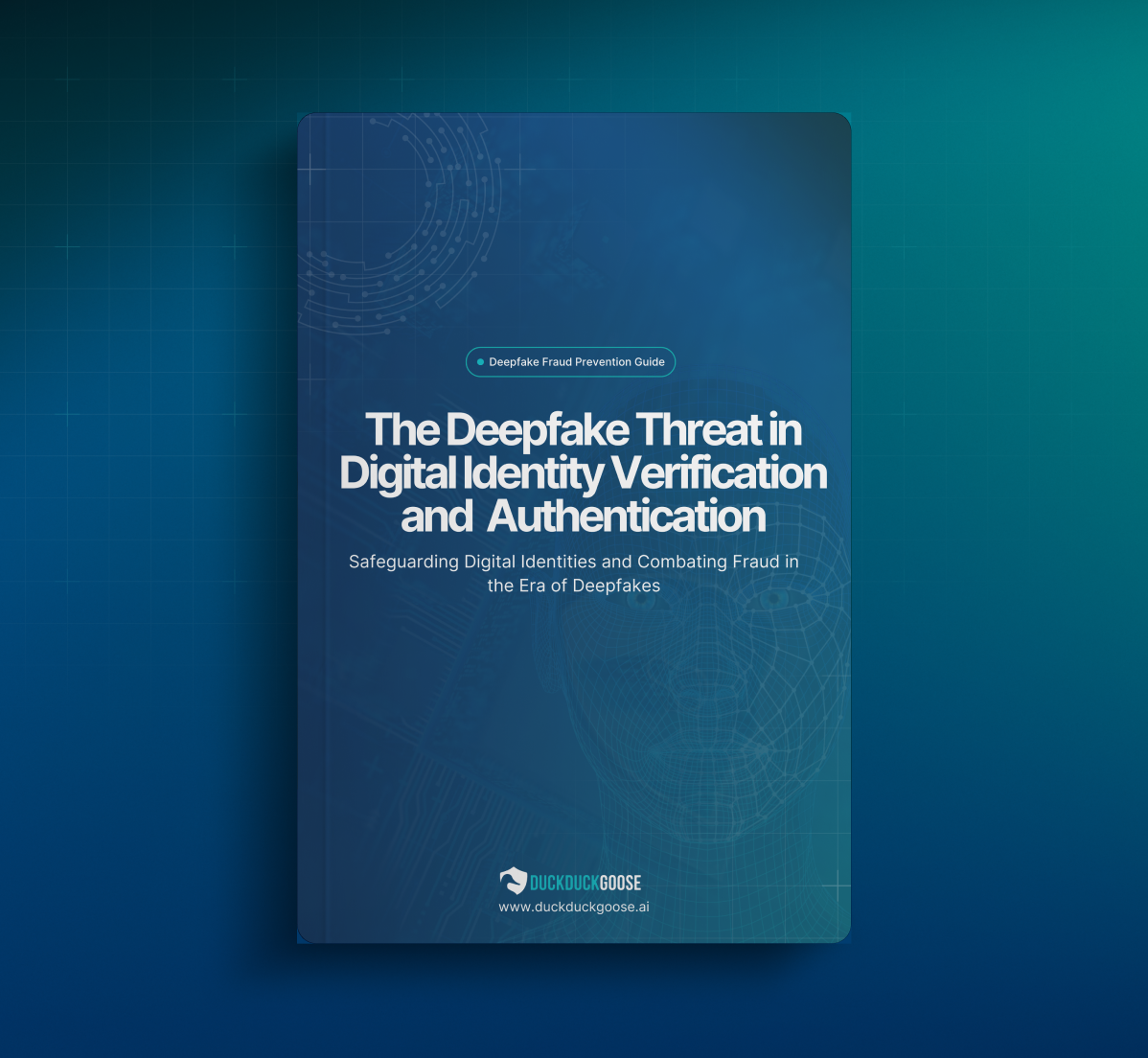

The Deepfake Threat in Digital Identity Verification and Authentication

Overview
Deepfake fraud is infiltrating identity verification at scale, nearly half of financial institutions have been hit, with losses averaging €450,000 per incident. This white paper exposes how AI-generated attacks bypass traditional liveness detection, reveals the escalating threat to biometric security, and provides a proven framework for detection. Discover how organizations are achieving 90%+ fraud reduction with explainable AI, backed by real-world case studies from banking and fintech.
Why it matters

Why we made this white paper?

As deepfake fraud surged 3,000% in 2023, traditional biometric systems became vulnerable overnight. Organizations need transparent, auditable solutions. This paper distills frontline intelligence from banking, fintech, and government systems, giving decision-makers the data required to restore trust in digital identity verification.

Key Takeaways

3000%
Surge in deepfake fraud incidents during 2023
Deepfake-driven identity fraud overwhelmed legacy detection systems relying on static liveness checks.
Upto 10%
Of onboarding attempts now involve deepfakes
Conventional systems verified deepfakes as legitimate, exposing
institutions to regulatory violations.
450,000
Average cost per deepfake incident for financial firms
Losses span operational disruption, compliance fines, reputational damage, and customer trust erosion.
40 bn.
In projected AI-enabled fraud losses by 2027
Deloitte forecasts deepfake fraud costs will increase threefold as attack sophistication accelerates.

Explore Key Findings

Deepfakes have evolved from entertainment tools into precision fraud weapons. This white paper reveals how attackers exploit identity verification gaps, and how leading organizations are closing them.

Synthetic identities bypass KYC using non-existent faces with stolen biometrics

Deepfake fraud increased tenfold between 2022–2023 globally

Legacy liveness detection fails against modern face swap attacks

Real-time generation enables live video impersonation during onboarding

Forensic-grade detection achieves 95–100% accuracy with zero disruption

Banks saved 3,000+ analyst hours annually while preventing €5M in losses

Every pixel counts

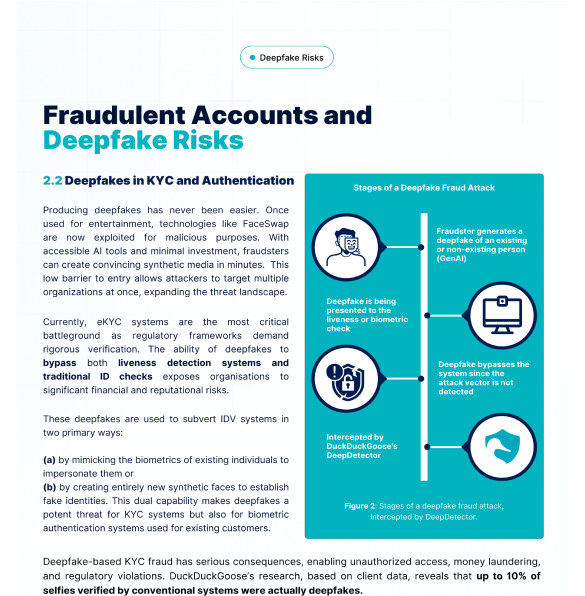
This white paper includes a banking case study demonstrating 90% fraud reduction, technical breakdowns of deepfake attack vectors, and DuckDuckGoose's explainable detection framework. Access forensic-level analysis, operational ROI benchmarks, and implementation strategies trusted by leading financial institutions

+5 more

More Whitepapers to explore

Reports
Deepfakes have evolved from entertainment tools into precision fraud weapons. This white paper reveals how attackers exploit IDV gaps, and how leading organizations are closing them.
Reports
Adoption is global. Readiness is not. From the EU's deliberate approach to Latin America's urgency-driven innovation, regulatory trajectories differ dramatically while the threat remains universal.
Reports
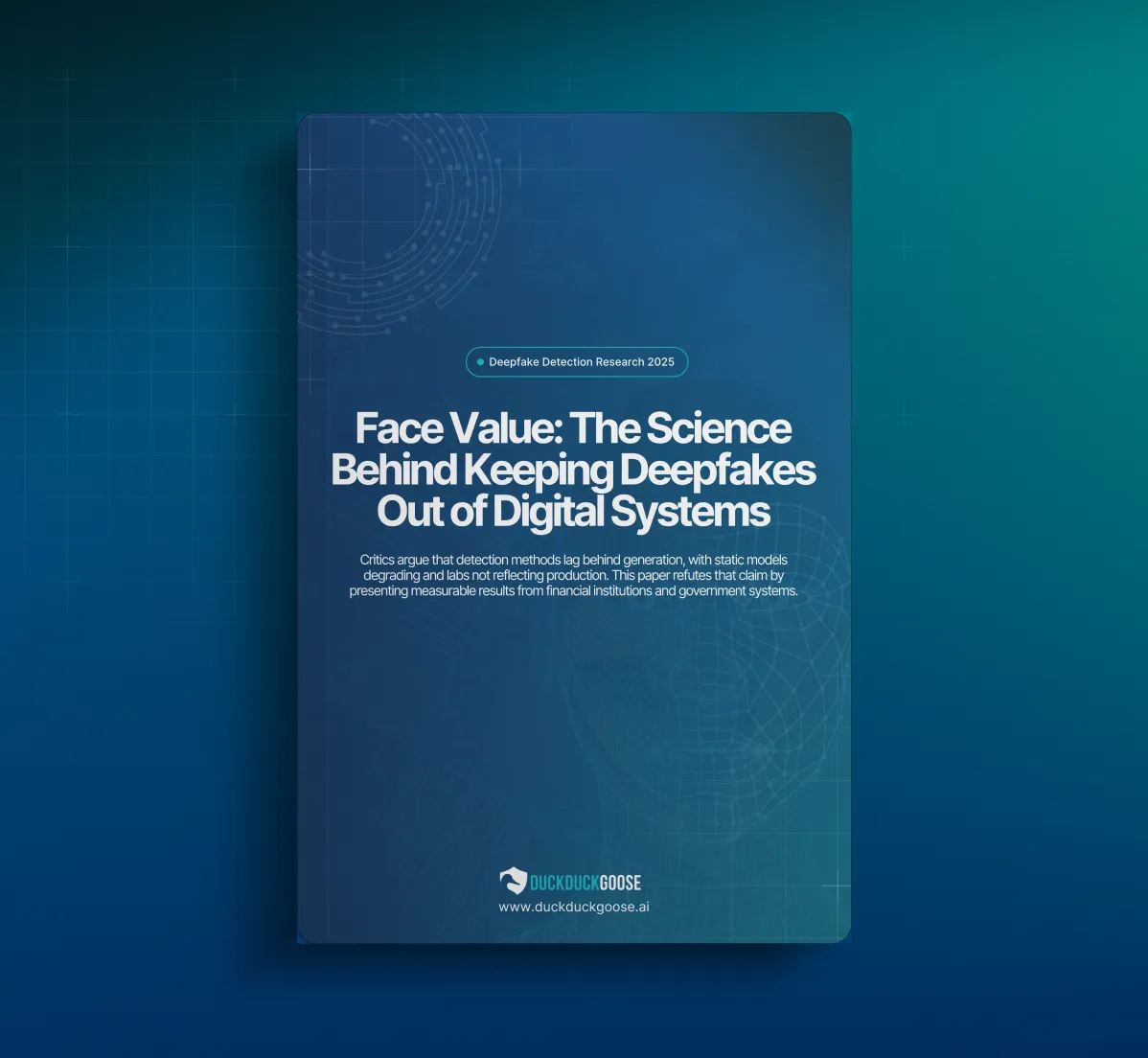
Detection isn't about perfection, it's about measurable, consistent improvement. This study reveals how AI stays ahead of adversarial generation without sacrificing operational efficiency.