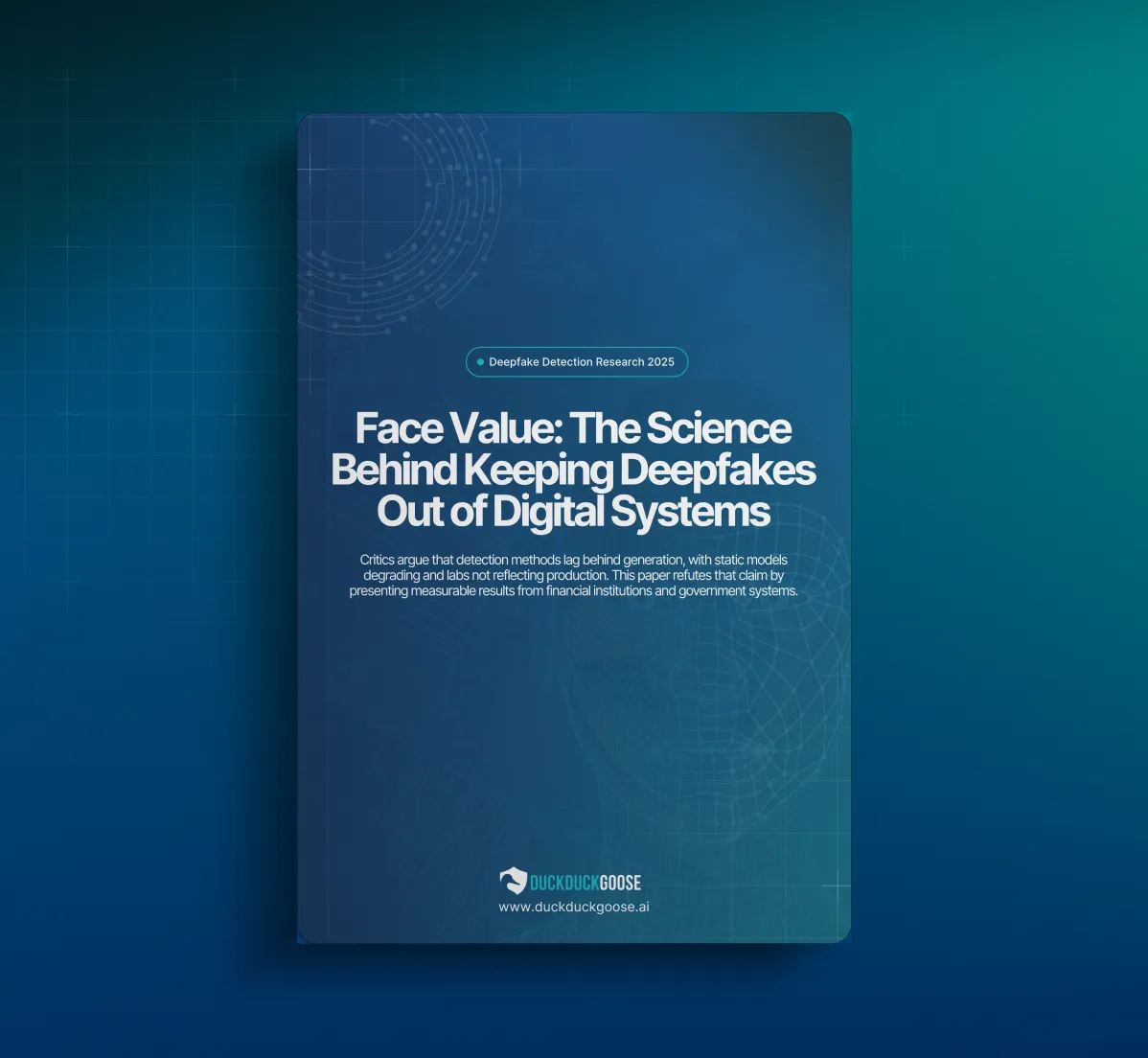

Face Value: The Science Behind Keeping Deepfakes Out of Digital Systems

Overview
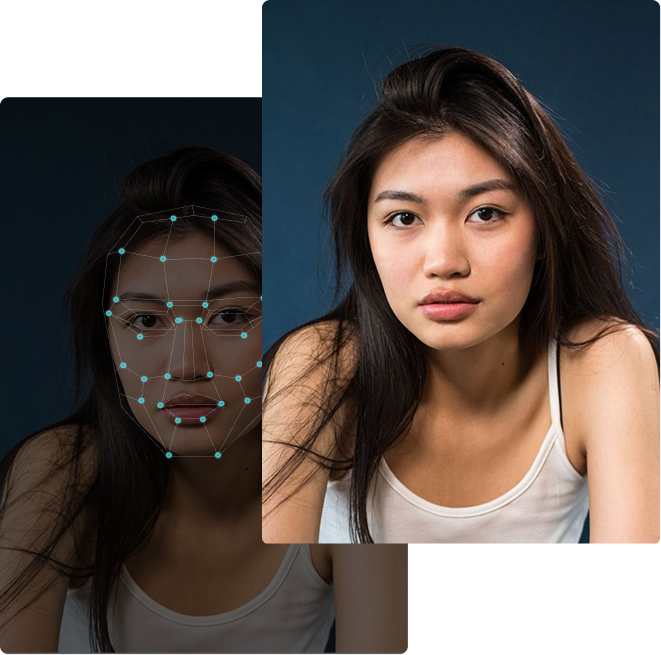
Deepfake detection skeptics claim it can't keep pace with generation quality. This three-year study proves otherwise. DuckDuckGoose reduced false acceptance rates from 78% to 15% while increasing detection recall from 22% to 90%, validated on unseen attacks in live production. With 35,000 deepfake model variants now publicly downloadable and 15 million downloads recorded since 2022, static defense fails. This paper presents longitudinal benchmarks across talking-heads, full-synthesis personas, and legacy morphs, demonstrating how adaptive AI outpaces adversarial tools.
Why it matters

Why we made this white paper?

Critics claim detection can't keep pace with generation. Static models degrade. Labs don't reflect production. This paper counters that narrative with measurable results from financial institutions and government systems. Detection works, when treated as an evolving process, not one-time integration. We're sharing our methodology because transparency is required to combat this threat.

Key Takeaways

35,000
Model variants publicly available for Generation
Anyone can now access sophisticated face-swap and voice-cloning tools, lowering barriers to fraud at scale.
Upto 80%
Reduction in false acceptance rate over three years
Detection evolved from accepting 78% of deepfakes as genuine to under 15%, validated on real identity checks.
90%
Detection recall increased from 22% to 90% in three years
System now flags nine out of ten deepfakes using unseen test data, proving true generalization beyond training sets.
15 mn.
Deepfake downloads recorded since late 2022
Mass adoption of generative tools means attackers operate at unprecedented scale and sophistication.

Explore Key Findings

Detection isn't about perfection, it's about measurable, consistent improvement. This study reveals how adaptive AI stays ahead of adversarial generation without sacrificing operational efficiency.

False acceptance rates dropped 80% through continuous model refinement

Recall performance quadrupled by testing unseen attack types

Talking-heads and lipsyncs require quarterly model updates

Full-synthesis personas fail against pixel-level forensic analysis

Generalization capacity separates effective detection from overfitting

Deloitte validates detection complexity matches financial crime urgency

Detection that evolves with the threat

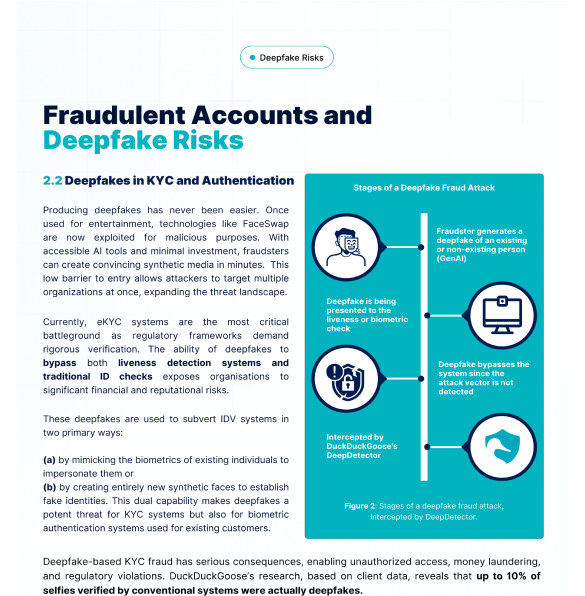
This white paper includes performance graphs tracking recall improvements across attack methods, technical breakdowns of generalization strategies, and Deloitte's industry perspective on detection urgency. Access methodology trusted by banks, governments, and IDV platforms, backed by three years of production validation.

+5 more

More Whitepapers to explore

Reports
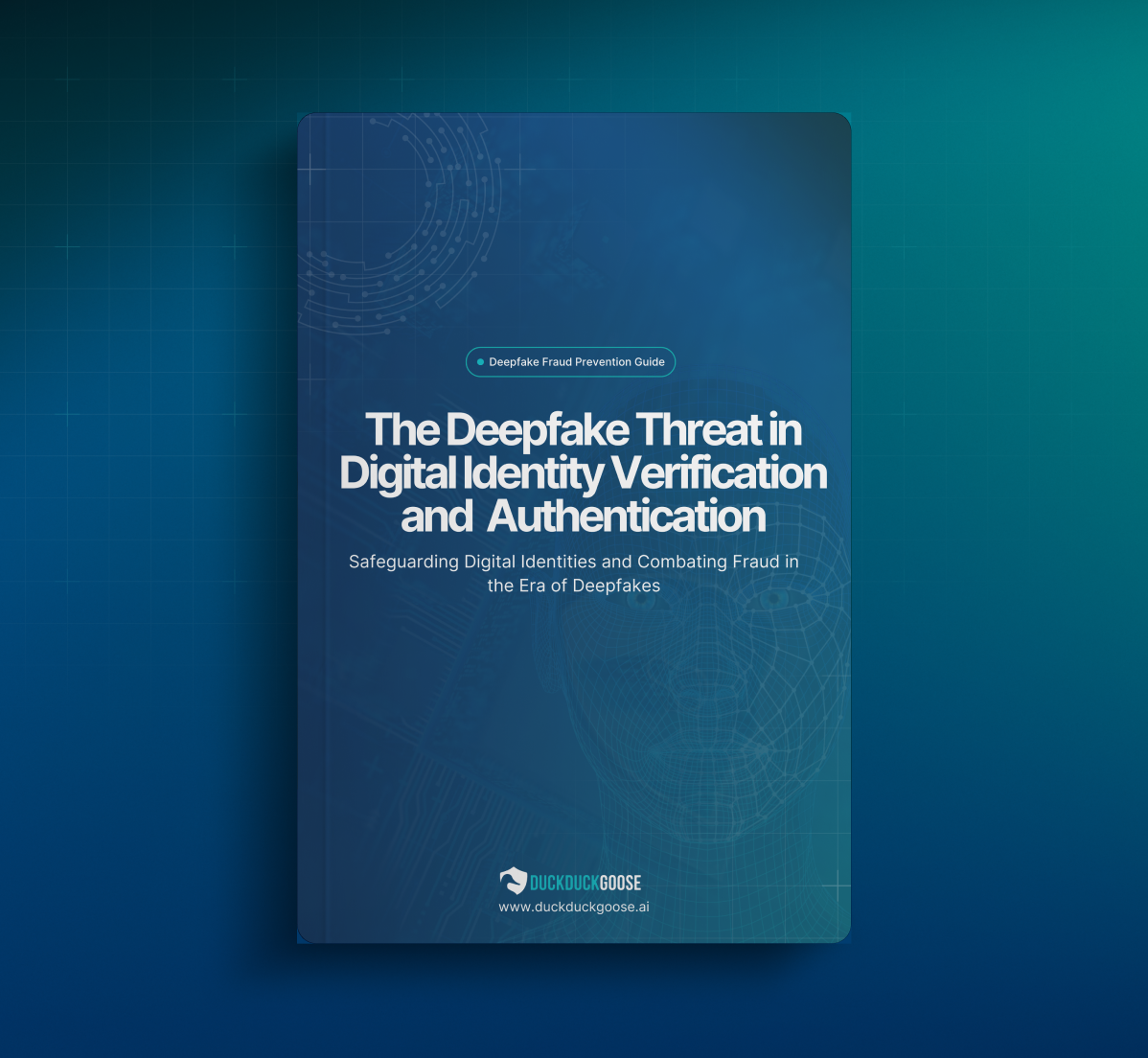
Deepfakes have evolved from entertainment tools into precision fraud weapons. This white paper reveals how attackers exploit IDV gaps, and how leading organizations are closing them.
Reports
Adoption is global. Readiness is not. From the EU's deliberate approach to Latin America's urgency-driven innovation, regulatory trajectories differ dramatically while the threat remains universal.
Reports
Detection isn't about perfection, it's about measurable, consistent improvement. This study reveals how AI stays ahead of adversarial generation without sacrificing operational efficiency.