
Deepfake Scams Are Reshaping Financial Crime and It's Already a Multi-Billion Dollar Problem

Overview
Deepfake fraud is no longer theoretical, it's operational. This Deloitte & DuckDuckGoose paper reveals how generative AI drives billions in financial losses today. With 25.9% of institutions already hit, fraud-as-a-service platforms selling deepfakes for $15, and 700% surge in fintech attacks, banks face an urgent credibility crisis. Beyond monetary damage, victims report severe psychological impact: 80% feel anxious, 74% feel violated, 72% feel angry. Prevention technology exists now, but regulatory response lags behind.
Why it matters

A new era of digital impersonation is here

With policy lagging and fraud-as-a-service platforms democratizing attack capabilities, banks must take proactive control. This paper shows what's at stake, financial losses, trust erosion, psychological trauma, and how leading institutions are fighting back with real-time detection before damage occurs.

Key Takeaways

40Bn.
In projected fraud losses by 2027
Deepfake-enabled financial crime is growing 32% year-over-year, up from $12.3 billion in 2023 across U.S. institutions alone.
700%
Increase in fintech deepfake attacks during 2023
Generative AI tools made fraud more scalable, automated, and accessible to non-technical criminals at unprecedented rates.
25.9%
Of financial institutions already experienced deepfake fraud
One in four organizations reported at least one deepfake-driven incident, proving these attacks are happening now.
80%
of deepfake fraud victims report feeling anxious
Beyond monetary losses, identity theft via deepfakes creates severe psychological distress, violating trust at fundamental levels.

Explore Key Findings

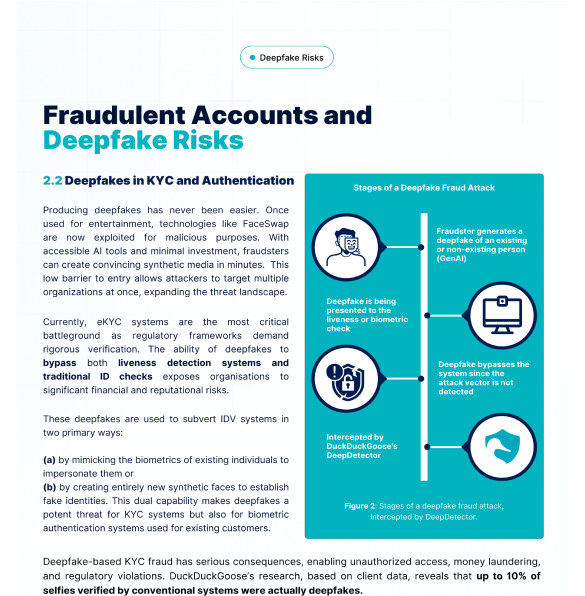
This is not a future threat. Deepfakes are already in your stack, exploiting KYC vulnerabilities and bypassing biometric matchers. Fraud teams and compliance officers can't afford to ignore this operational shift.

Real-time voice and face deepfakes are defeating legacy KYC systems

Synthetic identities bypass biometric matchers using AI-generated credentials

Victims experience severe psychological toll alongside financial losses

Financial institutions must act now to prevent systemic risk escalation

DuckDuckGoose integrates seamlessly with existing banking infrastructure

Detection needs to happen before damage occurs, not during investigation

From awareness to action

Co-developed with Deloitte, this white paper offers data-driven analysis, detection strategies, and a roadmap for financial institutions ready to lead on AI-driven fraud prevention. Access case studies, psychological impact research, and implementation frameworks trusted by risk and compliance teams globally.

+5 more

More Whitepapers to explore

Reports
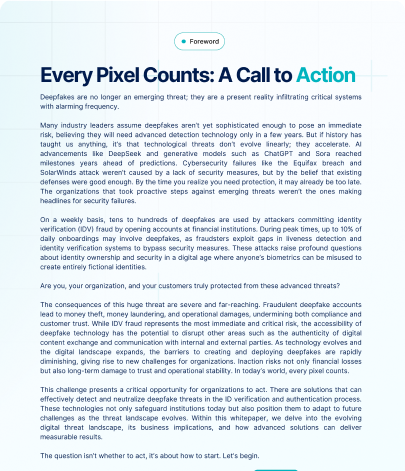
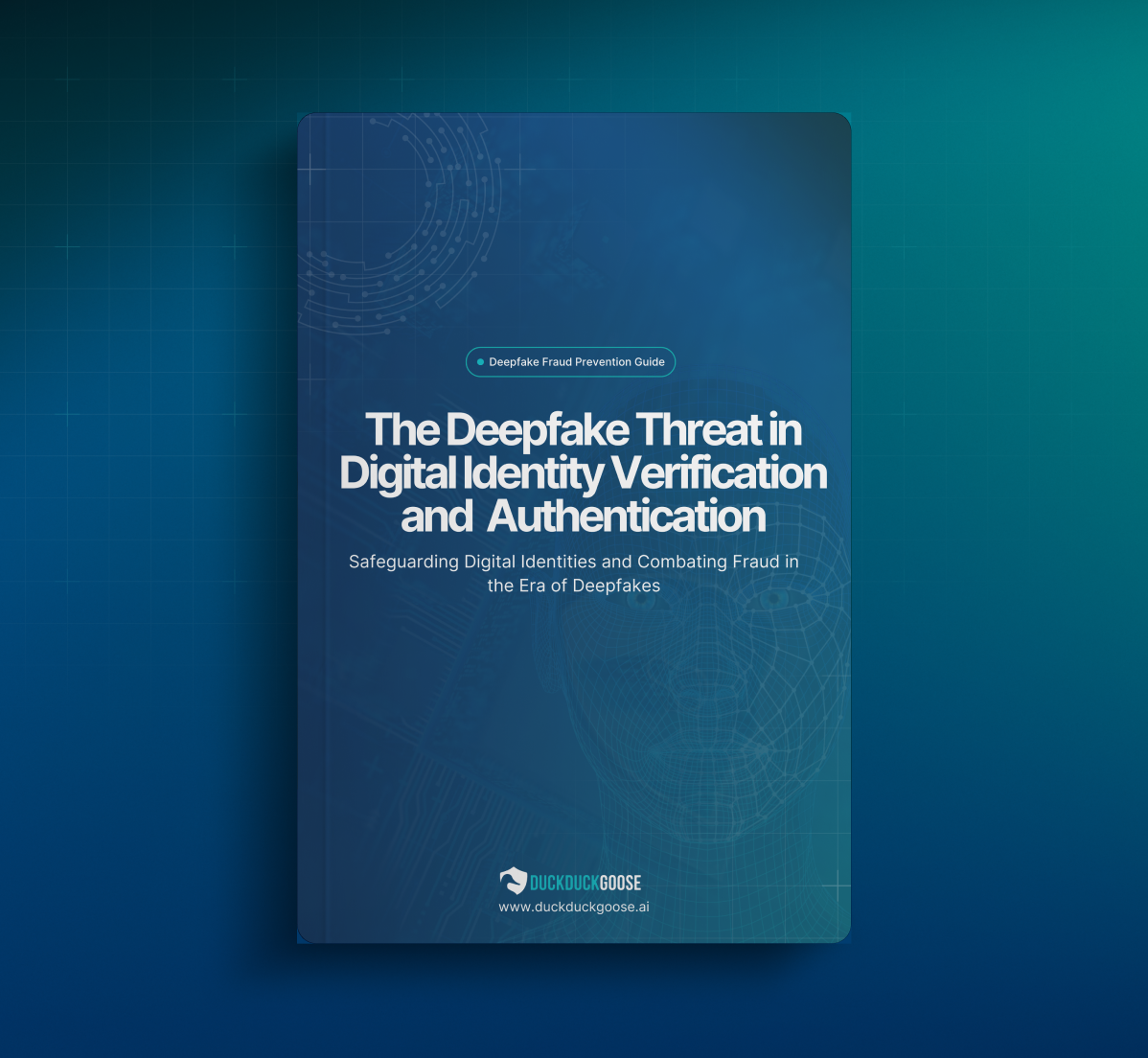
Deepfakes have evolved from entertainment tools into precision fraud weapons. This white paper reveals how attackers exploit IDV gaps, and how leading organizations are closing them.
Reports
Adoption is global. Readiness is not. From the EU's deliberate approach to Latin America's urgency-driven innovation, regulatory trajectories differ dramatically while the threat remains universal.
Reports
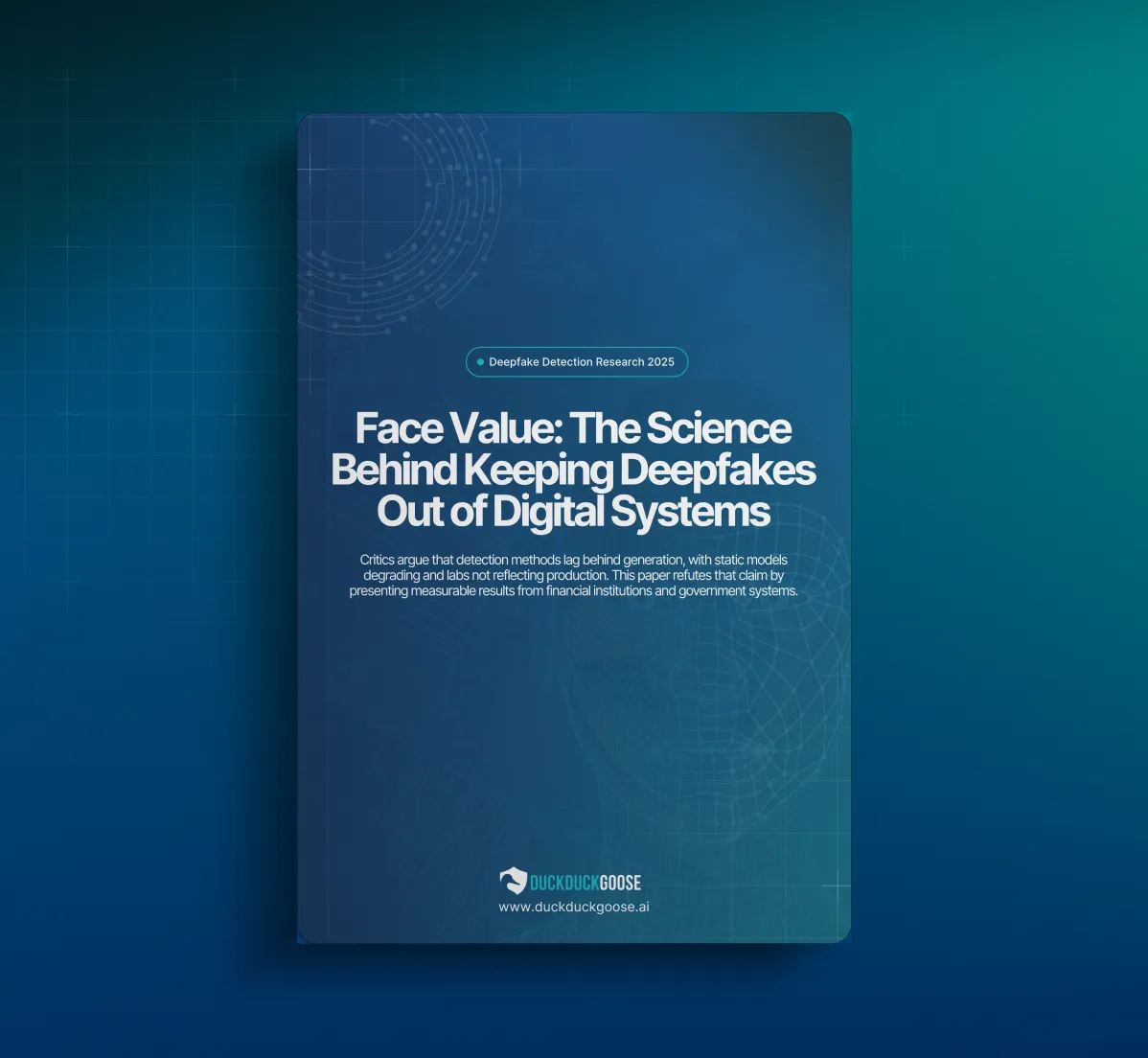
Detection isn't about perfection, it's about measurable, consistent improvement. This study reveals how AI stays ahead of adversarial generation without sacrificing operational efficiency.