
Build vs. Buy for Deepfake Defense in IDV

Overview
Most teams underestimate the "run" costs of building internal deepfake detection. One major IDV platform spent 6 months building a model, only for it to be bypassed in a test by a client using a new attack vector just 2 weeks after deployment. Building costs €745K-€1.5M over 12-24 months, requiring 10+ engineers, continuous data acquisition, and drift monitoring every 2-4 weeks. Buying delivers production-ready detection in 4-8 weeks with at least 4-6x cost savings and automatic updates against new attack methods.
Why it matters

The fastest path is a shadow-mode pilot

For identity verification leaders evaluating build versus buy, short pilots de-risk decisions before long-term commitments. This guide helps product, engineering, and risk teams assess whether they can realistically ship, maintain, and update detection, or partner externally.

Key Takeaways

1.5Mn+
Total build cost over 12-24 months
Headcount (€480K-€960K), data acquisition (€80K-€150K), infrastructure (€40K-€90K), red-teaming (€100K-€210K), and compliance (€45K-€80K).
4 to 6x
At least 4-6x cost savings with vendor solutions
Predictable costs, contractual SLAs for recall and latency, and built-in compliance versus variable hidden "run" costs.
18 to 24
Months to ship internal detection versus 4-8 weeks
Building requires discovery, hiring, data pipelines, model training, evaluation, hardening, and rollout—buying integrates in weeks.
>10+
Team members required for internal build
ML engineers, data engineers, MLOps, and threat researchers needed on-call for continuous model governance.

Explore Key Findings

If you tick 7+ criteria in the sanity scan, vendor integration likely delivers faster protection and lower total cost than an 18-24 month internal build.

Building requires 10+ specialists for ML engineering, data pipelines, and threat research

Data acquisition costs €80K-€150K for labeled samples across attack types

Red-teaming costs €100K-€210K to simulate realistic attacker behavior

Compliance audits cost €45K-€80K for explainability and regulatory alignment

Drift monitoring every 2-4 weeks required to maintain detection accuracy

Buying delivers breadth and freshness with pre-trained coverage and automatic updates

Run the sanity scan first

This guide includes cost comparison tables, a 7-point readiness checklist, quality KPI benchmarks (FAR, spoof success rate, latency, coverage), and a 4-step evaluation plan: stack audit, optional dataset benchmark, shadow-mode pilot, and integration. Access the framework product and risk leaders use to de-risk build versus buy decisions.

+5 more

More Whitepapers to explore

Reports
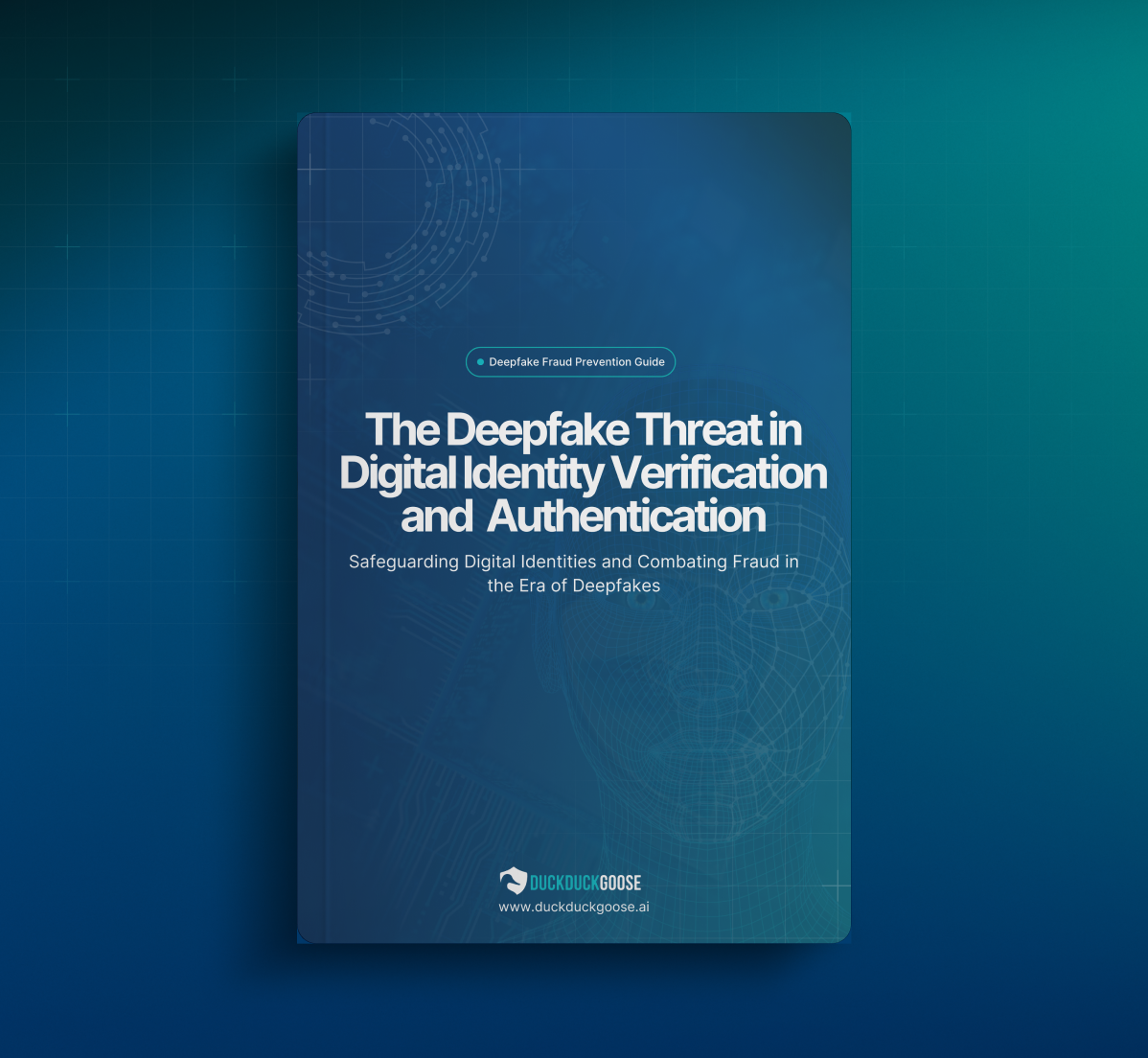
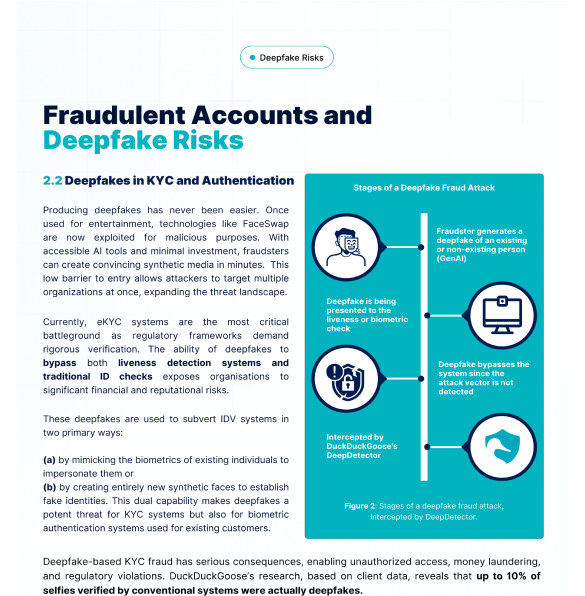
Deepfakes have evolved from entertainment tools into precision fraud weapons. This white paper reveals how attackers exploit IDV gaps, and how leading organizations are closing them.
Reports
Adoption is global. Readiness is not. From the EU's deliberate approach to Latin America's urgency-driven innovation, regulatory trajectories differ dramatically while the threat remains universal.
Reports
Detection isn't about perfection, it's about measurable, consistent improvement. This study reveals how AI stays ahead of adversarial generation without sacrificing operational efficiency.