













.webp)


Three seconds of recorded audio is now enough to clone a person's voice at roughly 85 percent accuracy, and a single clear photograph is enough to swap a face into a live video call. The question of how much data you need to clone a face or voice used to have a comforting answer measured in hours of studio recording. In 2026 the honest answer is measured in seconds and single images, and most of that data is already sitting on public social media profiles, recorded webinars, and earnings calls.
This resource pulls together the published sample requirements from the major voice and face cloning tools, the peer reviewed research on the theoretical minimum, and the fraud data that shows what happens once the threshold gets this low. The goal is a single reference for security leads, compliance officers, and identity verification teams who need to reason about exposure rather than react to headlines.
We update this resource quarterly. Last update: Q3 2026.
- 3 seconds of clean audio can produce a voice clone at about 85 percent accuracy, a figure now repeated across multiple 2025 and 2026 threat reports.
- 1 photo is enough for a real time face swap using open source tools such as Deep Live Cam and consumer apps such as Pincel.
- 15 seconds of video is all HeyGen's Avatar 5 requires to build a photorealistic talking avatar, and the same 15 seconds is what OpenAI's Voice Engine needed to clone a voice in 2024.
- As few as 20 images can be enough to build a convincing deepfake of a specific person, according to cybersecurity warnings aimed at parents.
- 5 to 10 seconds is the working minimum across most open source voice models, including Chatterbox, CosyVoice 2, and OpenVoice.
- $25.6 million was transferred out of engineering firm Arup after a live deepfake video call, built entirely from publicly available footage of its executives.
- $1.1 billion in US deepfake fraud losses were recorded in 2025, roughly triple the prior year.
- 24.5 percent is how often people correctly identify a high quality video deepfake, meaning human detection is no longer a reliable control.
- A few hundred dollars now buys a ready made voice clone or face swap package on deepfake as a service platforms.
- The direction of travel is one way: every model generation lowers the sample requirement while raising output quality, with direct implications for voice cloning fraud and identity verification.
The data needed to clone a person has collapsed to seconds and single images, all of it public. That low threshold is the mechanism behind a measurable surge in impersonation fraud.
The floor is now seconds and single images
The old answer was hours of studio recording. Today the honest answer is measured in seconds and single photos, and most of that material is already public on profiles, webinars, and earnings calls.
There's no lower bound left to retreat to. One-shot research (HyperReenact) clones from a single frame with no fine-tuning, the floor is now the data needed to recognize a person, not train a model.
What Is Voice and Face Cloning?
Voice cloning is the process of building a synthetic model of a specific person's voice from one or more audio samples, then using that model to generate new speech the person never said. Face cloning covers a related family of techniques, including face swapping, where one person's face is mapped onto another's head in an image or video, and talking head generation, where a still portrait is animated to speak. Both rely on the same underlying idea: extract a compact mathematical representation of a person's identity from a small sample, then reuse it to synthesize new content.
The critical shift over the past three years is the move from training to inference. Older systems needed to train a dedicated model for each target, which required large amounts of data and time. Modern zero shot systems extract a speaker embedding or a face embedding in under a second and generate output immediately, with no per target training. This is why the data requirement collapsed. The model has already learned what human voices and faces look like from millions of examples during pre training, so it only needs enough of your specific sample to locate you within that space.
This distinction matters for anyone assessing risk. When a tool advertises that it clones a voice from a few seconds of audio, it is not learning your voice from scratch in those seconds. It is fingerprinting you against a model that already understands speech. That is also why sample quality often matters more than sample length, a point that runs through the data below and connects directly to deepfake fraud statistics across the wider threat landscape.
How Much Audio Do You Need to Clone a Voice?
The published minimums from commercial and open source voice tools cluster tightly between 3 and 30 seconds. Microsoft's VALL-E research model demonstrated cloning from a 3 second sample as far back as January 2023, according to Freethink's coverage of the paper. OpenAI's Voice Engine, revealed in 2024, needs 15 seconds, per OpenAI's own disclosure reported by The Decoder. The open source field has pushed the working minimum down to 5 seconds across most models.
Table 1: Minimum audio sample required to clone a voice, by tool (advertised minimums).
The pattern in the table is worth dwelling on. The lowest advertised figures come from research demonstrations and open source projects, while commercial platforms tend to quote a slightly higher floor because they are optimizing for reliable, natural output rather than a headline number. TTS.ai notes that 5 seconds works with most models but that 10 to 30 seconds of clear, single speaker audio produces the best results. The takeaway for risk assessment is that the meaningful threshold is not the absolute floor but the point where output becomes convincing to a human listener, and that point now sits comfortably within a single sentence of recorded speech.
For fraud purposes, the accuracy figure matters more than the raw duration. Threat reporting throughout 2025 and 2026 has converged on the claim that 3 seconds of audio yields a clone at about 85 percent accuracy, a figure that appears in Bright Defense's deepfake statistics roundup among others. Eighty five percent is more than enough to pass in a stressful phone call where the listener has no reason to doubt the caller and every reason to act quickly.
Does a Longer Sample Make a Better Clone?
Yes, but with sharply diminishing returns, and the curve flattens far earlier than most people expect. The relationship between sample length and clone quality is the single most misunderstood part of this topic. A longer, cleaner sample helps a model capture emotional range, unusual accents, and fine prosody, but the core identity of a voice is captured almost immediately.
A longer sample barely helps
The core identity of a voice or face is captured almost immediately. More audio adds emotional range and edge cases, not recognizability. The quality curve flattens far earlier than most people expect.
The defensive trap: an attacker impersonating an executive on a wire-transfer call only needs the instant tier, a voice that sounds right for thirty seconds. The extra fidelity of a long sample is for audiobooks, not deception.
Table 2: How sample length maps to voice clone quality tiers.
The distinction that runs through the vendor documentation is between instant, or rapid, cloning and professional cloning. Resemble AI's product pages describe a Rapid Clone that needs 10 seconds and delivers in under a minute, alongside a Professional Clone that needs 10 to 25 or more minutes of recordings and trains in around 40 minutes to reach a voice the company calls nearly indistinguishable from the source. The gap between those two tiers is not identity capture. It is expressive range and edge case handling.
This has a direct implication that defenders often miss. An attacker impersonating an executive on a wire transfer call does not need the professional tier. They need a voice that sounds right for thirty seconds under time pressure, which the instant tier delivers from a clip pulled off a podcast or a conference recording. The extra fidelity of a long sample is valuable for audiobook narration and dubbing, not for a short, high stakes deception. This is why exposure cannot be reduced simply by limiting how much of your voice exists online. The relevant quantity was already exceeded the first time you appeared in a recorded meeting.
How Many Images Do You Need to Clone a Face?
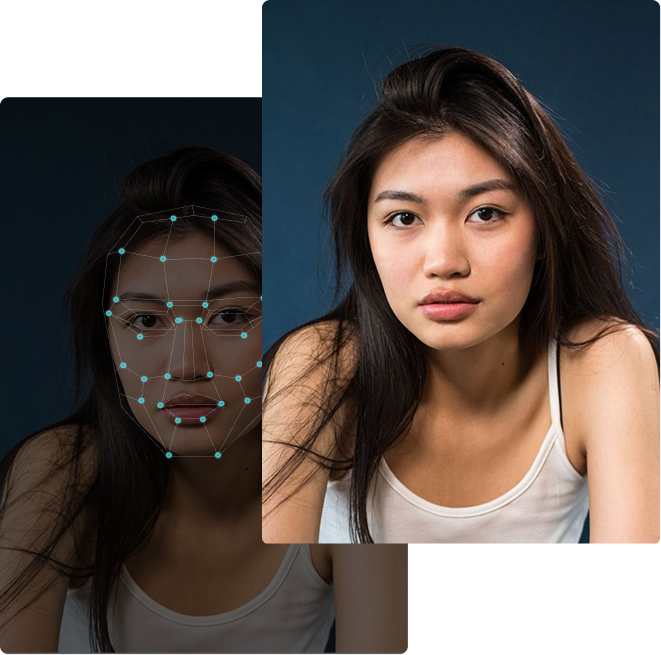
For a static face swap or a real time video swap, the answer is one. Open source tools such as Deep Live Cam advertise real time face swap and one click video deepfakes from a single source image, using the InsightFace inswapper model that was itself trained on millions of faces. Consumer web apps make the same claim: Pincel performs a face swap from one reference photo in about five seconds, with no model training required.
Table 3: Images required to swap or clone a face, by tool and method.
The single image case works because, as with voice, the heavy lifting happened during pre training. The inswapper model infers a three dimensional facial structure from a two dimensional photo and separates identity from pose, which is what allows one photo to drive an entire video. The DeepFaceLab guide, documenting the framework that reportedly powers the large majority of deepfake videos, notes that while a deepfake can technically be made from just a few images, cinema quality results come from facesets with consistent lighting, similar angles, and matched features.
The security relevant figure sits between these poles. Cybersecurity experts cited by Cyber Collective warn that as few as 20 publicly available images, or a short video clip, are enough to build a realistic deepfake of a specific person without any specialist skills. Twenty images is a low bar for anyone with a public social media presence, a professional headshot, or a single tagged event. For identity verification teams, the same capability shows up as face swap and synthetic presentation attacks against liveness checks, which connects this data directly to deepfake detection accuracy in production onboarding flows.
How Much Video Do You Need for a Talking Avatar?
A convincing, controllable talking avatar, the kind used in a live video call, sits a step above a single image swap, but the requirement has still collapsed to seconds of footage. HeyGen's Avatar 5, released in 2025, builds a photorealistic voice cloned avatar from 15 seconds of video, a figure MindStudio's analysis calls a significant reduction from earlier versions that needed minutes or hours.
Table 4: Video footage required to build a talking avatar, by platform.
The trade off across these tools is between speed of setup and range of motion. A 15 to 30 second clip produces a strong talking head suitable for a face forward video call, which is precisely the format used in executive impersonation. Fuller body movement and long form delivery still benefit from more footage, which is why HeyGen's Digital Twin documentation suggests a 30 second quick recording as a starting point and around two minutes for a full body twin. Enterprise platforms such as Synthesia add governance and consent workflows on top, but the underlying data requirement is comparable.
The reason this matters for fraud is that the attack format and the tool sweet spot line up almost perfectly. A deepfake wire transfer call is a tight, face forward talking head under time pressure. That is the exact scenario these avatar tools are optimized for and the exact scenario that needs the least source data. DuckDuckGoose's DeepDetector is built around this production reality, using a multi model ensemble designed to flag synthetic video in the live and recorded formats where impersonation actually happens rather than only in clean laboratory conditions.
The Theoretical Minimum: One Shot and Few Shot Research
The commercial floor of one image and a few seconds of audio is not a marketing exaggeration. It reflects a mature body of peer reviewed research on one shot and few shot generation that predates the current product wave. Samsung researchers demonstrated few shot adversarial learning of realistic neural talking head models as early as 2019, producing animated talking heads from a handful of frames and, in the one shot case, a single photograph.
Table 5: The theoretical minimum input from peer reviewed one shot and few shot research.
The academic literature draws a distinction that the marketing collapses. One shot methods generate output from a single source frame, while few shot methods use a small handful. Newer work such as HyperReenact, published on arXiv in 2023, operates under the one shot setting using a single source frame and performs cross subject reenactment without any subject specific fine tuning. The phrase to note there is without fine tuning. No training run, no dataset, no waiting. The model refines and retargets a face from one image in a single forward pass.
The practical consequence is that the sample requirement is now bounded below by the amount of data needed to recognize a person at all, not the amount needed to train a model. A human can recognize a familiar face from one photo and a familiar voice from one sentence. Modern generative systems have reached the same floor. There is no lower bound left to retreat to, which reframes the defensive question entirely. The problem is no longer preventing the collection of enough data, because enough data is a single public artifact. The problem is detecting the synthetic output and building verification processes that do not rely on recognizing a face or voice.
Where the Data Comes From
Because the required sample is so small, the sourcing problem for an attacker is trivial. The Arup deepfake, the most expensive documented case, used deepfakes of the CFO and colleagues built from publicly available video and audio scraped from online conferences and company meetings. Reporting in Cyber Helmets' breakdown of the case describes the footage as the kind anyone can pull off LinkedIn, YouTube, or a recorded earnings call.
Table 6: Common public sources of cloning data and what each typically yields.
The volume of self published material makes this a target rich environment. Industry reporting compiled in The Global Statistics' deepfake overview notes that a majority of adults share voice or audio data online every week through podcasts, video calls, and short form video, and that every one of those clips is potential training data. For public figures and executives, the exposure is structural rather than a matter of personal caution. An earnings call, a keynote, a media interview, or a promotional video each provides more than the required sample.
Rob Greig, Arup's chief information officer, illustrated how low the barrier now sits. After the incident, out of curiosity, he tried to deepfake himself in real time using free, open source tools. It took him around 45 minutes, according to his account to the World Economic Forum, relayed in the same Cyber Helmets analysis. His result was not especially convincing, but the point stands: the floor for good enough to fool somebody keeps dropping while the ceiling keeps rising, and the tools are free.
What the Low Threshold Costs
The collapse in data requirements is not an abstract technical curiosity. It is the mechanism behind a measurable surge in fraud, because it removes the two constraints that used to limit impersonation attacks: the need for insider access to a person's private recordings, and the need for technical skill to build a model.
Table 7: Documented deepfake and voice clone fraud losses and projections.
The headline projection comes from the Deloitte Center for Financial Services, which forecasts that generative AI enabled fraud losses in the United States will grow from $12.3 billion in 2023 to $40 billion by 2027, a compound annual growth rate of 32 percent. That trajectory is already visible in single year figures. US deepfake fraud losses reached roughly $1.1 billion in 2025, about triple the prior year, according to figures compiled in Security Today's C-suite fraud analysis.
The frequency data reflects the expanded attacker pool. The Entrust Identity Fraud Report found a deepfake attack occurring somewhere in the world every five minutes in 2024, and a Gartner survey cited in the same source found that 62 percent of organizations experienced a deepfake attack in the prior twelve months.
How Cheap and Accessible Has Cloning Become?
The accessibility side of the equation is the quieter but more consequential story. The data requirement is only half of what determines exposure. The other half is how much money, skill, and time it takes to turn that data into a working clone, and all three have fallen close to zero.
Table 8: The cost, skill, and time required to produce a working clone.
The pattern in the table is the same one that appears in the sample requirements: the floor keeps dropping. A working voice clone can be produced free in a browser in minutes, and a real time face swap runs on a mid range gaming GPU using open source code. The commercial layer is only marginally more expensive. Deepfake as a service platforms now sell ready made voice clones and real time face swap packages for a few hundred dollars, per dark web monitoring cited in Security Today's analysis, which describes an entry cost for a convincing voice clone in the low three digit range.
The significance is best understood as a change in who can attack, not just how. When cloning required specialist expertise and a large private dataset, the pool of capable attackers was small and the targets had to be worth the effort. When the input is a public clip, the tool is free or a few hundred dollars, and the skill requirement is close to zero, the economics flip toward high volume attacks against ordinary targets. This is the same dynamic that has pushed synthetic media into identity verification pipelines, where the marginal cost of one more fraudulent onboarding attempt approaches nothing.
Why Detection Is Hard Once the Clone Exists
If the data threshold cannot be raised and the sourcing cannot be prevented, defense has to move to detection and process. The difficulty is that human detection has effectively collapsed for high quality synthetic media, which removes the intuition that most verification processes silently depend on.
Table 9: Human and machine deepfake detection accuracy.
The human numbers are stark. People correctly identify high quality video deepfakes only about 24.5 percent of the time, and a meta analysis of dozens of studies found average detection accuracy of 55.54 percent, barely above a coin flip, both figures collected in the Bright Defense roundup. For voice, around 70 percent of people say they are not confident they can tell a cloned voice from a real one. The Arup case is the practical demonstration: an experienced finance professional, initially suspicious of a phishing email, was fully convinced once he saw and heard multiple familiar faces on a live call.
Automated detection performs better but faces its own well documented gap. Analysis of the Arup incident in PurpleSec's breach report notes that state of the art automated systems can see accuracy drop by 45 to 50 percent when moving from controlled laboratory settings to real world conditions, and that real time detection during a live video call is especially hard. This lab to production gap is the central problem in deployed detection, and it is the reason detection cannot stand alone. The durable defense is layered: independent out of band verification for high value transactions, pre agreed code words, callback procedures on registered numbers, mandatory delays above a threshold, and detection technology applied to the video and audio channels where impersonation now lands. No single layer is sufficient, precisely because the data needed to defeat any one of them is so small.
Frequently Asked Questions
How many seconds of audio do you need to clone a voice?
Most current voice cloning tools work from 3 to 30 seconds of audio. Microsoft's VALL-E research model demonstrated cloning from 3 seconds, OpenAI's Voice Engine uses 15 seconds, and open source models such as Chatterbox and CosyVoice 2 work from around 5 seconds. For a convincing result, 10 to 30 seconds of clear, single speaker audio is the commonly recommended range.
How many photos do you need to make a deepfake?
A single clear photo is enough for a face swap in a photo or a live video using open source tools such as Deep Live Cam or consumer apps such as Pincel. For a more robust and consistent deepfake of a specific person, cybersecurity experts warn that as few as 20 publicly available images can be sufficient. Higher fidelity results still benefit from more images with consistent lighting and angles.
Can you clone a voice from a 3 second clip?
Yes. Threat reporting across 2025 and 2026 repeatedly cites 3 seconds of audio as enough to produce a voice clone at roughly 85 percent accuracy. That level is sufficient to deceive a listener in a short, high pressure phone call, even though it falls short of the fidelity needed for long form or highly expressive content.
Can someone make a deepfake from a single photo?
Yes. One shot face reenactment and face swap methods generate animated or swapped output from a single source image, with no per person training. Peer reviewed research such as HyperReenact demonstrated one shot cross subject reenactment without any subject specific fine tuning, and this capability is now built into consumer face swap apps.
How much video is needed to create a realistic AI avatar?
As little as 15 seconds. HeyGen's Avatar 5 builds a photorealistic, voice cloned talking avatar from a 15 second clip. Fuller body motion and long form delivery benefit from more footage, typically around two minutes, but a short face forward talking head, the format used in video call impersonation, needs the least data.
Where do scammers get the data to clone a voice or face?
Almost entirely from public sources. Documented cases, including the Arup fraud, used footage scraped from LinkedIn, YouTube, recorded webinars, and earnings calls. Because the required sample is only seconds of audio or a handful of images, a single public appearance usually provides more than enough. Executives and public figures are structurally exposed through their normal professional visibility.
Does a longer sample make a better clone?
It helps, but with steep diminishing returns. Core voice or face identity is captured almost immediately. Longer samples mainly improve emotional range, unusual accents, and edge case handling. For impersonation fraud, which relies on a short and plausible interaction, the instant cloning tier is generally enough, which is why limiting the amount of public media rarely reduces real exposure.
How accurate is a voice clone made from 3 seconds of audio?
Reporting converges on about 85 percent accuracy from a 3 second sample. Accuracy in this context refers to perceptual similarity to the target voice rather than a formal benchmark, and it rises with cleaner and longer audio. The practical point is that 85 percent is already past the threshold at which most listeners stop questioning a familiar voice.
Can you detect a voice or face clone?
Detection is possible but unreliable when left to humans, who identify high quality video deepfakes only about a quarter of the time. Automated detection performs better but loses substantial accuracy moving from laboratory to real world conditions. Effective defense combines detection technology with process controls such as out of band verification, callbacks, and pre agreed code words.
How can people and organizations reduce the risk of being cloned?
Because the data threshold cannot realistically be raised, the emphasis should be on verification and detection rather than on hiding one's face or voice. Practical measures include independent confirmation channels for high value transactions, mandatory delays above a set amount, pre agreed verification phrases, callback procedures on known numbers, and deepfake detection applied to video and audio in the workflows where impersonation occurs.
Methodology
The figures in this resource are drawn from four source categories. Vendor documentation and product pages supply the published minimum sample requirements for commercial and open source cloning tools, including Microsoft, OpenAI, ElevenLabs, Resemble AI, HeyGen, and open source projects surfaced through TTS.ai. Peer reviewed and preprint research, primarily from arXiv, supplies the theoretical one shot and few shot minimums. News reporting from outlets including CNN, Fortune, and the Financial Times, along with incident analyses, supplies the documented fraud cases. Analyst and industry reports from Deloitte, Entrust, Gartner, Sumsub, Pindrop, and security vendors supply the market and frequency data.
Where sources differ on a figure, we favor the more conservative estimate and note the range rather than a single point. Sample length requirements are reported as published by each tool and should be read as advertised minimums rather than independently benchmarked results. Accuracy figures such as the 85 percent voice clone claim reflect perceptual similarity as reported in secondary sources rather than a standardized benchmark. Fraud loss figures mix documented single incident losses, single year national totals, and multi year projections, which are labeled distinctly in the text because they are not directly comparable. This article covers data published through mid 2026 and is reviewed quarterly.
Cloning a face or voice no longer takes insider access or technical skill, which is why detection has to live in the video and audio channels where impersonation actually happens. DuckDuckGoose's DeepDetector and Waver are built to flag synthetic video and audio in real world conditions, not just clean laboratory samples. Learn more at duckduckgoose.ai.
This article is updated quarterly. Last update: Q3 2026.

About the author