












.webp)


A lip-sync deepfake takes a real video of a person and rewrites only their mouth so it appears to speak words they never said, leaving their face, identity, lighting, and background untouched. That single design choice is what makes lip-sync deepfakes both convincing and unusually hard to catch: there is no swapped face to flag, no foreign identity stitched in, and often no visible seam to spot. This guide explains how lip-sync deepfakes are built, from the audio-to-mouth pipeline through the shift from GAN-based to diffusion-based models, and why detecting them requires analyzing sound and picture together rather than looking at the video alone.
It is written for security leads, fraud and compliance teams, and product managers at identity verification companies who need a working mental model of the attack, not a how-to for building one. If your job is to decide whether a video conference, a KYC session, or a piece of viral content can be trusted, understanding the mechanism is the first step to defending against it.
- A lip-sync deepfake regenerates only the mouth region to match arbitrary audio, preserving the subject's real identity, which defeats detectors built to spot face-swap artifacts.
- The seminal demonstration was the 2017 University of Washington "Synthesizing Obama" project; open-source tools have since pushed the technical barrier close to zero.
- Generation moves through five stages: audio encoding, face masking, mouth generation, sync and quality enforcement, and blending.
- GAN-based models like Wav2Lip (2020) are fast but leave visual artifacts; diffusion-based models (Diff2Lip, LatentSync) close the quality gap and erase the easy tells.
- Only 0.1% of people can reliably distinguish modern AI-generated content from real, per iProov's 2025 research, making manual review unreliable.
- The strongest detection is multimodal and temporal: audio-visual inconsistency analysis reports over 95% accuracy on lip-sync videos.
- Liveness checks do not evaluate whether the mouth matches the audio, so they cannot stop lip-sync deepfakes on their own.
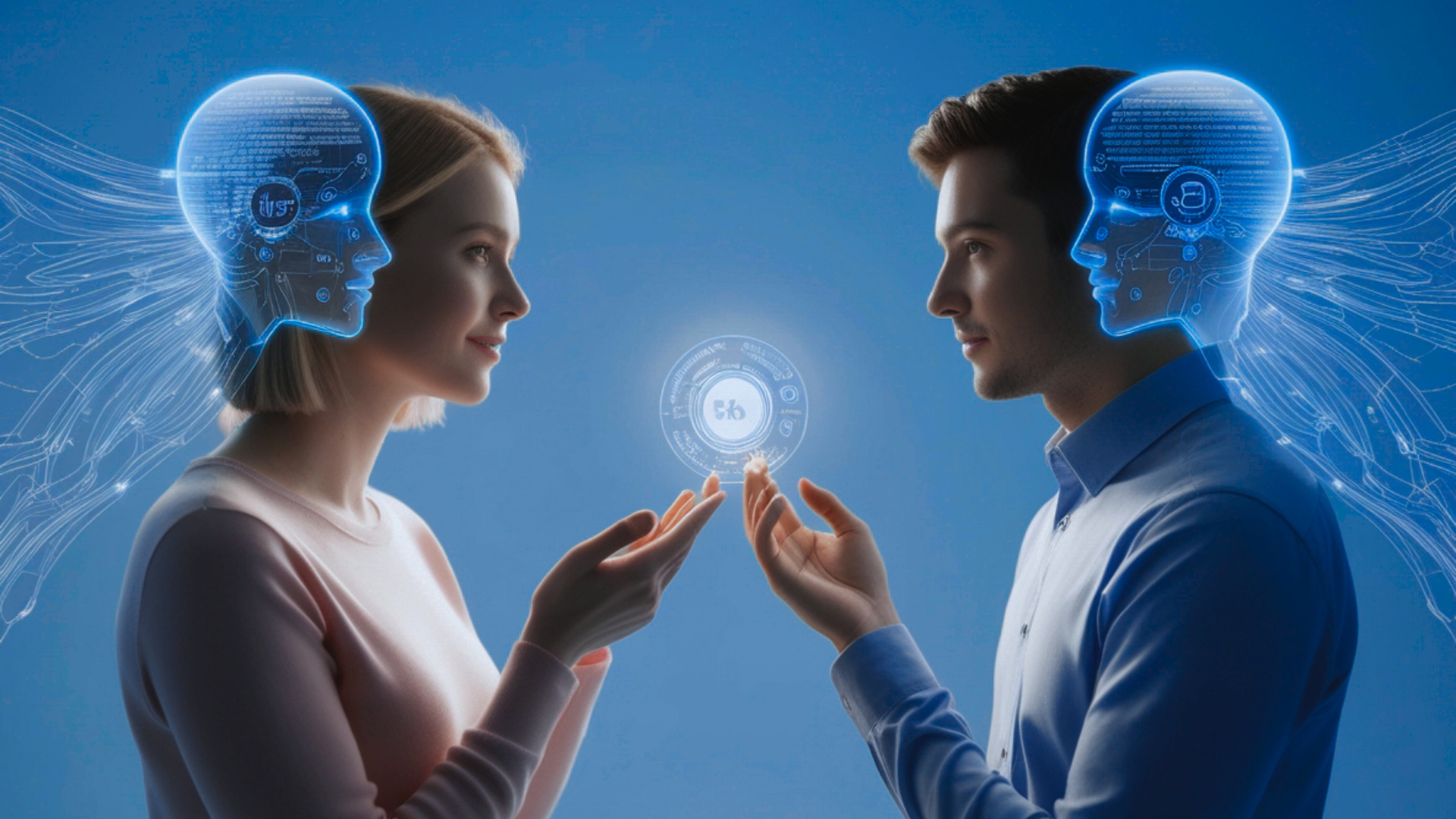
A lip-sync deepfake changes only the mouth and leaves the real face, identity and background intact. That one design choice makes it the hardest type for both people and traditional detectors to catch, and the answer is reading sound and picture together.
What Is a Lip-Sync Deepfake?
A lip-sync deepfake is a synthetic video in which a person's lip and mouth movements are regenerated to match an arbitrary audio track, so they appear to say something they never said. Crucially, the manipulation is local. Unlike a face swap, which replaces one person's entire face with another's, a lip-sync forgery keeps the original subject's identity intact and edits only the lower portion of the face. The audio can be a real recording of someone else, a voice clone of the target, or fully synthetic speech.
Researchers generally place lip-sync among three families of video manipulation. Writing for the Brennan Center for Justice, research scientist Shruti Agarwal and coauthors describe the three common deepfake video approaches as face swap, lip sync, and puppet master. Face swap changes who you are looking at; puppet master drives an entire performance from a source actor; lip sync changes only what the subject appears to be saying. Because it touches the least, lip sync is in many ways the most economical attack: it preserves everything the viewer already trusts about the footage and changes just enough to alter the meaning.
The technique is not new. The seminal academic demonstration came in 2017, when researchers at the University of Washington published "Synthesizing Obama: Learning Lip Sync from Audio," showing that a model could map an audio recording to realistic mouth shapes and composite them onto genuine video of the former president. What has changed since is accessibility and quality. Open-source models and consumer tools have pushed the technical barrier close to zero, and the same approach now underpins everything from benign video dubbing to the fabricated executive on a fraudulent video call. For a broader picture of where this sits among other synthetic media threats, see our guide on how to spot a deepfake.
How Lip-Sync Deepfakes Work: The Pipeline
At its core, a lip-sync system answers one question for every moment of a video: given this sound, what should the mouth look like right now? Building that answer involves a sequence of stages. The exact architecture varies between models, but almost all of them move through the same five steps.
From a sound to a new mouth shape, frame by frame
A lip-sync system answers one question for every moment of video: given this sound, what should the mouth look like now? Almost all of them work through the same five steps, and only the lower face is ever touched.
1. Audio encoding
The input speech is converted into a numerical representation the model can reason about, typically a mel-spectrogram (a time-frequency map of the audio) or features from a pretrained speech encoder. This step turns continuous sound into a sequence of feature vectors aligned to short time windows, so the system can ask which phoneme is being produced in each moment.
2. Face detection and masking
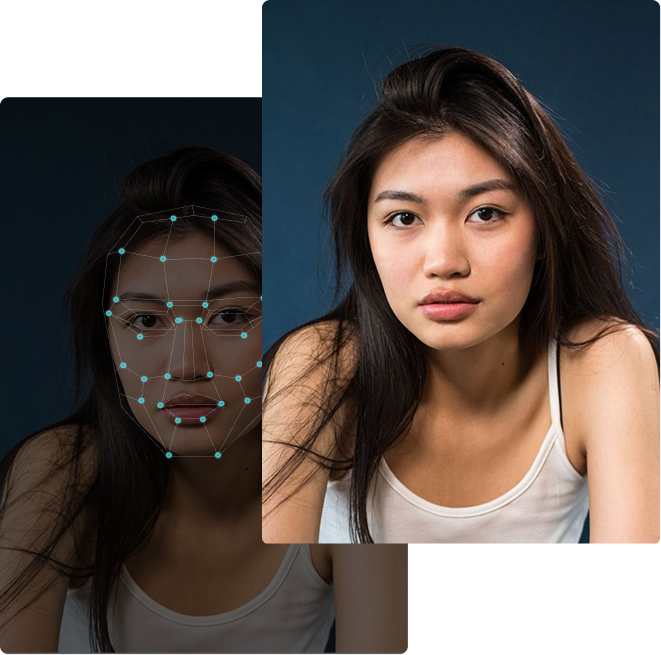
The model locates the face in each frame of the target video and isolates the mouth region. In the dominant training approach, the lower half of the face is masked out entirely. The upper face, including eyes, brow, and head pose, is preserved as a reference that anchors identity and orientation, while the masked region becomes the canvas the model must repaint.
3. Mouth generation
A generator network produces new pixels for the masked region, conditioned on the encoded audio and on reference frames that tell it what this person's mouth looks like. The output is a sequence of mouth shapes that track the phonemes in the audio, with lips closing for sounds like "m" and "b," rounding for "o," and parting for vowels.
4. Synchronization and quality enforcement
During training, the generator does not learn in isolation. It is pushed by additional networks that grade its output. One judges whether the generated mouth actually matches the audio; another judges whether the result looks photorealistic. Training objectives in audio-driven talking-head generation routinely combine signal-level losses, perceptual losses, adversarial losses, and synchronization-based losses, according to surveys of the field. The interplay of these objectives is what separates a crude, mumbling forgery from a convincing one.
5. Blending
Finally, the generated mouth region is composited back into the original frames and blended at the boundaries so the new pixels merge with the untouched upper face and surroundings. The result is a video that is identical to the source everywhere except the mouth, which is precisely why it can be so hard to detect.
The Two Generations: GAN-Based vs Diffusion-Based
Lip-sync technology has moved through two broad architectural eras, and understanding the difference matters for detection, because each generation leaves different traces.
The GAN era: Wav2Lip
The model that defined the modern lip-sync deepfake is Wav2Lip, introduced by Prajwal and colleagues in 2020 in a paper titled "A Lip Sync Expert Is All You Need for Speech to Lip Generation in the Wild." It uses a generative adversarial network (GAN) architecture. According to a technical study of the method, Wav2Lip takes a source talking face video and an audio clip as input, and generates a lip-synced version of the input video with the mouth movements corresponding to the input audio.
Its key innovation was the supervisor. Rather than train a sync judge from scratch alongside the generator, Wav2Lip borrows a pretrained lip-sync expert, a network already good at detecting whether mouth movements match audio, and freezes its weights so it cannot be fooled by the generator's visual artifacts. The model learns accurate lip-sync from this already well-trained expert rather than relying on reconstruction loss alone. To capture motion rather than static poses, it feeds the network several consecutive frames plus the corresponding audio so the model has temporal context.
Wav2Lip's strength is robustness: it produces accurate lip movements for almost any speaker. Its weakness is fidelity. As one diffusion-model paper notes, the method excels at producing accurate lip movements but the visual quality of the generated videos is suboptimal, because there is an inherent trade-off between lip-sync accuracy and visual quality. In practice that means blur, low-resolution mouth interiors, and teeth that smear under motion, which are telltale signs to a trained eye or a detector.
The diffusion era
More recently, the field has shifted toward diffusion models, the same family of architectures behind modern image generators. Methods such as Diff2Lip, LatentSync, SadTalker, EMO, Sonic, and Hallo apply diffusion priors to talking-head generation, producing markedly higher fidelity and realism than their GAN predecessors. The trade-off has moved: these models close much of the visual-quality gap, but a recurring limitation is slow inference speed, which is why a wave of 2025 research focuses specifically on making diffusion-based lip-sync fast enough for real-time use.
The practical consequence for defenders is that the easy visual tells are disappearing. The smeared teeth and blurry mouths that flagged a Wav2Lip output are far less reliable against a well-tuned diffusion model. Detection has to look deeper than surface artifacts.
Table 1: How the two architectural generations of lip-sync deepfakes compare. Characterizations drawn from the Wav2Lip paper (Prajwal et al., 2020) and recent diffusion-based talking-head research (SayAnything, OmniSync, READ, 2024-2025).
A second axis worth understanding is the input. Some systems perform video dubbing, editing an existing video of a real person, which is the classic lip-sync attack. Others perform single-portrait animation, turning one still photograph into a talking video. The latter is increasingly relevant to identity fraud, because an attacker only needs a single scraped image to animate a face into a live-looking session, a technique closely related to the methods covered in our analysis of how deepfakes bypass liveness checks.
Why Lip-Sync Deepfakes Are So Hard to Detect
Most deepfake detection grew up hunting for the artifacts of identity replacement, including the blending seams, warped boundaries, and inconsistent skin textures that face-swapping leaves behind. Lip-sync forgeries defeat that entire strategy by design.
Researchers behind one detection framework put the problem plainly: lip-forgery videos, which neither change identity nor have discernible visual artifacts, present a formidable challenge to existing detection methods, and the effectiveness of existing detectors often drastically decreases or even fails when tackling lip-syncing videos. There is no second identity to detect because the identity never changed. There is no swapped face because the face is real. Only the mouth moved.
The situation gets worse under adversarial pressure. Where residual visual artifacts do exist around the mouth, attackers can adaptively erase them through blurring, removing the very signals a frame-based detector would key on. And as the creation-versus-detection arms race intensifies, the audio-visual inconsistencies that detectors rely on are gradually reduced, eroding the effectiveness of coarse alignment checks over time. This is the central reason a single-modality detector, one that looks only at pixels or only at audio, is the wrong tool for this job. The forgery lives in the relationship between the two.
That difficulty is not just academic. iProov's 2025 research found that only 0.1% of people could reliably distinguish modern AI-generated content from real, which means manual review by humans is effectively a coin flip for high-quality fakes. The defensive burden falls on automated, multimodal analysis.
How Lip-Sync Deepfake Detection Actually Works
If the forgery is defined by mouth movement that was generated from audio rather than produced naturally alongside it, then the most reliable signal is the seam between what is heard and what is seen. Modern detection approaches target that seam directly.
The dominant strategy is audio-visual inconsistency analysis: the detector examines whether the mouth movements and the speech are genuinely correlated in the fine-grained way that real, simultaneously-recorded video always is. One well-cited framework, sometimes called "Lips Are Lying," focuses on the temporal correlation between energy variations in the audio spectrum and lip movements, and reports more than 95.3% accuracy in spotting lip-syncing videos, significantly outperforming detectors built for identity-swap forgeries.
A complementary line of work goes to the level of phonemes and visemes, the visual shapes the mouth makes for each speech sound. A 2025 framework presented at PRCV jointly analyzes word-level semantic consistency and fine-grained phoneme-level alignment between video and audio: it first compares the transcript produced by a lip-reading model against the transcript from an automatic speech recognition system to catch overt mismatches, then uses a temporal alignment network to detect subtle phoneme-level misalignments. Notably, that approach is trained only on real data, sidestepping the problem that detectors trained on yesterday's forgeries fail to generalize to tomorrow's. Other researchers apply vision temporal transformers focused specifically on mouth-region inconsistencies across frames.
The lie lives between the audio and the video
Look at the pixels alone and every frame is real. Listen to the audio alone and it may be a genuine recording. A lip-sync forgery only reveals itself in the relationship between the two, so detection has to read them together.
Does the mouth shape track the sound, moment to moment?
A single phoneme, viseme drift, the mouth not matching the sound for an instant, gives the forgery away, even when every frame looks flawless.
Table 2: Approaches to detecting lip-sync deepfakes, from frame-level classifiers to multimodal temporal analysis. Based on findings from "Lips Are Lying" (LipFD), PRCV 2025 phoneme-alignment research, and vision temporal transformer methods (2024-2025).
The throughline across all of these is that detection must be multimodal and temporal. A frame-by-frame image classifier misses the forgery because each individual frame can look perfectly real; the lie only appears across time, in the drift between sound and motion. This is also why lip-sync detection sits in a different category from liveness checks, which were built to stop physical spoofs at the camera and are not designed to evaluate audio-visual correspondence, a distinction we cover in detail in liveness detection vs deepfake detection.
This is the regime DuckDuckGoose's DeepDetector is built for on the visual side, pairing ensemble detection with per-frame explainability that shows analysts which regions of the face triggered a flag, while Waver analyzes the speech stream for synthetic-audio artifacts, because a lip-sync attack is fundamentally a problem of two modalities that no longer agree.
Common Mistakes When Defending Against Lip-Sync Deepfakes
Teams new to this threat tend to make the same handful of errors. Each one leaves a specific gap an attacker can walk through.
Relying on manual visual inspection. The old advice to watch for unnatural blinking, weird teeth, or blurry mouths was written for an earlier generation of fakes. Against diffusion-era lip-sync, those tells are unreliable, and with humans able to spot modern fakes only 0.1% of the time, training staff to look closely is a control that fails in production. Manual review is at best a triage signal, never a verdict.
Treating it as a video-only or audio-only problem. A pixel-only detector cannot see the lie because the pixels of any single frame are real. A voice-only detector misses it when the audio is a genuine recording spliced onto a manipulated face. Lip-sync forgery lives in the mismatch between the two streams, so detection has to evaluate them jointly.
Assuming liveness detection covers it. Liveness checks confirm that a real, present person is in front of the camera. They were not designed to judge whether the mouth movements correspond to the audio, and a lip-sync deepfake fed through a virtual camera can present a face that looks live while saying fabricated words.
Detecting only known generators. A detector trained exclusively on Wav2Lip outputs will degrade sharply against a new diffusion model it has never seen. Because the generation landscape turns over quickly, detection models that do not generalize beyond their training set have a short shelf life.
Ignoring the verification channel. Even strong detection should be paired with out-of-band confirmation for high-value actions. A suspicious payment instruction delivered on a video call should be verified through a separate, trusted channel, a defense that would have stopped several of the largest deepfake frauds on record.
Practical Recommendations
For organizations that need to act on this, a few priorities follow directly from how the attack works.
Start by mapping where audio-visual content actually enters trust decisions, including KYC video sessions, executive video conferences, recorded statements, and broadcast feeds, and treat each as a potential lip-sync surface. The Arup case, in which a finance employee authorized roughly $25.6 million in transfers after a video call populated by deepfaked colleagues, shows the cost of leaving the video-conference channel unguarded.
Deploy detection that is explicitly multimodal and temporal rather than a single-frame image classifier, and prioritize tools that generalize to unseen generators over those benchmarked only on yesterday's models. For regulated environments, favor detection that is explainable: a system that can show which regions or moments drove a decision is far more defensible in an audit than an opaque score. When you are comparing options, our rundown of the best deepfake detection tools lays out what to weigh.
Finally, pair automated detection with process controls: out-of-band verification for high-value transactions, callback procedures that do not rely on the same channel the request arrived through, and continuous model updates rather than occasional upgrades. Detection technology and human process each cover the other's blind spots.
Frequently Asked Questions
What is a lip-sync deepfake? A lip-sync deepfake is a video in which only a person's mouth movements are regenerated to match an arbitrary audio track, making them appear to say words they never said. Unlike a face swap, it preserves the subject's real identity and edits just the lower face, which is what makes it both convincing and difficult to detect.
How is a lip-sync deepfake different from a face swap? A face swap replaces one person's entire face with another's, changing who you see. A lip-sync deepfake leaves the identity intact and changes only what the person appears to be saying. Because lip-sync touches far less of the image, it leaves fewer of the blending artifacts that traditional face-swap detectors are built to catch.
What technology is used to make lip-sync deepfakes? Early and still-common systems use GAN-based models such as Wav2Lip, which mask the lower face and regenerate the mouth conditioned on audio, supervised by a pretrained lip-sync expert. Newer systems use diffusion models such as Diff2Lip, LatentSync, and related methods, which produce higher visual fidelity at the cost of slower generation.
Can you detect a lip-sync deepfake by watching it? Rarely, for high-quality fakes. iProov's 2025 research found only 0.1% of people could reliably distinguish modern AI-generated content from real. Older visual tells like blurry mouths apply mainly to dated GAN outputs and are unreliable against diffusion-era models. Automated, multimodal detection is required for any high-stakes decision.
How do detection systems catch lip-sync deepfakes? The most effective methods analyze the correspondence between audio and lip movement over time, looking for the subtle misalignments that arise when a mouth was generated from audio rather than recorded with it. Techniques include audio-visual temporal inconsistency analysis and phoneme-to-viseme alignment, with leading research reporting accuracy above 95% on lip-sync videos.
Are lip-sync deepfakes used in real fraud? Yes. They appear in fabricated political videos, in scam investment advertisements featuring lip-synced footage of public figures, and in business fraud, most notably video-conference attacks in which deepfaked executives instruct employees to transfer funds. Reported corporate deepfake losses reached well into the hundreds of millions of dollars in recent years.
Why do liveness checks fail to stop lip-sync deepfakes? Liveness detection is designed to confirm that a real, present person is in front of the camera, not to judge whether their mouth movements match the audio. A lip-sync deepfake can present a face that registers as live while delivering fabricated speech, especially when injected through virtual camera software.
Does voice cloning relate to lip-sync deepfakes? Often, yes. A lip-sync attack needs an audio track to drive the mouth, and that audio is frequently a cloned or synthetic voice of the target. The two techniques are complementary, which is why robust defense analyzes both the video and the audio stream rather than either alone.
This article is part of DuckDuckGoose AI's deepfake education series. To see how DeepDetector and Waver flag manipulated video and synthetic audio in real-time calls and verification flows, explore our detection technology or talk to our team about deployment in your pipeline. Last update: Q2 2026.

About the author