



















Allianz UK recorded a 300% increase in insurance claim incidents involving manipulated images, videos, and documents between 2021-22 and 2022-23, and the National Insurance Crime Bureau's 2026 intelligence report documented a further 1,400% rise in references to AI across questionable claims between 2025 and mid-2026. Deepfake insurance claims have moved from edge case to routine exposure.
For claims and SIU teams, the structural problem is that digital-first claims processing was designed around the assumption that photos, videos, and uploaded documents are authentic. Up to 70% of standard claims are now handled with little or no human intervention, according to Vekiarides research cited across the 2026 vendor literature. That same automation gain is what makes AI-fabricated evidence a scalable attack: a convincing photo of damage that never happened travels through a straight-through claims pipeline the same way a real photo does.
This guide walks through exactly how fraudsters stage insurance claims with deepfakes in 2026, the six techniques operating in production right now across auto, property, and life lines, and the detection controls that claims operations are using to push back. It is written for SIU leads, claims operations managers, fraud analytics teams, and product leaders at P&C and life carriers.
- Allianz UK recorded a 300% year-over-year rise in claim incidents involving manipulated images, videos, and documents, with the warning first published in May 2024 and repeated through 2026 reporting.
- NICB's 2026 intelligence report documented a 1,400% increase in mentions of AI across questionable claims between 2025 and mid-2026, driven by fabricated medical records, accident photos, and synthetic identities.
- 36% of consumers surveyed by Verisk said they would consider digitally altering a claim image or document, even where doing so would violate insurer policy (via NICB).
- "Shallowfakes" (lightly edited photos with added damage) are the most common attack vector in motor claims, according to Zurich UK's Head of Claims Fraud Scott Clayton.
- Documented case study: a business owner's van was copied from his company's social media, given an AI-generated bumper crack, and used to claim £1,000 in repairs for an accident that never happened (Allianz UK).
- Up to 70% of standard claims are projected to be handled with little or no human intervention, which gives fabricated evidence a straight-through pipeline into payment unless detection is embedded at FNOL.
- NAIC issued specific guidance on AI-generated claim evidence in 2025, and 43 US states now have mandatory SIU requirements under NAIC model legislation.
- Insurance deepfake fraud concentrates in six technique categories: image shallowfakes, AI-generated damage, fabricated supporting documents, voice cloning, synthetic policyholder identity, and deepfake video of staged incidents.
What Is a Deepfake Insurance Claim?
A deepfake insurance claim is any first-party or third-party claim where the supporting evidence (photos, videos, documents, voice calls, or identity records) has been AI-generated, AI-manipulated, or AI-assisted to misrepresent what actually happened. The goal is almost always a payout: a repair invoice, a property damage settlement, a medical reimbursement, or a life insurance claim on a policy taken out against a fabricated person.
The term covers a spectrum. On one end sit "shallowfakes," a term Zurich UK and Allianz UK use for photos lightly edited with consumer tools: a crack added to a bumper, a water stain painted onto a ceiling, a receipt total changed. On the other end sit full deepfakes: AI-generated video of a staged collision that never occurred, synthetic medical imaging, cloned voice calls to First Notice of Loss, and fully fabricated identities fronting ghost policies.
What ties the techniques together is that the digital evidence an adjuster or automated claims engine inspects does not correspond to a real-world event. The claim may be entirely fictional, or it may be a real incident whose severity has been inflated by altered evidence. Either way, the integrity of the evidence base that insurance claims adjudication depends on is compromised.
Why 2026 Is the Inflection Point for Claims Fraud
Three structural shifts have made deepfake insurance claims an industrial problem rather than an edge case.
The first is tool accessibility. Consumer photo editing apps now include generative AI features that can inpaint damage, remove objects, or alter content in seconds. Separate generative tools (Stable Diffusion and its variants, commercial image editors, open-source face and video synthesis libraries) produce convincing results on hardware the claimant already owns. The technical skill required to alter a car photo is now approximately the skill required to use Instagram.
The second is straight-through claims processing. Vekiarides research, cited across the 2026 vendor literature, projects that up to 70% of standard claims are handled with little or no human intervention. For low-severity claims, that means an uploaded photo, a damage estimate, and an automated decision. The system was designed for speed and good customer experience; it was not designed to assume that the photo itself is synthetic.
The third is attack volume. The NICB's 2026 intelligence report measured a 1,400% increase in AI references across questionable claims in roughly 18 months. Verisk's consumer survey, highlighted by NICB, found 36% of consumers would consider digitally altering a claim image or document even where it violates insurer rules. The behaviour has normalised, and the attempt rate reflects that normalisation.
Regulators have moved too. The NAIC issued specific guidance on AI-generated claim evidence in 2025, and state DOI audits now increasingly scrutinise whether carrier systems treat AI-generated fraud as a named risk category. 43 US states carry mandatory SIU requirements under NAIC model legislation, and at the federal level the proposed Preventing Deep Fake Scams Act would stand up a task force to study AI-related financial fraud. The regulatory posture has shifted from "aware of this" to "expected to be controlling it."
The Six Deepfake Techniques Used to Stage Insurance Claims
1. Shallowfake Image Alteration
Shallowfakes are the volume technique. A real photo of a real asset (a car, a home, a smartphone, a laptop) is lightly edited to show damage that does not exist. The underlying object is authentic; only the damage is fabricated.
Allianz UK's May 2024 case study, repeated in 2026 reporting, described a business owner whose van photo was copied from his company's social media page, given an AI-generated bumper crack, and submitted alongside a false repair invoice for roughly £1,000. The owner had no idea a claim was being pursued in his name. Zurich UK's Head of Claims Fraud Scott Clayton has catalogued multiple similar cases, including a third-party motor claim with the registration plate preserved and the damage digitally inserted.
Shallowfakes defeat straight-through processing because the photo is essentially real at the pixel level outside the altered region. Metadata may be intact, EXIF data may be consistent, and reverse image search catches the technique only if the original photo is already indexed on a public site. The detection signal is usually a localised pixel-domain or frequency-domain anomaly at the edit boundary.
2. AI-Generated Damage and Composite Scenes
The next step up is full AI generation of damage or incident scenes using tools like Stable Diffusion inpainting or RunwayML. Rather than editing a real photo, the fraudster generates a convincing damage image from scratch or composites a damaged asset into a plausible scene.
This technique is more detectable than a well-executed shallowfake because generative models leave statistical signatures in pixel values, frequency-domain content, and file provenance. The 2026 CheckFile.ai technical guide classifies staged accident scene composites as "moderate to high" detection difficulty and flags them as an emerging rather than dominant vector. The detection delta depends on the generator: outputs from mid-2024 models are routinely caught by 2026 detectors, while outputs from current generators require detection models that have been retrained against them.
3. Fabricated Supporting Documents
Alongside the photo, every claim carries supporting documents: repair estimates, engineer reports, medical records, receipts, police reports, and death certificates. All of these are now trivially fabricatable with generative text and layout tools.
Zurich UK publicly flagged the rise of claims with "totally fake engineer reports and repair estimates" in its 2024 communication, and the pattern has only accelerated. NICB's 2026 intelligence names fabricated medical records as a specific driver of the 1,400% AI-reference increase. For auto claims, the common pattern is a real photo paired with a fabricated repair estimate inflated well beyond actual market cost; for health and workers' compensation, it is fabricated or altered medical imaging and documentation.
Detection here extends beyond deepfake media detection into document forensics (layout consistency, font coherence, logo verification, metadata provenance) and cross-reference against issuing institutions where possible.
4. Voice Cloning for Claims Reporting and KBA Bypass
Deepfake audio is the fastest-growing channel in insurance claims operations. Fraudsters use cloned voices of policyholders (sourced from social media clips, podcasts, or public video) to call FNOL lines, confirm witness statements, impersonate contractors, or defeat knowledge-based authentication (KBA) on policy changes and payout redirects.
Zurich-highlighted 2025 cases included deepfake audio of policyholders calling claims hotlines to validate auto and liability claims that were otherwise fictional, and to redirect payouts to attacker-controlled accounts. The technique is particularly effective because contact centre authentication was built before modern voice-cloning tools existed; voice biometric templates deployed pre-2024 should be treated as deprecated.
For claims teams, the exposure sits in change-of-circumstance interactions, payout routing, and third-party witness verification: the moments where trust in a voice on a phone line translates into a financial decision.
5. Synthetic Policyholder Identity and Ghost Policies
The most structural attack is synthetic identity fraud at policy inception. Criminals build fabricated personas (a mix of real data fragments and AI-generated faces, addresses, and documents), use them to take out policies on cars, homes, or lives that may not exist, and file coordinated claims across carriers.
The Roundtables 2026 analysis describes this pattern: "a synthetic persona can maintain dozens of bogus policies, submit coordinated claims across carriers, and leave a network of bad data behind, all without tying directly back to a real individual or company." For life and annuity lines specifically, the pattern is "ghost policyholder" fraud: a policy taken out on a fully fabricated person, premiums paid for the minimum maturation window, then claimed on a fabricated death certificate.
The upstream defense is the same KYC architecture that the broader financial services sector is strengthening. Carriers that treat policy issuance as a lower-assurance process than bank account opening are increasingly out of step with the threat. See the five vectors fraudsters use to bypass KYC for the full attack surface.
6. Deepfake Video of Staged Accidents
The newest vector is full video deepfake of the incident itself: AI-generated footage of a collision, a slip-and-fall, or a property damage event. Industry and academic analyses through 2026, including the arXiv survey on generative AI and vehicle insurance fraud, flag staged video evidence as the most technically ambitious category and currently the lowest-volume one.
Detection is actually most tractable for this category, because video generation leaves temporal artefacts (frame-to-frame inconsistency, lighting mismatches, physics violations) that single-frame image detection misses. The volume is rising but has not yet reached the industrial scale of shallowfake image alteration. SIU teams should expect this to shift over 2026-2027 as generative video quality improves.
How Insurance Lines Are Affected Differently
Deepfake insurance fraud is not evenly distributed across the industry. The attack surface varies by line of business, the type of evidence the line relies on, and the degree of automation in claims adjudication.
Auto insurance is the front line. Allianz UK and Zurich UK's shallowfake warnings are largely about motor, and the arXiv 2026 survey on generative AI and vehicle insurance fraud centres on this line. The drivers are the sheer volume of claims, the reliance on photo evidence at FNOL, and the straight-through processing model that handles routine damage claims with minimal adjuster intervention.
Personal property (homeowners, renters, mobile home) is the category Verisk's Doug Townsend specifically flagged as "the greatest opportunity for deepfake-driven fraud" in IA Magazine's May 2026 reporting. Property damage evidence is photo-heavy, incidents are hard to independently verify (unlike collisions, there is no police report), and inflated damages on legitimate incidents sit comfortably alongside fully fabricated incidents.
Life and annuities face the synthetic policyholder problem more than the fabricated-evidence problem. The exposure is at policy issuance and at death-benefit claim, where fabricated death certificates and synthetic beneficiary identities exploit the long gap between policy and claim.
Commercial lines face a hybrid exposure: both individual claims fraud (inflated business property damage, fabricated equipment losses) and executive impersonation fraud (deepfake video or voice of a business principal authorising a payout redirect or a settlement change). The Hong Kong Arup $25 million deepfake video call attack, cited across the 2026 analyses, is the reference case for this category.
How Claims Teams Detect Deepfake Insurance Fraud
Detection in production uses a layered stack across pixel forensics, metadata analysis, cross-carrier data, and deepfake media models. No single technique is sufficient; the strongest claims operations combine three or four.
Pixel-Level and Frequency-Domain Forensics
Image forensics tools inspect the pixel-level and frequency-domain statistical signatures that AI-generated and AI-edited images leave behind. These include JPEG ghost analysis (recompression inconsistencies at edit boundaries), error-level analysis, noise residual inspection, and frequency-spectrum analysis that catches the statistical fingerprints of generator models. The CheckFile.ai 2026 guide and Verisk's Digital Media Forensics product are reference implementations of this category.
The limitation is that well-executed shallowfakes on uncompressed or carefully recompressed source images can reduce these signals to noise. Pixel forensics is strongest against generative-model outputs and weakest against light edits saved through the same pipeline as the underlying photo.
Metadata and Provenance Analysis
EXIF data, camera fingerprinting, and file provenance (C2PA content credentials where available) provide an independent signal. An image whose EXIF says it came from an iPhone 15 but whose compression artefacts do not match Apple's HEIF pipeline is a flag, as is a photo whose GPS coordinates place it miles from the claimed incident location.
Content credentials standards (C2PA, Adobe's Content Authenticity Initiative) are increasingly embedded in editing tools and capture devices. As adoption grows, the absence of credentials on a claim photo becomes informative.
Reverse Image Search and Duplicate Detection
Shallowfakes built on photos sourced from social media are detectable through reverse image search against the public web. Verisk's cross-carrier image database is the industry reference for duplicate detection across insurer data: a 2023 Verisk study of 768,000 claim images found 0.26% were duplicates, linked to approximately $5.3 million in indemnity payments. The number sounds small until you scale it across the industry.
Deepfake-Specific Media Detection
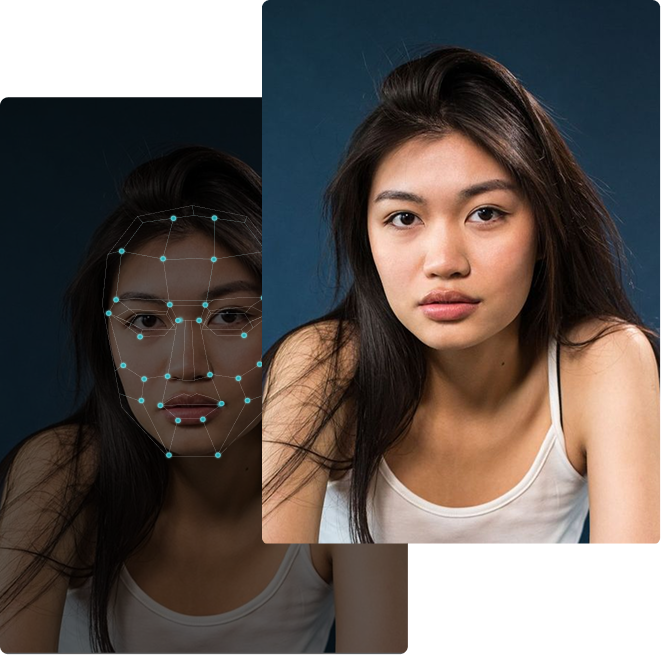
Dedicated deepfake detection models analyse images, video, and audio for the artefacts that modern generative models produce: temporal inconsistency in video, physiological inconsistencies in faces, generator-specific pixel signatures, and voice-cloning artefacts. The accuracy challenge is generalisation: a model trained against generators from 2024 does not necessarily catch outputs from a 2026 generator it has not seen.
DuckDuckGoose publishes detection performance against unseen generators specifically for this reason, which matters in claims operations where the next batch of fraudulent photos will not be generated by the same model as the training set.
Cross-Reference and SIU Investigation
For high-severity or high-flag claims, traditional SIU investigation remains the backstop: contacting named service providers, verifying police reports with originating departments, confirming medical records with issuing institutions, and physical inspection of damaged property. 43 US states carry mandatory SIU requirements under NAIC model legislation, and the trend in state DOI audits is toward requiring SIU capability to extend explicitly to AI-generated evidence.
Common Mistakes Claims Teams Make
Three mistakes recur across the carriers that AI-enabled claims fraud is quietly penetrating.
The first is relying exclusively on single-image deepfake detection. Shallowfakes and metadata manipulation evade generator-specific detectors because the image is essentially real. A detection posture that runs only a deepfake classifier and treats the result as a binary verdict will miss the dominant technique in motor claims today.
The second is leaving voice-channel claims operations out of the deepfake strategy. Voice fraud at FNOL and in claim change-of-circumstance interactions is growing faster than image fraud, and voice biometric authentication built before 2024 is often the only control in place. Modern voice-clone detection, integrated at the contact centre, closes this gap.
The third is treating policy issuance KYC as weaker than claim-time verification. Many carriers run strong fraud controls at claim time but issue policies with minimal identity verification, which creates the synthetic policyholder problem. The fix is to lift the identity-proofing standard at policy inception to match the controls applied at claim adjudication, including document authenticity and deepfake-aware biometric checks.
Practical Recommendations
A pragmatic 2026 roadmap for claims operations has four priorities.
Embed deepfake and manipulation detection at FNOL, not post-adjudication. The economics of straight-through processing collapse if fraudulent claims pass through the auto-pay threshold and have to be recovered later. Detection at the point of upload, with risk-scored routing for borderline cases, preserves the speed benefit of digital claims while rebuilding the integrity base.
Build an integrated image, video, document, and voice detection stack. No single vendor covers all four well. SIU teams that stitch together image forensics, metadata inspection, voice-clone detection, and deepfake media classification across the claim lifecycle will out-perform teams that chose a single tool.
Lift the policy issuance identity-proofing standard. Treat policy issuance as a KYC event comparable to bank account opening, with document authenticity, injection attack detection, and liveness. This closes the synthetic policyholder vector at its source, as covered in our walkthrough of how fraudsters bypass KYC with deepfakes.
Train and tool SIU explicitly on AI-generated evidence. 43 states expect SIU capability to extend to AI-generated fraud per NAIC guidance, and state DOI audit scope is moving in the same direction. Document your detection stack, your escalation criteria, and your SIU workflow for AI-flagged claims; regulators are starting to ask.
DuckDuckGoose's Phocus specifically addresses image-side detection at the FNOL and adjudication moments where claims operations need a defensible signal, with detection accuracy tested against generators the model has not been trained on.
Frequently Asked Questions
How common are deepfake insurance claims in 2026?
Rising fast, but the precise share of all claims is not publicly measured. Allianz UK recorded a 300% rise in manipulated-image incidents between 2021-22 and 2022-23, and NICB documented a 1,400% increase in AI references across questionable claims between 2025 and mid-2026. A widely repeated statistic that "20 to 30% of insurance claims contain AI-altered media" has been flagged by independent audits as unverified; no public dataset supports the specific figure, though the direction of travel is clear.
What is the difference between a shallowfake and a deepfake in insurance?
Shallowfakes are lightly edited real photos (a crack added to a real bumper, a water stain painted onto a real ceiling). Deepfakes are AI-generated from scratch or synthesised from models. Shallowfakes dominate motor claims today because they are simpler and harder to catch; deepfakes dominate the headlines because they are more technically impressive but currently lower volume.
Which insurance lines face the highest deepfake fraud exposure?
Personal property (homeowners, renters, mobile home) and motor insurance, per Verisk's Doug Townsend and Zurich UK's Scott Clayton. Property claims are evidence-heavy and hard to independently verify; motor claims are high-volume and increasingly handled through straight-through processing. Life and commercial lines face the synthetic-identity and executive-impersonation versions of the same problem.
What detection techniques actually work against shallowfakes?
A combination of pixel-level forensics (JPEG ghost analysis, error-level analysis, noise residuals), metadata inspection, reverse image search against public and cross-carrier databases, and dedicated deepfake media classifiers. No single technique catches all shallowfakes; the detection rate comes from combining three or four signals in a risk-scored routing decision.
How do fraudsters use voice cloning in insurance claims?
To report fictional claims on policyholders' behalf, to confirm witness statements that did not occur, to impersonate contractors or adjusters in redirecting payouts, and to defeat knowledge-based authentication on policy changes. Voice biometric authentication built before 2024 is typically not designed to resist modern voice-cloning tools, which is why contact centre and FNOL voice verification is the fastest-growing attack path in claims operations.
Are regulators requiring insurers to address AI-generated claim evidence?
Increasingly, yes. The NAIC issued specific guidance on AI-generated claim evidence in 2025, and 43 US states carry mandatory SIU requirements under NAIC model legislation. State DOI audits are moving toward scrutinising whether carrier systems treat AI-generated fraud as a named risk category. At the federal level, the proposed Preventing Deep Fake Scams Act would formally task-force AI fraud in financial services.
What is the single highest-leverage change a carrier can make in 2026?
Move detection upstream to FNOL and policy issuance, rather than catching fraud post-adjudication through claim re-review. Straight-through processing is where the economics of digital claims live, and fabricated evidence that passes the auto-pay threshold is expensive to recover. Embedding deepfake-aware controls at the moment the photo, document, or voice call enters the pipeline preserves the operating model and closes the dominant attack path.
How do I evaluate a deepfake detection vendor for insurance claims?
Ask for test results against three categories: shallowfake photo manipulation (not just full deepfakes), cross-generator generalisation (performance against generators the vendor has not trained on), and multi-modal coverage (image, document, and voice as separate test sets). Confirm the model refresh cadence, which should be measured in weeks and not quarters given how fast generative tools are updating.

About the author