



















On July 31, 2026, eleven allied governments (the United States, Japan, South Korea, the United Kingdom, Australia, Canada, New Zealand, France, Germany, Italy, and the Netherlands) issued a coordinated joint advisory warning employers that North Korean IT operatives were using real-time AI deepfake video to defeat identity checks during live job interviews, turning remote hiring into one of the highest-value targets in the deepfake threat landscape. The advisory described a specific technical escalation: operatives now run a deepfake model live during a video call that maps a stolen or synthetic face onto their own video feed, routed through a virtual camera driver that Zoom, Microsoft Teams, and Google Meet treat as an ordinary webcam. This is a step change from the earlier version of the same scheme that relied on AI-enhanced still photographs on resumes.
The reference case for the scheme sits two years earlier, in July 2024, when the US cybersecurity firm KnowBe4 hired a North Korean operative known as "Jo" as a Principal Software Engineer. The hire passed four separate video interviews, a background check conducted against a valid stolen American identity, and verified references. KnowBe4 shipped the new hire a company laptop. Within minutes of receiving it, the operative attempted to load malware onto the device. KnowBe4's endpoint security caught the activity and shut off access 25 minutes later. The interviews did not catch it. A security-first cybersecurity awareness company with a rigorous hiring process got all the way to shipping a laptop to a North Korean operative. According to Mandiant (now part of Google Cloud), nearly every Fortune 500 company CISO interviewed about this issue has admitted to hiring at least one North Korean IT worker.
This guide walks through how deepfakes actually bypass video interviews in 2026, the five attack patterns operating in production, the documented cases that establish the scale, and the detection stack that pushes back. It is written for talent acquisition leads, head of security roles, CISOs, CTOs at remote-first companies, and anyone designing or operating a remote hiring pipeline.
- On July 31, 2026, eleven allied governments issued a joint advisory warning that North Korean IT operatives are using real-time AI deepfake video to defeat live video interview screening.
- In July 2024, KnowBe4 hired a North Korean operative as a Principal Software Engineer after four video interviews, a background check on a stolen valid identity, and verified references. The interview process did not catch the fraud; endpoint security did, after the laptop was shipped.
- The Chapman operation ran through more than 300 American companies and generated over $17 million for the North Korean government before being disrupted by federal law enforcement.
- Mandiant's industry observation: nearly every Fortune 500 company CISO interviewed about this issue has admitted to hiring at least one North Korean IT worker.
- A typical team of North Korean IT workers can earn up to $3 million annually, per US government estimates, with the revenue funding weapons programs.
- The technical mechanism is a deepfake model running live that maps a stolen or synthetic face onto the operative's video feed, routed through a virtual camera driver that video-conferencing software treats as an ordinary webcam.
- Zhenxing Wang pleaded guilty in January 2026 to conspiracy to commit mail and wire fraud and conspiracy to commit money laundering tied to the scheme, with eight laptop farm operators sentenced in 2026.
- The 2026 detection posture requires real-time deepfake detection during the interview, virtual camera and injection attack detection, device and network signal analysis, and post-hire endpoint monitoring, not the interview process alone.
What Makes Remote Interviews Specifically Vulnerable?
Remote video interviews differ from in-person interviews in five ways that each amplify the deepfake threat.
The first is that there is no physical verification of the person in the room. The hiring manager sees a video feed on Zoom, Teams, or Meet. The identity of the person behind the feed is inferred from the face on screen, the voice heard, and the content of the responses. Each of these signals can now be synthesised in real time, and the integrated product (an AI face on a real voice, a real person's face on a synthesised voice, or a fully synthetic candidate) is what the KnowBe4 and parallel cases document.
The second is that video conferencing software treats the camera stream as trusted input. Zoom, Teams, and Meet do not verify that the camera feed originated from a physical camera on a real device. The virtual camera driver approach, which the July 2026 advisory describes directly, exploits this: the deepfake model's output is presented to the conferencing software as if it were a webcam, and the software has no mechanism to distinguish.
The third is that multiple interviews do not help against a single deepfake operator. KnowBe4's four separate video interviews each individually failed against the same operative because each interview had the same vulnerability. Multiple rounds of interviewing is a good control against candidates who are weak on specific skills; it is not a control against a candidate whose identity is deepfake-driven across every round.
The fourth is that background checks run against stolen real identities. If the operative has stolen the identity of a real US citizen with a clean record, the background check comes back clean. The identity verification layer (Jumio, iDenfy, Socure, Persona) that would catch a clearly fraudulent identity passes a stolen real one. This is specifically the KnowBe4 case: valid identity, clean background, verified references.
The fifth is that remote hiring pipelines are optimised for speed. Technical interview loops are compressed into a few days; offer-to-start timelines run as short as two weeks. The operational pressure pushes against adding the kind of friction (in-person verification, multi-day cooling-off periods, multi-channel identity confirmation) that would meaningfully address the attack. The KnowBe4 operative passed four interviews in a process that would be considered rigorous by remote-hiring standards.
The Mechanics of a Real-Time Interview Deepfake
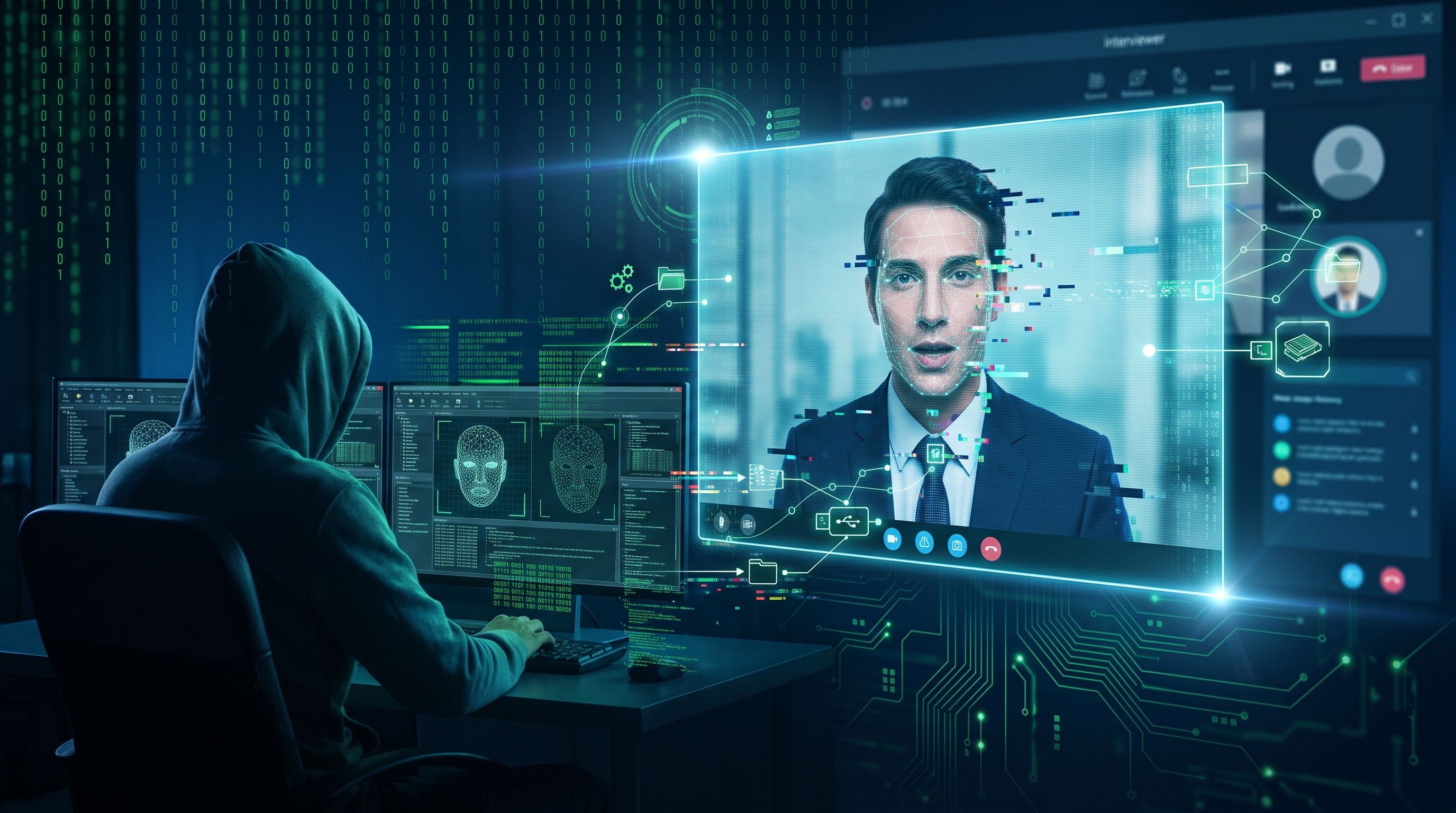
The specific technical escalation that the July 2026 joint advisory warned about operates as follows. The attacker runs a consumer or specialist deepfake model (several commercial options support the pattern as of 2026) that takes a source face image and maps it onto the attacker's own live video feed, frame by frame. The output feed is routed through a virtual camera driver installed on the attacker's machine.
When the attacker joins the Zoom, Teams, or Meet call, the video conferencing application sees a webcam device (the virtual camera driver) and uses its output as the attacker's video feed. The hiring manager sees the deepfake face overlaid on the attacker's real-time expressions and lip movements. The attacker's voice can be transmitted as-is (producing a face-voice mismatch that older research sometimes caught) or run through a voice-clone pipeline to match the stolen identity's voice profile where available.
The quality of the resulting deepfake video is high enough in 2026 to defeat casual visual inspection. The KnowBe4 case documents that four rounds of structured interviews with experienced technical reviewers did not identify the deepfake; the detection happened post-hire through endpoint security monitoring of the shipped laptop, not through anything in the interview process itself.
The Five Attack Patterns Hiring Teams Face
1. Real-Time Deepfake Face-Swap During Video Interview
The pattern the July 2026 advisory specifically named is the dominant 2026 attack. A consumer face-swap tool runs on the attacker's machine, maps a stolen identity's face onto the attacker's video feed, and routes the output through a virtual camera driver. Zoom, Teams, and Meet treat the stream as a legitimate webcam. The attacker (typically a North Korean IT worker, but the pattern is not limited to one actor) uses this to impersonate the stolen identity for the full interview sequence.
This is the pattern that passed KnowBe4's four interviews, that the Mandiant industry observation puts across "nearly every Fortune 500 company," and that the eleven-nation joint advisory warned against. It represents the escalation from still-photo deepfakes to real-time video deepfakes, and it is what defines the 2026 interview threat model.
2. Pre-Recorded Interview Response Pattern
A variant that targets asynchronous video interview platforms (HireVue, Spark Hire, and similar) uses pre-recorded deepfake video responses rather than live manipulation. The platform presents the interview question, the candidate submits a video response, and the video is reviewed later by the hiring team. The attacker records a response using a deepfake of the stolen identity, with the content either read from a script or generated by an LLM.
The asynchronous attack is easier to produce than the real-time attack because the quality bar is lower: the video does not have to respond to arbitrary follow-up questions, and the attacker can record multiple takes to find the best one. It is harder to spread across many interviews because each question requires a separate recording, but for standardised asynchronous video interview platforms it is an effective pattern.
3. Proxy Interview (One Person Interviews, Another Works)
A lower-technology but operationally significant variant is proxy interviewing: one person (technically competent, able to code live, often native English speaker) does the interview, and a different person (less competent, cheaper to employ) does the day-to-day work after the hire. The FBI's wanted notice describes this pattern directly: operatives "sometimes have a different, more technically fluent person sit the interview than the one who does the day-to-day work."
The proxy attack does not require deepfake video at all if the interview and the eventual work are done by different individuals on different calls. It does require some form of identity consistency (the hired person needs to use the same identity as the interview candidate), which is where the stolen-identity dimension of the scheme matters. This variant has been documented since before the real-time deepfake capability emerged, and remains active alongside the newer deepfake attack.
4. Stolen Identity Plus AI-Enhanced Resume Photo
The pattern that preceded the real-time deepfake escalation, and that remains active in combination with it, uses a stolen real identity (name, SSN, DOB, address) with an AI-enhanced or deepfake-generated resume photograph. The photograph does not need to match any real person; it needs to look plausible enough to accompany a resume.
The KnowBe4 case is the reference for this layer: the operative submitted an AI-enhanced headshot built by editing a stock photograph. The background check cleared because the identity was real; the resume photograph passed review because it looked like a real applicant. The real-time deepfake during the four video interviews then needed to roughly match the resume photograph for consistency.
5. Voice Clone During Audio-Only or Voice-Heavy Screen
For interview stages that rely heavily on voice (phone screens, voice-only technical conversations, reference verification calls), voice cloning of the stolen identity's voice profile defeats voice-only authentication. Commercial voice clones in 2026 require only a few seconds of source audio and produce real-time speech synthesis that matches the target's voice profile.
Reference verification calls are a specific sub-pattern. If an attacker has compromised or impersonated the stolen identity's prior employer references, the voice-cloned "reference" confirms the candidate's employment history. The KnowBe4 verified references passed; without public details of exactly how, the pattern that would explain it includes voice-cloned reference responses or socially-engineered reference pathways.
Documented Cases and Enforcement
The specific cases through 2024-2026 establish the scale and pattern.
The KnowBe4 case (July 2024) is the public reference. The security awareness company hired a North Korean operative as a Principal Software Engineer after a clean background check on a stolen valid US identity, verified references, and four video interviews. The company shipped a company laptop. Within minutes of receiving it, the operative attempted to load malware. KnowBe4's endpoint security caught the activity and cut access 25 minutes later. The interview process did not catch the fraud at any point; endpoint security did, after the shipment.
The Chapman operation involved more than 300 American companies and generated over $17 million for the North Korean government. Chapman operated "laptop farms" in the US where shipped laptops from hiring companies were housed while remote North Korean operatives connected to them via VPN and remote monitoring and management (RMM) software, giving the appearance of a US-based worker. The operation was ultimately disrupted by federal law enforcement.
Zhenxing Wang pleaded guilty in January 2026 to conspiracy to commit mail and wire fraud and conspiracy to commit money laundering tied to the scheme. This is one of several guilty pleas and sentences through 2026, with eight US laptop farm operators receiving sentences during the year.
The Pindrop "Ivan X" case documented a specific detection pattern. The candidate claimed to be located in western Ukraine, but his IP address indicated a location thousands of miles east, in a possible Russian military facility near the North Korean border. The company used a video authentication program to confirm the deepfake. The case is a public example of the device-and-network signal analysis layer catching what the interview itself missed.
The WaterPlum campaign (also tracked as DeceptiveDevelopment and Contagious Interview by various threat intel vendors) is the broader campaign framework that ESET and others have attributed to the scheme. The WageMole sub-group specifically steals developer identities for use in the hiring fraud. Infected device counts reach into the tens of thousands across the broader campaign per various 2026 reporting.
Where Attacks Land in the Hiring Pipeline
Understanding where each attack class lands in the standard remote hiring pipeline determines where control investment matters.
At the resume screening stage, the dominant attack is a stolen real identity with an AI-enhanced resume photograph. The control that catches this is cross-referencing the resume photograph against known-good images of the stolen identity (where available), checking for AI-generation artefacts in the photograph itself, and flagging resumes whose identity information does not match independent sources.
At the technical assessment stage (live coding, take-home problems), the dominant attack is proxy work: a technically competent person completes the assessment while a different person is ultimately hired. The controls that catch this are proctored assessments with camera monitoring and cross-referencing the assessment delivery with the subsequent interviews for consistent voice, style, and technical approach.
At the video interview stage, the dominant attack is real-time deepfake face-swap over a virtual camera. The controls that catch this are real-time deepfake detection on the live video feed, injection attack detection that verifies the stream originates from a physical camera on a real device, and behavioural interview techniques that stress the deepfake (unexpected gestures, unusual lighting requests, requests to turn specific directions).
At the background check stage, the dominant attack is the stolen real identity itself. The check comes back clean because the identity has no criminal record. The controls that catch this are cross-referencing the identity's prior employment, education, and address history against the candidate's answers in the interview process. Discrepancies that would be unlikely for the real identity (unusual career gaps, unfamiliarity with claimed employers) are signal.
At laptop shipment and device onboarding, the dominant attack is the laptop farm redirection. The ship-to address is a US location that houses the laptop and lets remote operatives connect in via VPN and RMM. The controls that catch this are strict verification of the shipment address against the candidate's claimed location, delay-and-verify protocols before enabling full device access, and endpoint security monitoring that flags RMM software or VPN connections from unexpected geographies.
At day-to-day work, the dominant pattern is the VPN/RMM/VPS-mediated connection that disguises the operator's true location. The KnowBe4 outcome (endpoint security catching the fraud post-hire) demonstrates that this is often where the attack actually surfaces. Continuous endpoint monitoring, anomaly detection on access patterns, and periodic in-person check-ins where feasible are the controls.
How to Detect and Stop Interview Deepfakes
A resilient 2026 hiring posture against deepfake interview fraud operates across six control families.
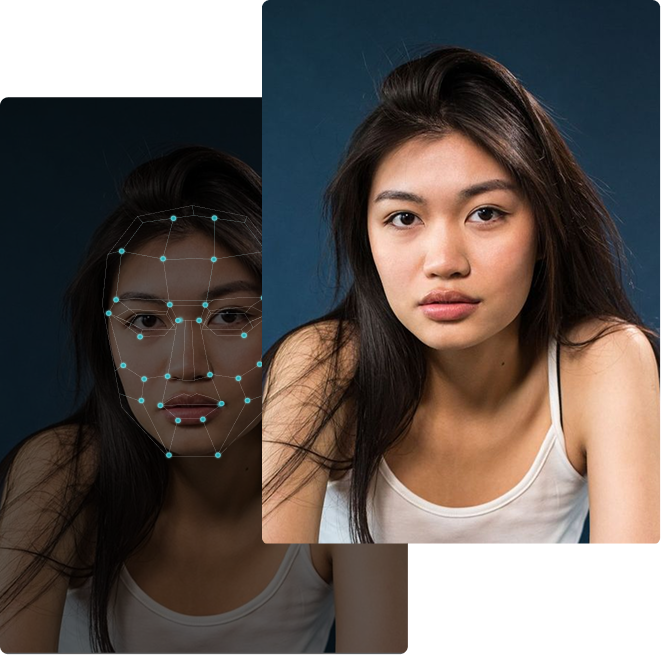
Real-time deepfake detection during the interview is the control that addresses the specific July 2026 advisory concern. Commercial vendors (GetReal Security, Reality Defender, InterviewGuard, Pindrop, and others) run detection models on the live Zoom, Teams, or Meet video stream and flag frames where generator artefacts are present. The detection accuracy problem is generalisation to generators the model has not been trained on, which matters directly because the attackers' tooling evolves faster than any single vendor's training set.
Virtual camera and injection attack detection addresses the delivery mechanism directly. The July 2026 advisory specifically named the virtual camera driver as the vector; detection that identifies virtual camera drivers in the attacker's system is a direct countermeasure. The challenge is that legitimate users also sometimes use virtual cameras (for background blur, prepared demos), so the control needs to be scoped to context rather than used as a blocking rule.
Device and network signal analysis addresses the location-mismatch pattern the Pindrop "Ivan X" case documented. If the candidate claims to be in one geography and the IP address, timezone, device locale, and other signals all point elsewhere, that discrepancy is a direct signal. This control is independent of the deepfake detection layer and catches the operator's location regardless of how good the face-swap is.
Behavioural interview techniques apply light pressure to stress the deepfake. Asking the candidate to turn their head quickly, cover part of their face temporarily, show a specific unusual object, or make an unexpected gesture produces stress on real-time face-swap models that can expose artefacts. The July 2026 advisory and multiple vendor playbooks reference specific techniques. The effectiveness is model-dependent; a sufficiently advanced real-time deepfake handles these challenges, which is why they are a supplement to automated detection rather than a replacement.
Post-hire endpoint monitoring is the control that actually caught the KnowBe4 case. Continuous monitoring of the shipped device for RMM software installation, VPN connections from unexpected geographies, unusual process activity, and malware attempts is the last layer in the stack. The KnowBe4 lesson is specifically that even a security-first company's interview process did not catch the attack, but endpoint monitoring did. For any remote hire, this layer should not be optional.
Cross-platform candidate signal checking addresses the multi-persona pattern. The July 2026 advisory noted that "one operator interview for the same role under multiple personas" is a documented pattern. Cross-referencing candidate patterns (voice similarity, technical style, phrasing) across multiple candidates for the same role and across multiple roles at multiple companies surfaces the operator-level signal that individual-interview detection misses.
DuckDuckGoose publishes deepfake detection accuracy against generators the detection system has not been trained on, which is the directly relevant metric for interview deepfake detection in a market where the attacker's generator evolves on a monthly cadence.
Common Mistakes
Three mistakes recur in hiring programs that have otherwise invested seriously in security.
Treating the interview as the primary identity check. The KnowBe4 case demonstrates that four separate video interviews with experienced technical reviewers did not catch the deepfake. If the interview process is the primary layer that verifies candidate identity, the gap is open to any attacker with access to a real-time deepfake tool. The architectural shift is to treat the interview as one input to a multi-layer identity verification process, not as the identity check itself.
Relying on background checks against the candidate's claimed identity. The stolen real identity passes the background check cleanly, because the real person has a clean record. The background check does not verify that the candidate is the person they claim to be; it only verifies that the claimed person has a clean record. The architectural shift is to add a live biometric-to-document consistency check that is independent of the background check, and to cross-reference the candidate's claimed history against the claimed identity's actual history.
Under-investing in post-hire endpoint monitoring. The KnowBe4 case specifically caught the fraud through endpoint security monitoring after the laptop was shipped. For any remote hire, the laptop shipment and initial device access are the specific moments where endpoint monitoring provides the highest-leverage detection signal. Hiring programs that treat the interview decision as final and endpoint monitoring as separate operational infrastructure miss the specific architectural alignment that works.
Practical Recommendations
For hiring and security teams, four priorities.
Add real-time deepfake detection to video interviews. The infrastructure is now commercially available (GetReal Security, Reality Defender, InterviewGuard, Pindrop, and others). The evaluation metric that matters is accuracy against generators the vendor has not explicitly trained on, because the attackers' tooling moves faster than any single vendor's training set.
Integrate device and network signal analysis with the interview process. IP geolocation versus claimed location, timezone versus claimed geography, device locale versus claimed origin, and VPN/proxy detection are all independent signals that catch what the deepfake detection misses. The Pindrop "Ivan X" case is the model: the deepfake was caught by the location mismatch, not by visual inspection.
Build the laptop shipment and device onboarding stage as a specific control layer. Strict verification of shipment address, delay-and-verify protocols before full device access, and endpoint security monitoring from the first boot are the specific controls that would have caught the KnowBe4 case earlier. For remote-first hiring at scale, this layer needs to be designed as a security control, not as a logistics step.
Invest in cross-platform operator signal detection. Voice similarity, technical style, phrasing patterns, and scheduling patterns across multiple candidates and multiple hiring events surface the operator-level fraud that no single interview can catch. Industry-level signal sharing (which is beginning to emerge for the North Korean IT worker campaign specifically) is where the enforcement economics work.
DuckDuckGoose's DeepDetector is designed specifically for the real-time video and voice detection layer in this stack, with model performance tested against generators the detection system has not been trained on, which is the relevant metric for the interview workload where the next attack will use a generator the model has not seen.
Frequently Asked Questions
Can a deepfake candidate actually pass a live video interview?
Yes, and multiple documented cases confirm it. In July 2024, KnowBe4 hired a North Korean operative as a Principal Software Engineer after four separate video interviews with experienced technical reviewers; the interview process did not catch the fraud at any point. On July 31, 2026, eleven allied governments issued a joint advisory confirming that North Korean IT operatives are now running real-time AI deepfake video during live interviews, not just submitting AI-enhanced resume photographs.
What did the July 31, 2026 eleven-nation advisory actually say?
The advisory warned employers that North Korean IT operatives are using real-time AI deepfake video to defeat identity checks during live job interviews. The technical mechanism is a deepfake model running live that maps a stolen or synthetic face onto the operative's video feed, routed through a virtual camera driver that video conferencing software treats as an ordinary webcam. The signatory countries were the US, Japan, South Korea, UK, Australia, Canada, New Zealand, France, Germany, Italy, and the Netherlands.
How did the KnowBe4 case actually get caught?
Not by the interview process. KnowBe4 hired the operative after four video interviews, a clean background check on a stolen valid US identity, and verified references. The company shipped a company laptop. Within minutes of receiving it, the operative attempted to load malware onto the device. KnowBe4's endpoint security caught the activity and shut off access 25 minutes later. The lesson is that endpoint monitoring, not interview screening, was the actual detection layer that worked.
How widespread is the North Korean IT worker scheme?
Widespread. According to Mandiant (part of Google Cloud), nearly every Fortune 500 company CISO interviewed about the issue has admitted to hiring at least one North Korean IT worker. The Chapman operation ran through more than 300 American companies and generated over $17 million. US government estimates place a typical NK IT worker team's annual revenue at around $3 million. The scheme is not a few isolated cases; it is a recurring and systematic pattern.
Why don't multiple interview rounds catch the deepfake?
Because each round has the same vulnerability. KnowBe4's four interviews each individually failed because the deepfake was running during each one. Multiple rounds of interviewing is a good control against candidates who are weak on specific skills; it is not a control against a candidate whose identity is deepfake-driven across every round. The gap is in the identity verification layer, not in the number of rounds.
Does a clean background check mean the candidate is who they claim to be?
No. A background check verifies that the claimed identity has a clean record, not that the candidate is the person they claim to be. In the KnowBe4 case and across the broader North Korean IT worker scheme, operatives use stolen real US identities with clean records, so the background check passes cleanly. The architectural gap is that background verification does not include biometric-to-identity consistency, which is a separate control layer.
What is the single highest-leverage control shift for a hiring program in 2026?
Add real-time deepfake detection to the video interview process and integrate device/network signal analysis for every candidate. The combination addresses the two specific gaps the July 2026 advisory and the KnowBe4 case documented: the visual layer where the deepfake lives, and the network layer where the operator's actual location contradicts the claimed one. Post-hire endpoint monitoring is the third layer and the one that actually caught KnowBe4.
How should a hiring team evaluate a deepfake interview detection vendor?
Ask for test results against three categories: detection accuracy on real-time video deepfakes using recent (last 90 days) generators, detection accuracy against virtual camera injection attacks, and generalisation performance against generators the vendor has not explicitly trained on. Confirm the model refresh cadence (weekly to monthly is the 2026 baseline given how fast interview-deepfake tooling evolves). The integration pathway into Zoom, Teams, and Meet without materially affecting interview flow is as important as the detection accuracy itself.

About the author