

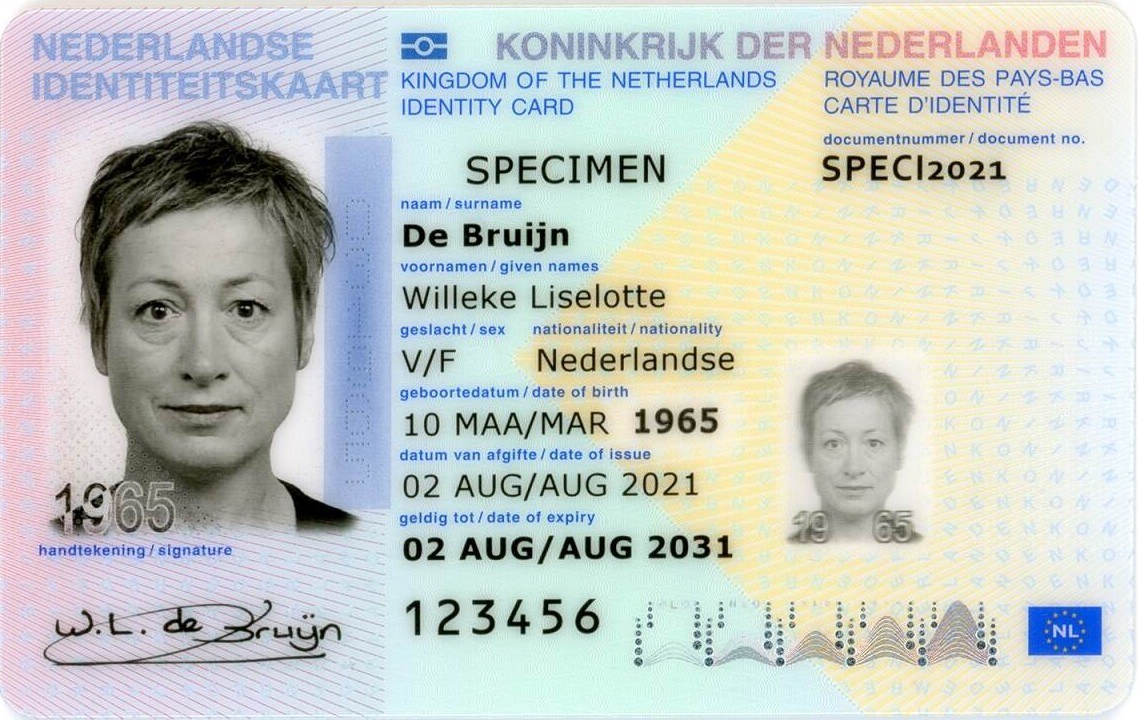



















Crypto exchanges carry the highest fraud rate of any industry Sumsub tracks, and 28% of all deepfake identity verification attacks in 2026 are aimed at cryptocurrency exchanges and fintech trading platforms, according to data compiled across the Sumsub Identity Fraud Report 2025-2026 and Chainalysis. The combination is not a coincidence. Crypto exchanges run high-velocity remote onboarding with sub-five-minute SLAs, settle funds quickly to on-chain addresses that leave the regulated perimeter, and sit at the entry point of a Travel Rule data chain that every downstream counterparty VASP depends on.
The enforcement environment has caught up. The US Department of Justice brought a $504 million guilty plea against OKX in February 2025, FinCEN placed Binance under a five-year independent monitorship with a $150 million suspended penalty, and the Financial Action Task Force's July 2026 Seventh Targeted Update warned that "organized crime groups are exploiting gaps in virtual asset regulation to move billions in illicit proceeds." A deepfake KYC bypass at a regulated crypto exchange is no longer an isolated operational incident; it is a specific compliance exposure that supervisors are now scrutinising.
This guide walks through the five deepfake attack vectors that target crypto exchange onboarding specifically, how synthetic identities propagate through the Travel Rule data flow once admitted, and the detection stack that pushes back. It is written for crypto exchange compliance officers, fraud leads, VASP risk teams, and product managers at identity verification vendors serving the digital asset sector.
- Crypto exchanges hold the highest fraud rate of any industry Sumsub tracks, and 28% of all deepfake KYC attacks target cryptocurrency exchanges and fintech trading platforms (Sumsub/Chainalysis, 2026).
- An AI-generated handheld video impersonated a MEXC account holder well enough to move approximately $340,000 before detection, cited across the 2026 industry analyses.
- A Hong Kong deepfake ring was linked to approximately $193 million in losses, merging fraudster faces with stolen IDs to bypass facial recognition at financial institutions (Sumsub, via Zenoo 2026).
- MIT Technology Review's April 2026 investigation identified 22 public Telegram channels openly selling KYC bypass kits aimed at "major crypto exchanges such as Binance to name-brand banks like Spain's BBVA."
- The ProKYC toolkit, documented by Cato Networks, bundles synthetic document generation with deepfake video for crypto onboarding at roughly $629 per year; AI-generated identity documents sell from around $15 each in bulk via Sumsub-tracked marketplaces.
- Sumsub recorded a 311% spike in synthetic identity document fraud in North America in Q1 2025 compared with Q1 2024, and a 180% year-over-year rise in sophisticated multi-step fraud across all sectors.
- FATF's July 2026 Seventh Targeted Update found 83% of jurisdictions have Travel Rule legislation in place, but 60% have taken no enforcement action, which concentrates compliance expectations on the onboarding stage.
- Travel Rule screening is only as strong as the upstream KYC; a synthetic identity admitted at onboarding at one VASP pollutes the counterparty data flow to every receiving VASP downstream.
What Makes Crypto Exchange Onboarding Different?
Crypto exchange onboarding is structurally different from bank account opening in four ways that each amplify the deepfake threat.
The first is scale and velocity. Major exchanges run onboarding SLAs in the single-digit minutes, compared with the hours or days typical in traditional banking. The business model depends on converting intent-to-trade into a funded account before the user drops off, which concentrates all KYC decisioning into an automated, remote, biometric-only flow. There is no branch visit, no cooling-off period, and typically no human-in-the-loop for standard retail onboarding.
The second is the Travel Rule data propagation. FATF Recommendation 16, extended to virtual assets in 2019, requires VASPs to collect, retain, and transmit complete originator and beneficiary information during qualifying transfers. 83% of surveyed jurisdictions have enacted Travel Rule legislation as of the July 2026 FATF update. The practical consequence for deepfake exposure: the identity record created at onboarding does not stay at the originating exchange. It travels, as counterparty data, to every receiving VASP the user ever transacts with. A synthetic identity admitted at one exchange pollutes the data lineage of the entire ecosystem.
The third is the account commodification problem. Crypto exchange accounts are tradable on secondary markets. A fraudster who successfully opens an account using a synthetic identity and deepfake biometrics can sell that verified account to another operator for money laundering, mule network operation, or sanctions circumvention. The attacker's business case is not necessarily to use the account themselves; it is to produce verified accounts at scale.
The fourth is the direct money laundering surface. Funds that enter a regulated exchange through a synthetic-identity account can be converted to on-chain assets and withdrawn to self-hosted wallets within minutes. The output of the fraud is pseudonymous and cross-border by default, which is why FATF, FinCEN, and MiCA have concentrated enforcement specifically at the on-ramp.
Why Crypto Has the Highest Fraud Rate of Any Industry
Sumsub's Identity Fraud Report 2025-2026 placed cryptocurrency as the highest-fraud industry in its global customer base, a finding repeated across the Hoge.gg November 2026 analysis and the Chainalysis crypto crime reporting. The 28% share of all deepfake identity verification attacks aimed at crypto exchanges and fintech trading platforms, compiled across Sumsub and Chainalysis data, tells the same story from the attacker side.
Three attacker-side economics explain why crypto has earned this position.
Attack-to-cash-out time is minutes, not days. A traditional bank account opened with a synthetic identity still requires the fraudster to move funds through at least one transaction cycle to extract value. A crypto exchange account can purchase an asset, withdraw to a self-hosted wallet, and leave the regulated perimeter in a single session. The speed advantage is a direct multiplier on attempt volume.
Cross-border friction is near zero. Traditional banks route value through correspondent networks that create friction at borders; crypto routes value through on-chain transactions that do not. A synthetic identity at a US-licensed exchange can produce funds at a self-hosted wallet in any jurisdiction minutes later, with no additional identity check by an intermediary.
Account resale value is uniquely high. Verified crypto exchange accounts, particularly on tier-one exchanges with high withdrawal limits and institutional-grade reputations, command prices on secondary markets that make bulk account farming commercially viable. The attacker does not need to profit from each individual account; they need to produce verified accounts at a cost per unit below the resale value.
The Five Deepfake Attack Vectors Against Crypto Exchange Onboarding
1. Synthetic Identity Document Plus AI Selfie
The foundational attack is a synthetic identity: a fabricated persona built from a mix of real data fragments and AI-generated faces, submitted with a matching AI-generated identity document and a selfie that passes the exchange's liveness check. Sumsub-tracked marketplaces offer AI-generated identity documents from around $15 each in bulk, generated from spreadsheet uploads according to the Signzy 2026 analysis.
The attack defeats document verification engines that rely on template matching and known security feature inspection, because the document is generated to look like a valid issuing authority's layout, with internally consistent numbers (including valid MRZ checksums for passports), and with a portrait that matches the selfie the attacker will submit. Document verification that was built on the assumption that fabricated documents are rare and sloppy does not catch a well-generated synthetic document, as covered in our walkthrough of the five vectors fraudsters use to bypass KYC.
2. Real-Time Face Swap on Live Video KYC
For exchanges that run live video KYC as a step-up for higher tier accounts or for jurisdictions that require it, the attack of choice is real-time face swap. The fraudster drives the video call themselves but runs a consumer face-swap model that replaces their face, frame by frame, with the target face. The target face is either the AI-generated persona matching the submitted documents, or a real face scraped from social media to match stolen documents.
The documented reference incident is MEXC: an AI-generated handheld video impersonated an account holder well enough to move around $340,000 before anyone caught it, cited across the Hoge.gg 2026 analysis and multiple downstream reports. Active liveness challenges (turn your head, blink, read a number) fail against modern real-time face-swap models because the attacker's motion drives the swap, and the swap preserves the attacker's cadence while substituting the identity.
3. Camera Injection Against Mobile KYC SDKs
Camera injection is the delivery layer that makes synthetic video industrial at crypto exchange onboarding. Rather than pointing a physical camera at a screen playing a deepfake (a presentation attack that modern liveness catches), the attacker installs a virtual camera driver on an Android device or runs the exchange's app in an emulator with full control of the camera input.
MIT Technology Review's April 2026 investigation documented 22 public Telegram channels openly selling virtual camera injectors, deepfake generators, and camera hooking modules starting at around $30, with several listings advertising specific named exchanges and banks as reliably bypassable. Sumsub, quoted in the same MIT reporting, described observing a 180% rise in sophisticated multi-step fraud attempts including virtual-camera bypasses across its client base.
Presentation attack detection certified to ISO/IEC 30107-3 does not catch injection; it was built for a different problem. For a crypto exchange running onboarding at scale, injection attack detection is now a procurement baseline, not an enhancement.
4. Account Farm Bulk Onboarding
The account farm attack industrialises the three vectors above. A single operator uses automated tooling to onboard dozens or hundreds of accounts in a short window, each with a distinct synthetic identity and a distinct deepfake biometric chain. The accounts are not used by the operator; they are resold to downstream buyers for money laundering, mule network operation, or sanctions circumvention.
Sumsub's 180% year-over-year rise in multi-step fraud, and the 311% spike in synthetic identity document fraud in North America in Q1 2025 compared with Q1 2024, are direct measurements of this pattern. The economics work because the per-account cost of generation (around $15 for the document, under $50 for the full kit) is well below the resale value of a verified tier-one exchange account.
5. ProKYC-Style Fraud-as-a-Service Toolkits
The ProKYC toolkit, documented by Cato Networks and cited across the 2026 industry coverage, is a representative example of the commercial fraud-as-a-service ecosystem that now targets crypto onboarding. ProKYC sells at approximately $629 per year and bundles synthetic document generation with deepfake video tooling built specifically for the onboarding flows of named exchanges and banks.
The commercial availability of these kits is why crypto exchange onboarding is a volume target rather than an incident target. The attacker does not need to build the attack chain; they rent it. This is the architecture that drove the 1,100% rise in deepfake fraud attempts Sumsub measured between 2024 and 2025, concentrated disproportionately in crypto.
How These Attacks Pollute the Travel Rule Data Flow
The structural implication of a successful deepfake KYC bypass at a crypto exchange extends far beyond the originating account. FATF Recommendation 16 Travel Rule obligations require the originating VASP to collect, retain, and transmit complete customer identity information to the receiving VASP during qualifying transfers. 83% of surveyed jurisdictions have enacted this into law as of the July 2026 FATF Seventh Targeted Update.
The practical effect on the deepfake threat model is that one successful bypass at one exchange produces polluted Travel Rule data at every downstream counterparty. A receiving VASP cannot independently verify that a counterparty VASP's KYC record is based on a real human; it accepts the record because the regulatory framework assumes the originating VASP has done its CDD. As the Zyphe compliance analysis puts it, "Travel Rule screening is only as strong as the upstream KYC. Poor originator data quality produces blind spots at the receiving VASP."
The enforcement environment matches this reality. Of the 91 jurisdictions with Travel Rule legislation in force per the FATF 2026 update, 60% (55 jurisdictions) have not issued a single finding, directive, or enforcement action on Travel Rule compliance. The supervisory focus is shifting from "is there a law" to "does anyone check," and the check increasingly concentrates on the upstream KYC data quality that polluted Travel Rule records reveal.
For a VASP compliance officer, the operational consequence is that a deepfake-admitted account at your exchange is not just your fraud loss. It is your Travel Rule data integrity exposure to every receiving VASP you transact with, and the regulatory conversation you will have if a supervisor traces a polluted record back to your onboarding flow.
Specific Incidents and Enforcement Context
The combination of named incidents and regulatory actions in 2025-2026 is why crypto exchange compliance programs have moved deepfake defense from "monitor this" to "treat as present threat."
The MEXC case, cited across the 2026 industry analyses, saw an AI-generated handheld video impersonate an account holder well enough to move approximately $340,000 before detection. The incident is the clearest public example of how a mid-session deepfake interacts with a customer service verification flow to produce direct financial loss.
The Hong Kong deepfake ring, measured by Sumsub and cited in the Zenoo 2026 analysis, was linked to approximately $193 million in losses. The modus operandi was merging fraudster faces with stolen identity documents to bypass facial recognition at financial institutions. A separate case saw a single suspect open approximately 46 fraudulent accounts using stolen IDs and deepfakes against one bank's mobile onboarding flow.
The MIT Technology Review April 2026 investigation is the public reference point for the industrial commerce layer: 22 Telegram channels, kits priced from around $30, named target exchanges and banks. The reporting ran over two months and identified traffic in Chinese, Vietnamese, and English, which indicates the attack infrastructure is geographically distributed rather than concentrated in any one region.
The OKX enforcement action, a $504 million guilty plea brokered through the DOJ SDNY in February 2025, is the single largest recent US crypto AML enforcement. The Binance FinCEN monitorship places the world's largest exchange by volume under direct federal supervision with a 5-year duration and a $150 million suspended penalty tied to compliance undertakings. The NYDFS consent order against Coinbase from January 2023, referenced across the 2026 compliance analyses, established the pattern of state-level supervisory action for AML control failures that predates the federal escalation.
Together these set the context that any crypto exchange compliance officer evaluating deepfake controls in 2026 operates in: supervisors are attentive, penalties are material, and the attention has shifted specifically to the identity proofing quality at onboarding.
How to Detect and Stop Deepfake Onboarding at Crypto Exchanges
A resilient crypto exchange onboarding stack in 2026 runs four control families in parallel, with the primary KYC vendor treated as one input to a layered decision rather than the whole decision.
Document authentication beyond template matching. Standard document verification engines catch obvious fakes but struggle against AI-generated documents with internally consistent numbers and layouts. Document authentication for crypto onboarding in 2026 includes microprint and watermark inspection at image resolution, consistency checking between the document photo and the submitted selfie across multiple signals (not just a face match score), and NFC chip verification for eMRTD passports and modern eIDs where supported.
Injection attack detection at capture. The MIT-documented attack infrastructure is overwhelmingly injection-based: virtual cameras, emulators, hooked APIs. ISO/IEC 30107-3 presentation attack detection does not cover injection, and most tier-one KYC vendors have historically treated it as a separate (often optional) module. For a crypto exchange onboarding thousands of accounts per day, injection attack detection should be a procurement baseline. The control verifies that the capture stream genuinely originated from a physical camera on a real device, not from a virtual camera, emulator, or hooked API.
Dedicated deepfake media detection. The primary KYC vendor's liveness is necessary but not sufficient against modern face-swap and AI-generated selfie attacks. The QWE analysis is direct: "A regulated crypto exchange onboarding thousands of users a month should assume its primary KYC vendor's liveness alone won't hold." A dedicated deepfake detector, running in parallel and testing against generators the model has not been trained on, closes the gap.
Behavioural and device risk signals. Device fingerprinting, behavioural biometrics during the onboarding session (typing cadence, mouse movement, session timing), and risk scoring against known fraud patterns catch many account farm attempts that pass the visual checks. Rapid session completion (under 90 seconds), session-to-funding time of minutes, and device characteristics inconsistent with the claimed location are the signals that account farms leave behind at volume.
DuckDuckGoose publishes deepfake detection accuracy against generators the detection system has not been trained on, which is directly relevant to crypto exchange onboarding where the next generator the account farm uses will not be the one in the primary KYC vendor's training set.
Common Mistakes
Three mistakes recur in crypto exchange compliance programs that have otherwise invested seriously in KYC.
Treating the primary KYC vendor as the whole deepfake defense. Sumsub, Jumio, Onfido, Persona, Veriff, and iProov are strong KYC platforms, but the industry consensus through 2026 (QWE, Zyphe, Signzy, Trustsphere) is that liveness certified at ISO/IEC 30107-3 is not sufficient against the specific attack mix crypto exchanges face. The architecture shift is to treat the primary vendor as one layer in a four-layer stack, not the whole stack.
Running identical controls at all onboarding tiers. Tier-one accounts with high withdrawal limits warrant tier-one controls, which may include human review, out-of-band identity re-proofing, and dedicated SIU review. Running the same automated-only flow at the $50,000 withdrawal-limit tier as at the $500 tier is a standard pattern in exchange onboarding and a standard gap in deepfake controls.
Under-investing in account-farm detection because individual accounts look clean. A synthetic identity account farm produces individually clean-looking accounts that only become visible as a pattern across the portfolio. Portfolio-level signals (co-location of registration, shared device characteristics across accounts, shared behavioural patterns, co-timing of registration and funding) catch what account-level checks do not.
Practical Recommendations
A pragmatic 2026 roadmap for crypto exchange compliance has four priorities.
Add injection attack detection to the onboarding pipeline. The MIT Technology Review investigation makes this concrete: the specific attack infrastructure now commercially available targets exactly the capture layer that most KYC vendors do not independently attest. If your current vendor stack has no explicit injection attack detection control, assume your onboarding is exposed to the dominant 2026 attack class.
Layer a dedicated deepfake detector alongside the primary KYC vendor. The two model classes are not substitutes. A detector that reports performance against generators it has not seen in training is the signal that matters for a workload where the next attack will not use the generator that was dominant three months ago.
Tier your controls to your withdrawal limits. The regulatory logic is that higher-value accounts carry higher money laundering exposure, and the compliance logic is that higher-tier controls should match the risk. Out-of-band identity re-proofing for high-tier accounts, human review on enrollment anomalies, and recovery assurance that matches enrollment assurance are the three control shifts that most programs are moving to in 2026.
Build portfolio-level fraud analytics. Account farms are detectable at the portfolio level in ways that no individual account check can match. Shared devices across accounts, co-timed registrations, co-located IP ranges, and co-ordinated first-funding patterns are the signals. Compliance teams that stand up portfolio-level monitoring see the farms they otherwise would not.
DuckDuckGoose's DeepDetector is designed specifically for the detection layer in this stack, with model performance tested against generators the detection system has not been trained on, which addresses the generalisation gap that defines the 2026 crypto onboarding threat.
Frequently Asked Questions
Are crypto exchanges really the most targeted sector for deepfake KYC bypass?
Yes. Sumsub's Identity Fraud Report 2025-2026 placed cryptocurrency as the highest-fraud industry in its global customer base. Data compiled across Sumsub and Chainalysis showed 28% of all deepfake identity verification attacks in 2026 target cryptocurrency exchanges and fintech trading platforms. The combination of high-velocity onboarding, fast cash-out, and tradable verified accounts is what drives the concentration.
What is the MEXC case and why is it cited so often?
The MEXC incident, cited across the 2026 industry analyses, involved an AI-generated handheld video that impersonated an account holder well enough to move approximately $340,000 before detection. It is the clearest public example of how a mid-session deepfake, as opposed to an onboarding-stage deepfake, interacts with a verification flow to produce a direct financial loss. For compliance officers, it is often referenced as the proof-of-concept for the attack.
How does a deepfake-admitted account affect the Travel Rule?
Travel Rule (FATF Recommendation 16) requires the originating VASP to transmit complete customer identity information to the receiving VASP during qualifying transfers. A deepfake-admitted account produces polluted Travel Rule data that flows to every downstream counterparty, which then cannot independently verify the record. The receiving VASP accepts the data because the framework assumes the originating VASP has done its CDD. As Zyphe's 2026 analysis put it, "Travel Rule screening is only as strong as the upstream KYC."
What is ProKYC and why does it matter for crypto exchanges?
ProKYC is a commercially available fraud-as-a-service toolkit documented by Cato Networks. It sells at approximately $629 per year and bundles synthetic document generation with deepfake video tooling built specifically for the onboarding flows of named exchanges and banks. The commercial availability of such kits is why the attack is now a volume problem rather than an incident problem.
Does my primary KYC vendor's ISO/IEC 30107-3 liveness certification protect against deepfakes?
Partially. ISO/IEC 30107-3 covers presentation attack detection, which catches deepfakes shown to a physical camera. It does not cover injection attacks, which are the dominant 2026 delivery method per MIT Technology Review's investigation, and it does not measure performance against AI-generated media that the certified system has not been trained on. Treat ISO/IEC 30107-3 as necessary but not sufficient.
What does FATF expect from a crypto exchange on deepfake controls?
FATF's December 2025 Horizon Scan on AI and Deepfakes formally identified three structural risks: growing reliance on facial biometrics enlarges the attack surface, synthetic media defeats legacy KYC, and cross-border fraud exploits inconsistent national rules. The July 2026 Seventh Targeted Update sharpened the supervisory expectation that VASPs can demonstrate controls against these risks, particularly at onboarding and in the resulting Travel Rule data quality.
How should a crypto compliance officer evaluate a deepfake detection vendor?
Ask for test results against three categories: ISO/IEC 30107-3 presentation attacks, injection attack scenarios (virtual camera, emulator, API hook), and AI-generated media from recent generative models the vendor has not explicitly trained on. Confirm the model refresh cadence (monthly updates are the 2026 baseline) and request generalisation scores against unseen generators. The vendor's integration pathway alongside the primary KYC stack is as important as the detection accuracy itself.
What is the single highest-leverage control shift for a crypto exchange in 2026?
Add injection attack detection to the onboarding capture layer. The MIT Technology Review investigation documented that the commercial attack infrastructure now targeting crypto exchanges is overwhelmingly injection-based, and primary KYC vendor liveness certification does not cover injection. The architectural fix is the same control family KYC vendors are now building out, applied to the mobile onboarding SDK and the web capture SDK that handle the actual video stream.

About the author