




















Digital document forgeries rose 244% year-over-year and now account for 57% of all detected document fraud, overtaking physical forgery for the first time, according to combined 2025-2026 data from Entrust and Signicat. Generative AI document fraud detections rose 90% year-over-year in Resistant AI's 2026 Global Document Fraud Report. The 2026 financial services industry benchmark places the confirmed identity verification fraud rate at 3.89% of transactions, roughly one in every 26 IDV checks. The attacker economics that drove this are specific: AI-generated passports, driver's licences, and national ID cards now sell for approximately $15 each on underground platforms, and a full KYC bypass kit (document plus matching deepfake selfie plus vendor-specific playbook) runs $30 to $600.
For document verification teams, the operational impact is already measurable. Red-team tests of document-upload-plus-selfie verification stacks conducted in Q1 2026, published by Xident, recorded pass rates of 60 to 90% against generative-AI-produced documents on the first attempt. The 2025 Forrester-Experian survey found that 69% of organisations in the India market considered their KYC infrastructure inadequate against AI-generated identity documents, and similar surveys in European and US markets have reached similar conclusions through 2026.
This guide walks through how attackers actually bypass document verification in 2026, the six vectors operating in production right now, the specific documented cases and enforcement actions, and the detection stack that pushes back. It is written for fraud leads and compliance officers at banks, fintechs, crypto exchanges, and neobanks, and for product managers at identity verification vendors.
- Entrust and Signicat 2025-2026 data: digital document forgeries rose 244% year-over-year and now account for 57% of detected document fraud, overtaking physical forgery.
- Resistant AI's 2026 Global Document Fraud Report measured a 90% year-over-year rise in GenAI-driven document fraud detections.
- 2026 financial services industry data places the confirmed IDV fraud rate at 3.89% of transactions, approximately one in every 26 checks.
- AI-generated identity documents sell for around $15 each on underground platforms; full KYC bypass kits (document + deepfake selfie + vendor playbook) run $30 to $600.
- Xident's Q1 2026 red-team tests recorded 60 to 90% pass rates against document-upload-plus-selfie verification stacks on the first attempt.
- OnlyFake, an underground platform sold photorealistic fake passports and driver's licences and was linked to over 10,000 AI-generated documents worldwide before its operator pleaded guilty.
- ProKYC (uncovered by Cato Networks in October 2024) generates a forged Australian passport plus a matching deepfake selfie video and defeated the verification flow of a major crypto exchange in the demonstration.
- The 2026 detection architecture requires AI-powered document pattern detection, issuer database lookup where available, NFC chip verification for eMRTD passports and modern eIDs, and injection attack detection at the capture layer.
What Is Document Verification and What Was It Built to Catch?
Document verification (DocV) is the identity-proofing layer that answers the question: "Is this identity document genuine, and does it belong to the person presenting it?" It sits alongside biometric verification (the selfie and liveness layer) in the standard KYC architecture, and it is typically the first check in an onboarding flow.
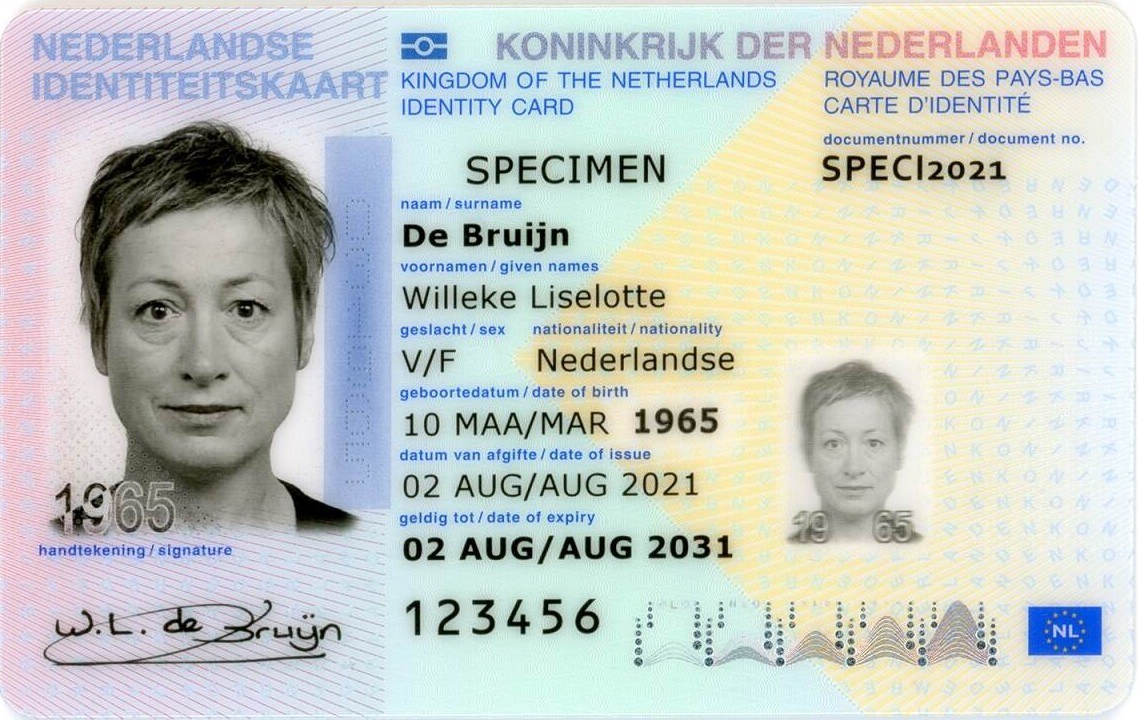
The modern DocV stack has six functional layers. OCR extracts text fields from the document image. Template matching compares the layout and visual composition to known issuing authority templates. Security feature inspection verifies microprint, watermarks, holograms, and UV features where visible. MRZ (machine-readable zone) parsing validates the checksummed format of passports and modern IDs. Barcode and QR code data matching cross-references encoded data against the visible document. Issuer database lookup, where available, checks the document number against the issuing authority's records. NFC chip verification, for eMRTD passports and modern eIDs, reads the cryptographically signed chip content.
The architectural assumption behind the stack is that producing a convincing identity document is expensive, requires specialised skills (printing, holograms, specific materials), and leaves detectable artefacts when done poorly. Against the 2020-era threat model (Photoshop edits, physical laminated fakes, stolen documents with substituted photos), the stack worked well. Against the 2026 threat model (AI-generated documents with internally consistent numbers, matched selfies, and generator-tuned-against-detector dynamics), the architectural assumption no longer holds.
Why 2026 Broke Document Verification
Three structural shifts moved document verification from "working against most attackers" to "working against unskilled attackers only" between 2023 and 2026.
The first is the cost collapse. Sumsub documented in 2025 that what once required "fine-tuned skills and significant resources can now be done for as little as $15 and half an hour using generative AI." OnlyFake, the underground platform that reached the clearest public documentation, sold AI-generated passports and driver's licences at this price point until its operator was arrested and pleaded guilty after selling more than 10,000 documents worldwide.
The second is the generator-detector co-evolution problem. As the Xident 2026 analysis puts it: "Synthetic generators are trained against the same public benchmarks vendors use to validate their detectors." The specific effect is that improvements in detection models are matched by targeted improvements in generation models, with the generators maintaining a lead because they have the economic incentive and the public benchmark data. For any vendor whose detection models have not been updated against generators released in the last 90 days, the gap is active.
The third is the human reviewer gap. Internal benchmarks across large verification vendors, cited in the Xident 2026 analysis, show human reviewer accuracy on AI-generated IDs sitting between 50 and 80% depending on document class and review time. Document verification cannot fall back on human review at scale, because the human reviewer has the same perceptual limits as the automated detector for modern synthetic documents.
The architectural response, which regulators across the EU, UK, and US are now beginning to require, is to shift verification from pixel inspection to cryptographic verification. NFC chip verification of ePassports (eMRTDs) and modern eIDs provides a cryptographically signed guarantee of the document data that cannot be AI-generated. This is the direction the 2026 compliance landscape is pushing; it is also not yet universal because not every document type supports NFC and not every capture device can read it.
The Six Attack Vectors Against Document Verification
1. AI-Generated IDs From Scratch (OnlyFake Pattern)
The dominant 2026 attack vector is a fully AI-generated identity document produced from scratch by a generative model. OnlyFake was the clearest public example: a web interface that produced photorealistic passports, driver's licences, and national IDs in minutes, with internally consistent number sequences, correctly formatted MRZ with valid checksums, and portraits that matched the selfie the attacker would later submit.
The attack defeats template matching because the generator produces output that matches the template. It defeats security feature inspection because the generator produces visually plausible microprint and watermarks at image resolution. It defeats MRZ validation because the generator produces mathematically correct MRZ with valid checksums. The only checks that typically catch it are issuer database lookup (where the generated document number has no record) and NFC chip verification (where no chip exists to read).
2. Hybrid Real Data Plus AI Face
A variation that often outperforms pure generation uses real stolen identity data (name, DOB, address, document number from a breach) paired with an AI-generated face and a modified design. The attack chain is often: purchase breached identity data, generate a face that matches a fabricated persona or a target the attacker will impersonate, produce a document that pairs them.
The attack defeats issuer database lookup for the data fields that came from real breach data, because the document number may actually exist in the issuer's records. It defeats detection approaches that rely on checking identity data against public records. The selfie the attacker submits matches the AI-generated face on the document because both came from the same generator.
The ID-Pal 2026 industry analysis categorises this as "the most operationally dangerous current pattern" because it bridges the gap between AI generation and real-world records that verification systems depend on.
3. Template-Based Synthetic Documents
A middle layer between fully AI-generated and real-data hybrid is template-based generation using document templates sold on underground marketplaces. The templates are typically high-resolution scans of real documents with the identity fields removed, letting the operator insert any name, DOB, and photo into the template.
The template-based attack is older than the pure AI-generation attack and shares some of its characteristics (template matches, security features look right at image resolution) but typically fails more quickly at issuer database lookup and more obviously at expert visual inspection. It remains a volume attack because the per-unit cost is lower and the technical skill required is lower, which makes it a baseline attack for operators running at scale.
4. Edited Authentic Documents
The traditional attack pattern (taking a real document and editing specific fields with Photoshop or specialised editing tools) remains a meaningful volume vector. The attacker starts from a real document (stolen, lost, or borrowed) and modifies the photograph, date of birth, name, or document number to create the required identity.
The attack defeats OCR extraction because the edited fields look like real OCR targets. It passes basic template matching because the underlying document is real. It fails modern pixel-level forensics (JPEG ghost analysis, error-level analysis, noise residual inspection) that catch the recompression artefacts at edit boundaries. In the 2026 attack mix, edited authentic documents are the lower-skill cousin of AI generation, often used by less sophisticated operators or by attackers who have a specific stolen document to adapt.
5. Document Injection at the Capture Pipeline
Rather than submitting a photo of a document shown to the camera, the injection attack feeds a document image directly into the capture SDK. The attacker installs a virtual camera driver, runs the app in an emulator, or hooks the camera API, as covered in detail in the five vectors fraudsters use to bypass KYC. When the app requests a camera stream for the document capture, it receives the attacker's prepared image.
For document verification specifically, injection attacks bypass any check that assumes the document was photographed by the user in real time. Capture-time quality assessment (checking lighting, angle, motion blur) is fooled because the injected image can be a perfect-conditions capture. The MIT Technology Review April 2026 investigation documented injection toolkits on 22 Telegram channels at prices starting around $30.
6. NFC Chip Spoofing for ePassports
The attack class that targets the strongest existing control is NFC chip spoofing. eMRTD passports and modern eIDs carry a cryptographically signed chip with identity data and portrait, and NFC verification is the single strongest document authenticity check available in consumer-grade KYC. Attack attempts against this have been documented through 2026 but remain rare and typically unsuccessful at scale because the cryptographic signatures from issuing authorities are not easily forgeable.
The emerging vector is not attacking the chip's cryptography directly but using emulators to replay previously-captured chip responses, or using cloned chips programmed with real but stolen identity data. For high-assurance flows at major financial institutions, NFC verification remains the gold standard; for the broader document verification market where NFC is not universally adopted, it is not yet a control that most IDV flows can rely on.
Documented Cases and Enforcement Pattern
The 2024-2026 cases establish the attack pattern in public evidence.
OnlyFake is the reference case for the underground AI-document market. The platform sold photorealistic fake passports and driver's licences at approximately $15 each and was linked to more than 10,000 documents sold worldwide before its operator was arrested and pleaded guilty. The platform's public pricing and operation established the baseline economics that subsequent operators have replicated.
ProKYC, documented by Cato Networks in October 2024, raised the bar from documents to full KYC bypass kits. The tool generates both a forged government document (an Australian passport in the published demonstration) and a matching deepfake selfie video engineered to pass facial recognition and liveness challenges. In the demonstration, ProKYC defeated the verification flow of a major crypto exchange. The tool's commercial availability established the fraud-as-a-service model that now underlies most industrial document fraud.
In 2025, a public demonstration in Bengaluru showed that a generative AI model could produce highly realistic Aadhaar and PAN card replicas, exposing the limits of visual inspection-based verification for the specific Indian identity document ecosystem that services much of South Asia's financial infrastructure.
Also in 2025, the North Korean advanced persistent threat group Kimsuky reportedly used generative AI to forge South Korean military ID cards in spear-phishing campaigns against defence-sector personnel. This established that state-level actors are using AI document generation operationally, not just criminal operators.
Cifas's Fraudscape 2026 report, the UK fraud prevention body's annual analysis, specifically flagged that advances in AI are letting criminals rapidly generate synthetic identities and produce convincing fake documents including passports, making fraudulent applications materially harder to detect. This is the specific regulatory context for the UK document verification market in 2026.
Where Attacks Land in the Verification Pipeline
Understanding where each attack class lands in the six-stage document verification pipeline is what determines where control investment matters.
At the document image capture stage, the dominant attack is injection: a prepared document image fed directly into the capture SDK through a virtual camera, emulator, or hooked API. Capture attestation (verifying that the stream originated from a real camera on a real device) is the control that addresses this layer.
At OCR and field extraction, the dominant attack is any document (AI-generated, template-based, or edited) that produces readable fields. OCR is not a security check; it is a utility step. The security value comes from what happens with the extracted fields in subsequent stages.
At template and security feature matching, the dominant attacks are AI-generated and template-based documents that are designed to match the template. Detection here has to move beyond template matching to AI-pattern detection: identifying the statistical signatures of generator output rather than confirming the layout matches.
At MRZ and barcode validation, the dominant attack is any document with correctly formatted machine-readable data. Modern generators produce valid MRZ with correct checksums. The MRZ check is necessary but not sufficient; its value is in catching badly-formed fakes, not well-formed ones.
At issuer database lookup, the dominant defence surfaces. A document number that does not exist in the issuing authority's records is strong evidence of generation. The limit is coverage: not every jurisdiction provides API access to issuing authority records, and coverage varies by document type.
At NFC chip verification, the dominant defence reaches its strongest point. A valid cryptographic signature from the issuing authority is strong evidence of document authenticity. The limits are device support (not every device can read NFC), document type (not every document has a chip), and user experience (NFC capture adds friction).
How to Detect and Stop Forged ID Attacks
A resilient 2026 document verification stack runs six detection families in parallel, with escalation to issuer lookup and NFC where available for high-assurance flows.
AI-powered document pattern detection is the control that addresses the generator output itself. The detection problem is to identify the statistical signatures that generator output carries at pixel and frequency domain level, even when the document appears correct at template level. The accuracy challenge is generalisation: a model trained against generators from 2024 does not necessarily catch outputs from a 2026 generator it has not seen. The vendor evaluation metric that matters is accuracy against generators the detection system has not been trained on.
Issuer database lookup where available addresses the fully-generated document class directly. The attack works because the generator produces a document number that has no real record; a direct lookup catches this cleanly. The limit is coverage, but for major jurisdictions where the API exists (eMRTD passports via ICAO, various state driver's licence databases, national eID systems) it should be a baseline check.
NFC chip verification for eMRTD passports and modern eIDs is the strongest authenticity check available in consumer-grade KYC. For device-and-document combinations that support it, NFC verification should be the default for any high-assurance flow. The regulatory direction (EBA/GL/2021/21, FinCEN BSA revisions, ENISA guidance) is explicitly moving toward requiring NFC where supported.
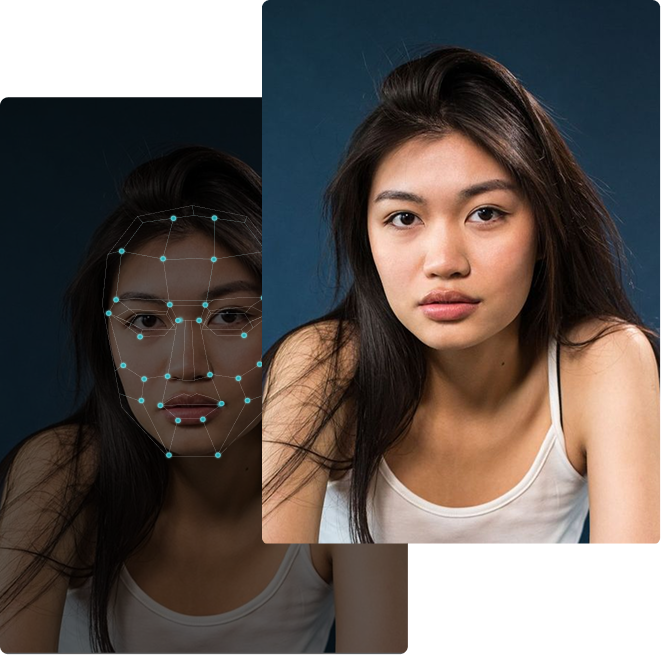
Document-to-selfie consistency across multiple signals addresses the hybrid real-data-plus-AI-face class. Standard face match scores check whether the selfie matches the document photo; multi-signal consistency goes further, checking illumination, geometry, 3D depth, and background context consistency. The AI-matched pair that passes a face score may fail multi-signal consistency.
Injection attack detection at capture addresses the document injection vector. The mobile SDK or browser capture pipeline has to verify that the stream originated from a physical camera on a real device. This is the same control family that addresses biometric injection attacks; it applies equally to document capture.
Cross-carrier data patterns catch coordinated fraud at portfolio level. Shared document numbers, shared birthdates, shared address patterns across accounts and across institutions are signals that individual-account checks miss. Verisk's cross-carrier image database and similar industry infrastructure provides the tooling.
DuckDuckGoose publishes document detection accuracy against generators the detection system has not been trained on, which is the directly relevant metric for document verification in a market where the next attacker's generator will not be the one in the primary KYC vendor's training set.
Common Mistakes
Three mistakes recur in document verification programs that have otherwise invested seriously in KYC.
Treating template matching plus MRZ validation as sufficient. The 2020-era document verification architecture is inadequate against 2026 generator output. Template matching passes well-generated documents; MRZ validation passes mathematically correct generated MRZ. Programs that stop at these checks are structurally exposed to the OnlyFake-tier document that sells for $15.
Under-adopting NFC chip verification for eligible documents. ePassports and modern eIDs provide cryptographic verification that cannot be AI-generated. Programs that support ePassport capture but do not require NFC where the document supports it leave the strongest available control switched off for a user experience gain that is typically not material.
Treating document verification as independent from biometric verification. The hybrid real-data-plus-AI-face attack class is the exact case where document and biometric scores can each pass independently while the combined attack is clearly synthetic. Document-to-selfie consistency across multiple signals, not just face match score, catches what each layer individually misses.
Practical Recommendations
For fraud and compliance teams, four priorities.
Add AI-powered document pattern detection with generator generalisation as the vendor evaluation metric. The attack profile moves monthly; the detection models have to move with it. A vendor that reports accuracy only against generators in its training set is not meeting the 2026 threat.
Require NFC chip verification where eligible. For eMRTD passports and eIDs, make NFC the default capture path and only fall back to visual inspection when the device or document does not support it. The user experience cost is modest; the security gain is the strongest available control.
Integrate issuer database lookup where available. ICAO for passports, state APIs for driver's licences, national eID systems where open. The attack class that fully-generated documents represent is addressed cleanly at this check, and the operational cost is small for the jurisdictions that are covered.
Measure document-to-selfie consistency across multiple signals, not just face match score. The AI-matched pair is the specific case where the simple face match is inadequate. Multi-signal consistency closes the gap, and the techniques are commercially available in 2026.
DuckDuckGoose's Phocus is designed specifically for the document pattern detection layer in this stack, with model performance tested against generators the detection system has not been trained on, which is the relevant metric for a workload where the next attack will not use a generator the model has seen.
Frequently Asked Questions
How common are AI-generated fake IDs in 2026?
Rising fast. Entrust and Signicat 2025-2026 data shows digital document forgeries rose 244% year-over-year and now account for 57% of detected document fraud, overtaking physical forgery for the first time. Resistant AI's 2026 report measured a 90% year-over-year rise in GenAI-driven document fraud detections specifically. Xident's Q1 2026 red-team tests recorded 60 to 90% pass rates against document-upload-plus-selfie verification stacks.
What was OnlyFake and why is it the reference case?
OnlyFake was an underground platform that sold photorealistic AI-generated passports and driver's licences for approximately $15 each. The platform established the baseline economics for the modern document fraud market and was linked to more than 10,000 documents sold worldwide before its operator was arrested and pleaded guilty. It is cited across the 2024-2026 industry literature as the moment when the attack moved from "possible" to "routine."
What is ProKYC and how is it different from OnlyFake?
ProKYC, documented by Cato Networks in October 2024, is a full KYC bypass kit rather than a document-only tool. It generates both a forged government document and a matching deepfake selfie video engineered to pass facial recognition and liveness challenges. In the published demonstration, it defeated the verification flow of a major crypto exchange. The distinction matters because ProKYC addresses the full attack chain, not just the document step.
Why doesn't template matching catch AI-generated IDs anymore?
Because the generator produces output that matches the template. Template matching compares the document to known layouts from issuing authorities; a generator trained on those layouts produces output that passes the comparison. The same applies to visual security features, MRZ format, and barcode encoding: all of these are features the generator can produce because they are public specifications. The checks that still work against AI-generated documents are those that depend on external data the generator cannot fabricate: issuer records and NFC chip signatures.
Does NFC chip verification actually stop AI-generated IDs?
Yes, for the document classes that support it. eMRTD passports and modern eIDs carry a cryptographically signed chip from the issuing authority. A generator can produce an image that looks like a passport, but it cannot produce a chip with a valid signature from a national authority. For high-assurance flows, NFC verification should be the default capture path for eligible documents. The limitation is coverage: not every document has a chip and not every device can read NFC.
What is injection attack and why does it apply to document verification?
Injection attack is the vector where the attacker feeds a prepared image or video directly into the capture SDK rather than photographing a real document through the camera. For document verification, injection lets the attacker submit a perfect-conditions image of any document (AI-generated, template-based, or edited) with no camera-level anomalies. The capture-attestation control family addresses this by verifying that the stream originated from a physical camera on a real device.
How should a compliance officer evaluate a document verification vendor in 2026?
Three test categories: detection accuracy against AI-generated documents (from scratch and hybrid), detection accuracy against template-based and edited documents, and injection attack detection for both document and selfie capture. Confirm the model refresh cadence (measured in weeks for 2026, not quarters). Request generalisation scores against generators the vendor has not explicitly trained on. For high-assurance flows, verify NFC chip verification support for eMRTD passports and modern eIDs.
What is the single highest-leverage control shift for document verification in 2026?
Add NFC chip verification as the default for eligible documents (eMRTD passports, modern eIDs) and require AI-pattern detection with generator generalisation for everything else. The combination addresses the two biggest gaps in the 2020-era stack: that AI generators now produce visually convincing documents that pass template-level checks, and that the only cryptographic guarantee of document authenticity comes from the chip.

About the author