















An AI impersonation attack is what happens when a fraudster uses artificial intelligence to convincingly become someone you trust: a chief executive on a video call, a colleague's voice on the phone, a vendor in a chat thread. The most expensive cases follow the same script, a cloned executive voice, a rushed payment, and a verification step that never happened, and they work because conventional security controls were built to check credentials and devices, not to ask whether the voice or face on the line belongs to a real human at all.
This piece explains how AI impersonation attacks are detected: what the attacks are, why they are so hard to catch, how the synthetic voice and video are detected, the behavioral and contextual signals that surround the media, and the human and process backstop that works regardless of how good the fake is. It is written for the security, fraud, and finance teams who are now the last line against a phone call they cannot tell from real.
The single most important thing to understand is that no one signal catches impersonation. Detection is layered, and, crucially, the channel the attack arrives on determines which layer does the work.
- AI impersonation attacks use a cloned voice or a real-time deepfake to pose as a specific real person, an executive, colleague, vendor, or family member, to extract money or access.
- Conventional security controls miss them, because they verify credentials and devices, not whether a voice or face belongs to a real human.
- Human perception is not a defense: the technology is designed so there is nothing to spot, and mainstream conferencing platforms ship no dependable built-in detection.
- Detection is layered, and the delivery channel determines which layer applies: media detection, liveness and injection, behavioral signals, provenance, and process verification.
- Media detection reads modality-specific tells: for voice, AI frequency patterns and unnatural rhythm; for video, liveness failures, blending artifacts, and a missing pulse.
- Real-time detection during the call matters, because investigating after a wire clears can cost 50 to 100 times more.
- Behavioral and contextual signals catch the request that does not fit, and manufactured urgency is itself a red flag.
- The durable backstop is out-of-band verification, a callback on a known number or a second channel, which works no matter how convincing the fake is.
What an AI Impersonation Attack Is
An AI impersonation attack uses synthetic media to pose as a specific, real, trusted individual. It takes three main forms, and the delivery method matters because it dictates how the fake can be detected. The first is the real-time video-call deepfake, where an attacker joins a meeting wearing a live face swap of a senior executive to authorize a transfer, the pattern behind the widely reported case in which a finance employee paid out tens of millions after a video call with what looked like colleagues. The second is the voice clone, used in vishing calls that impersonate a C-level executive demanding an urgent payment. The third is the fake participant in a hiring or vendor interaction, a synthetic candidate in a job interview or a cloned supplier redirecting payments.
The economics explain why this is now a mass problem. A convincing voice clone can be built from only a few seconds of audio, easily harvested from an earnings call or podcast, and a face swap runs in a browser on inexpensive hardware, so the barrier to impersonating almost any executive is effectively gone. The results show in the numbers: vishing using cloned voices has surged by several hundred to over a thousand percent in recent reporting, one survey found roughly 37% of companies hit by identity fraud were targeted with AI voice clones, and the average wire-transfer loss per incident runs well over a million dollars. As one analysis put it, business email compromise now starts with email but ends on a call, because voice and video have become the final, most trusted verification layer, and that is exactly the layer AI now forges.
Why It Is Hard to Detect
The first difficulty is that human perception has quietly stopped being a defense. The instinct that "I would know my own boss's voice" is now the exact weakness being exploited, because a clone on a slightly noisy line is indistinguishable to the ear, and, as one practitioner put it, the whole point of the technology is that there is nothing to spot. Compounding this, the mainstream conferencing platforms most business calls run on ship no dependable built-in deepfake detection, so there is no automatic safety net on the channel where the attack lands.
The second difficulty is speed and channel. These attacks unfold live, in a conversation, and they manufacture urgency, a deadline, a deal about to collapse, a boss who cannot talk right now, precisely to push the target past any verification step. That urgency is not incidental; it is the attack. And because impersonation arrives across email, phone, SMS, and video conferencing, no single channel-specific control covers it. Conventional security controls, built to verify credentials and devices, collapse against this, because they never ask the one question that matters: is the voice or face real? Detection has to add that question back, in layers.
Detecting the Synthetic Media: Voice and Video
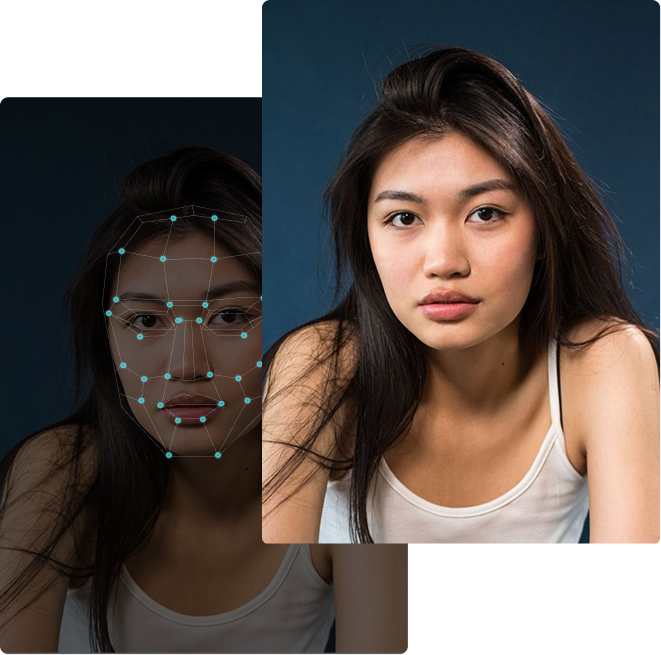
The core layer is detecting whether the media itself is synthetic, and it works differently for audio and video. For voice, detection systems listen for what the human ear cannot: frequency patterns specific to AI voice models, micro-pauses and speech rhythm that do not match natural human patterns, acoustic inconsistencies between the claimed setting and the actual audio, and, in live attacks, the processing delay introduced by a real-time voice-conversion pipeline. For video, detection checks whether a face is genuinely alive, natural blinking, believable micro-expressions, gaze that moves the way real eyes move, and looks for the synthesis artifacts of a face swap, warping around the hairline, ears, or neck during movement, lighting and shadows that do not fit, and the absence of a real physiological pulse.
Two properties make this layer effective in an impersonation context. It reads signals invisible to people, so it does not depend on a human noticing anything, and it can run in real time, returning a synthetic-or-genuine signal during the conversation rather than after. That timing is decisive, because by the time a wire transfer clears or a job offer goes out, the fraud is locked in, and investigating after the fact is estimated to cost fifty to a hundred times more than catching it in the call. The window to stop executive fraud, interview fraud, and vishing is the conversation itself.
Beyond the Media: Behavior, Context, and Provenance
Media detection is necessary but not the whole picture, because impersonation is a social attack as much as a technical one. A second layer reads behavior and context. Behavioral analysis compares the request and the interaction against a known baseline for that person and that relationship, flagging what does not fit: an executive who never asks for wire transfers by phone suddenly doing so, a request routed through an unusual channel, or the manufactured urgency that so reliably accompanies these attacks. For live video, liveness and injection detection add the question of whether the feed is a genuine capture from a real camera or a replayed or injected stream, since a deepfake can be piped in through a virtual camera rather than shown to a lens. And where it exists, content provenance, such as C2PA credentials, can confirm origin for cooperating sources, though it is absent from most live attacks.
The value of combining these is that they fail in different ways, so an attack that slips past one is likely to trip another. A flawless voice clone still has to make an out-of-pattern request; an injected video still has to survive a liveness check; a request with a plausible pretext still has to originate from a verifiable place. No single layer is sufficient, which is the recurring lesson of impersonation defense.
The Human Backstop, and Putting It Together
The most durable detection is not technical at all, and it deserves emphasis precisely because it works no matter how convincing the fake becomes. Out-of-band verification, confirming a request by calling the person back on a known, pre-registered number or through a system both parties already trust, defeats impersonation structurally: the attacker controls the channel they chose, but not the second one you insist on. Paired controls, code words for sensitive requests, mandatory callbacks and multi-person approval for high-value transfers, and step-up authentication for executive transactions, remain effective because they are independent of the quality of the synthetic media. This is why training matters too, but modern training, rotating deepfake voice and video simulations so employees learn that the more urgent and unusual a money request feels, the more the verification process applies, not less, rather than the old advice to look for misspelled domains.
Put together, detecting AI impersonation is a stack: detect the synthetic media in real time during the call, layer on behavioral and contextual signals to catch requests that do not fit, and require out-of-band verification as the backstop that holds when everything else is uncertain, all extended beyond onboarding to the payment, account-recovery, and help-desk workflows where impersonation actually pays off. Within that stack, DuckDuckGoose, based in Delft, provides the media-detection layer: DeepDetector analyzes images and video for the signatures of synthetic media, with explainable output and ISO 27001, SOC 2, and GDPR compliance, giving teams a machine signal on whether a face is real that human eyes can no longer provide. For the voice side of the threat, see our guide to how voice cloning powers modern scams, and for why a live deepfake defeats liveness, why liveness checks fail against deepfakes.
Frequently Asked Questions
How are AI impersonation attacks detected?
Through layers, not a single test. Media detection determines whether a voice or face is synthetic, liveness and injection detection confirm a live genuine capture, behavioral and contextual signals flag requests that do not fit the person, and out-of-band verification confirms the request through a second channel. The delivery channel of the attack determines which layers do the most work.
Why can't people just spot an AI impersonation?
Because modern voice clones and video deepfakes are indistinguishable to human senses, especially on a call, and the technology is designed so there is nothing obvious to spot. The instinct that you would recognize your boss's voice is exactly the weakness attackers exploit, which is why human perception alone is no longer a reliable defense.
How is a cloned voice detected?
Detection systems analyze the audio for cues the ear misses: frequency patterns characteristic of AI voice models, unnatural micro-pauses and speech rhythm, acoustic inconsistencies with the claimed setting, and the processing latency of a real-time voice-conversion pipeline. These can produce a synthetic-or-genuine signal during a live call rather than only in later forensic analysis.
How is a deepfake on a video call detected?
By checking whether the face is genuinely alive, natural blinking, micro-expressions, and realistic gaze, and by looking for synthesis artifacts such as warping around the hairline or neck, mismatched lighting, and the absence of a physiological pulse. Injection detection also checks whether the video is a real camera feed rather than a stream piped in through a virtual camera.
Why does real-time detection matter for impersonation?
Because the fraud completes in the conversation. Once a wire transfer clears or a job offer is made, the loss is locked in, and investigating afterward is estimated to cost fifty to a hundred times more than catching it live. Detecting the synthetic media during the call, in well under a second, is what closes the window.
Do behavioral signals help detect impersonation?
Yes. Even a flawless deepfake still has to make a request, and impersonation attacks tend to be out of pattern: unusual urgency, an atypical channel, or a request the real person would not normally make. Comparing the interaction against a known baseline and flagging manufactured urgency adds a layer that does not depend on catching the media itself.
What is the most reliable defense against AI impersonation?
Out-of-band verification. Confirming any high-value or unusual request through a second, trusted channel, such as a callback on a known number, works regardless of how convincing the synthetic voice or face is, because the attacker does not control that second channel. Paired with real-time media detection and behavioral signals, it is the backstop that holds when everything else is uncertain.

About the author